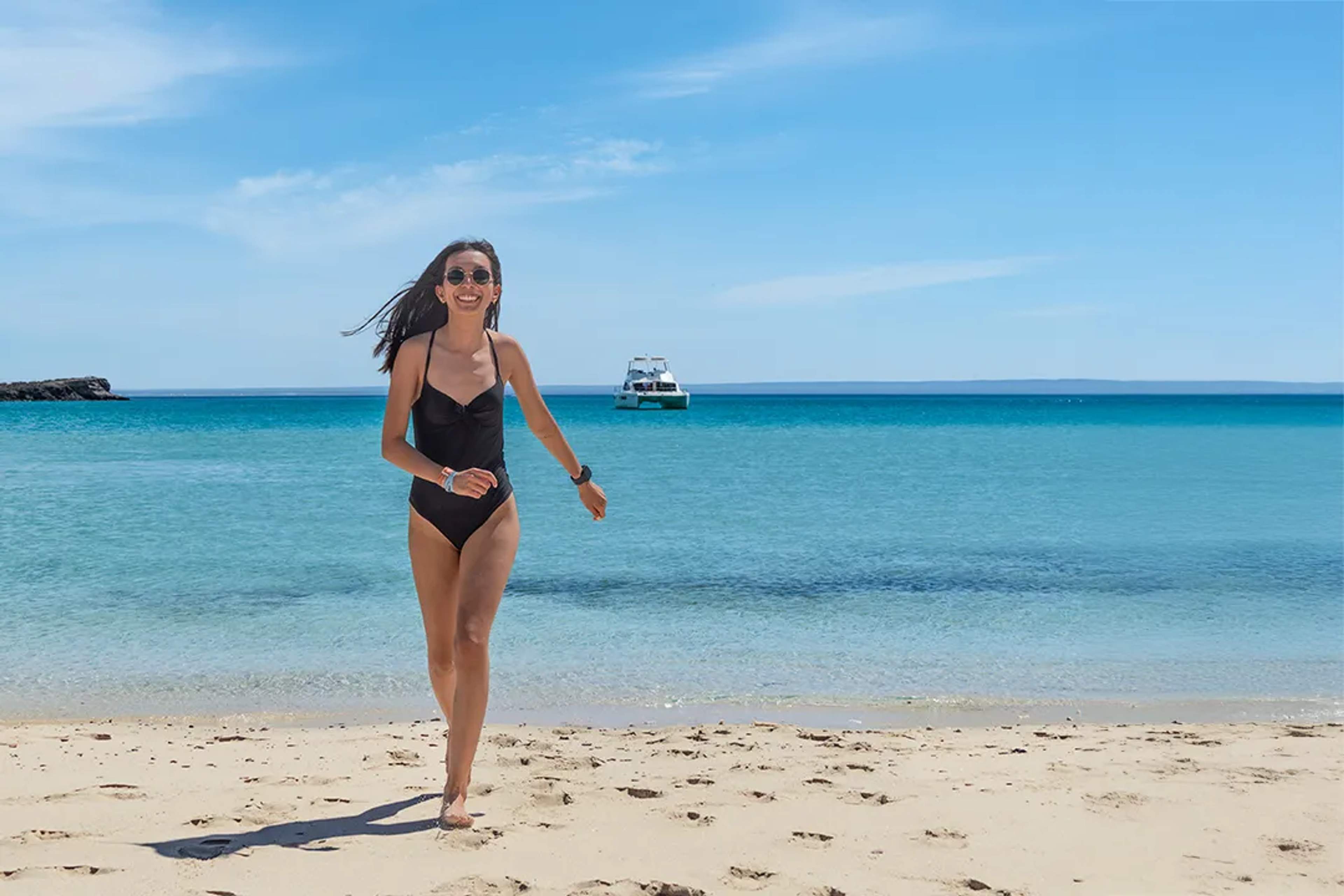
Santa Maria Bay Cabo sits along the Tourist Corridor, about 13 kilometers east of Cabo San Lucas, in a horseshoe cove framed by granite headlands and cactus-covered volcanic cliffs. No hotels line its shore. No artificial breakwaters protect it. The land itself does that work, blocking swell and wind to create calm, clear snorkeling water in the region.
It holds Blue Flag status and protected marine sanctuary status. For anyone heading to Los Cabos with the ocean at the top of their list, this bay deserves serious planning attention.
Why Santa Maria Bay Stands Out
The geography tells the story. Two large rock headlands curve around the cove like arms, forming a natural barrier against surf and wind. The result is water that feels almost impossibly calm for a beach with no built infrastructure.
What you won't find here matters as much as what you will. There's no resort development on the beach. The bay has been a protected area since 1973, which means fishing and extractive activities are restricted. Those decades of protection help explain the fish density snorkelers come to see.
The surrounding landscape is pure Baja: desert scrub, towering cacti, and volcanic rock dropping into turquoise water. It's a dramatic visual contrast that sets Santa Maria apart from any generic tropical beach.
What Lives Below the Surface
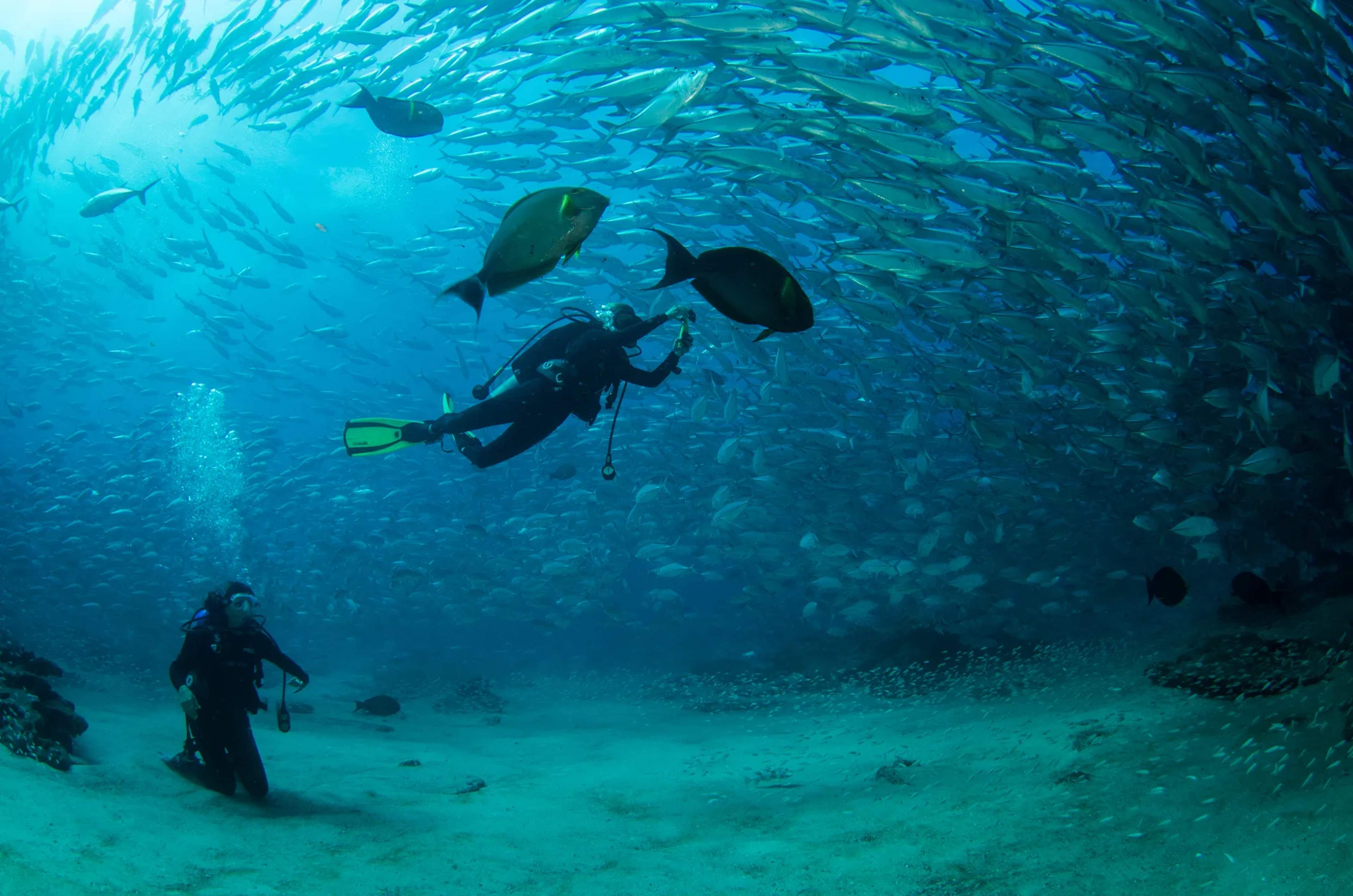
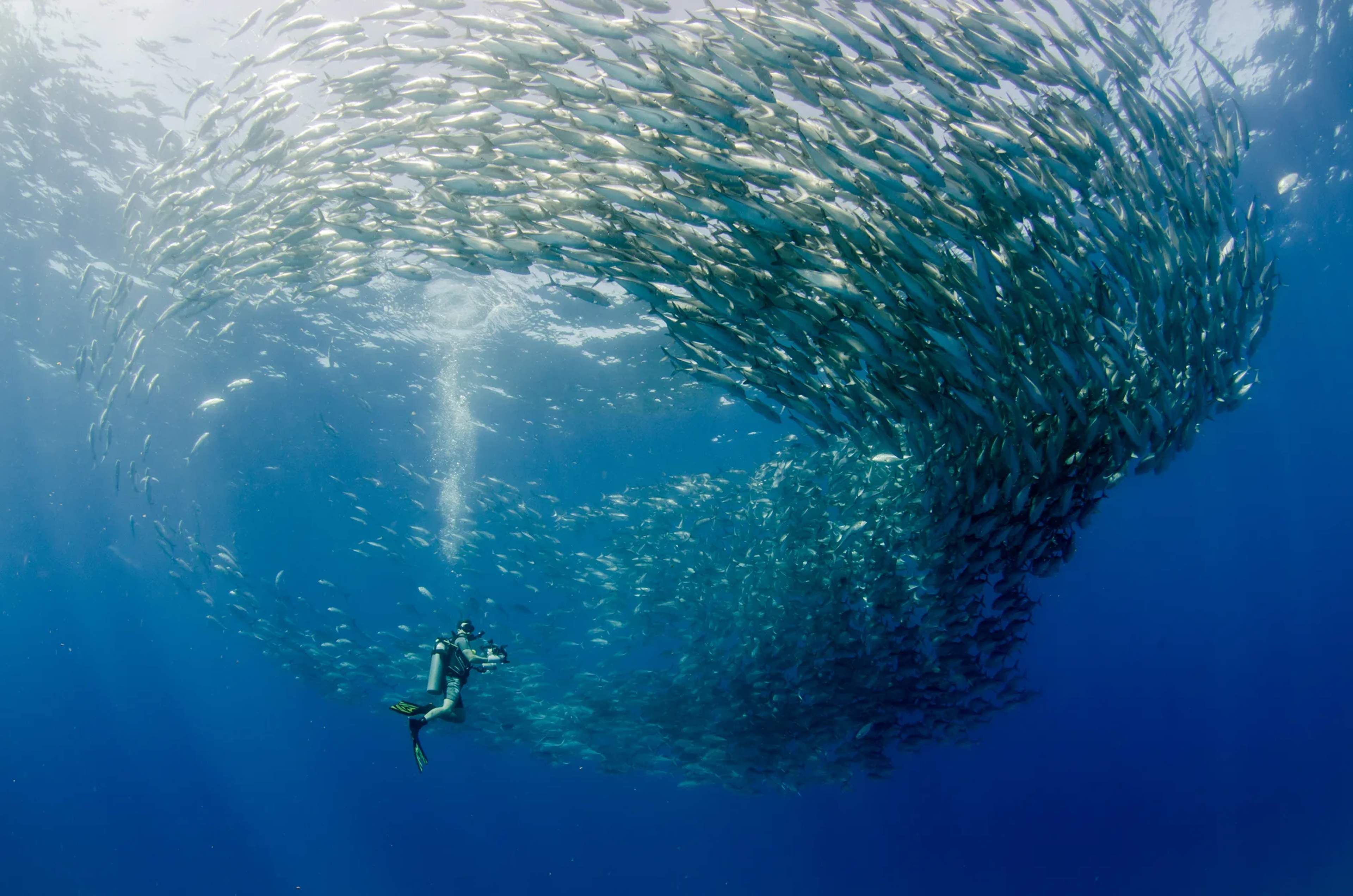
The bay's volcanic rock walls, white coral formations, and golden sea fans create two distinct snorkeling zones within the same cove. The rocky outcrops at both ends hold dense concentrations of reef fish: King Angelfish schooling tight against the rock faces, Sergeant Majors in thick clouds, parrotfish, Moorish Idols, butterflyfish, and wrasses weaving through the formations.
The sandy center of the bay delivers a different kind of sighting. Eagle rays and spotted rays glide across the bottom. Sea turtles appear with satisfying regularity; five species inhabit the Sea of Cortez, all currently listed as endangered. Moray eels shelter in the rock, and pufferfish hover near the reef edges.
The Sea of Cortez ecoregion is home to 891 fish species, 39% of all marine mammal species on Earth, and 11 species of whale. Jacques-Yves Cousteau called it "the aquarium of the world," and that's the ecosystem you're entering when you put on a mask here.
When to Plan Your Visit
Here's a detail most guides gloss over: the warmest water and best underwater visibility don't coincide with Cabo's peak tourist season. Understanding this tradeoff is the key to timing your trip right.
December through April brings the classic Cabo weather, dry, sunny, and warm on land. Water is cooler during this stretch, and this is also when humpback and gray whales pass the area, making it prime time for marine mammal sightings. A light wetsuit is recommended for the coldest months.
July through October is a strong stretch for snorkeling. Water is warm, and visibility is typically strongest. October stands out as a particularly appealing month, with warm water, fewer crowds, and a better balance than September for many travelers.
May and June offer a compelling middle ground. Conditions are often strong for both snorkeling and sightseeing.
Getting There and What to Bring
Santa Maria Bay sits at approximately Km 12–13 of Highway 1 along the Tourist Corridor, about a 15 to 20 minute drive east of Cabo San Lucas. Watch for the highway sign reading "playa santa maría." A free parking lot is about a quarter mile off the road, not beachfront, and rideshare services operate throughout the corridor.
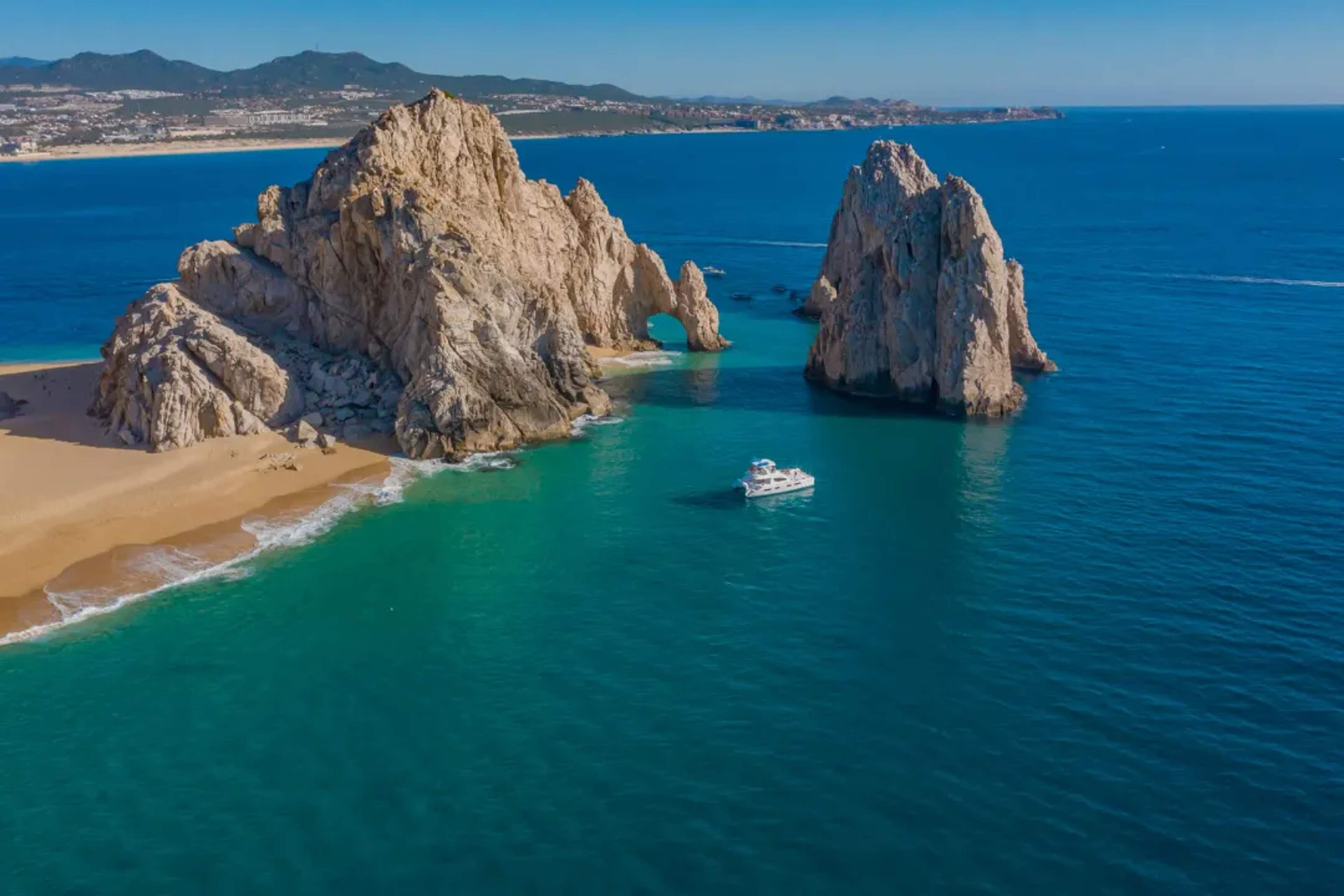
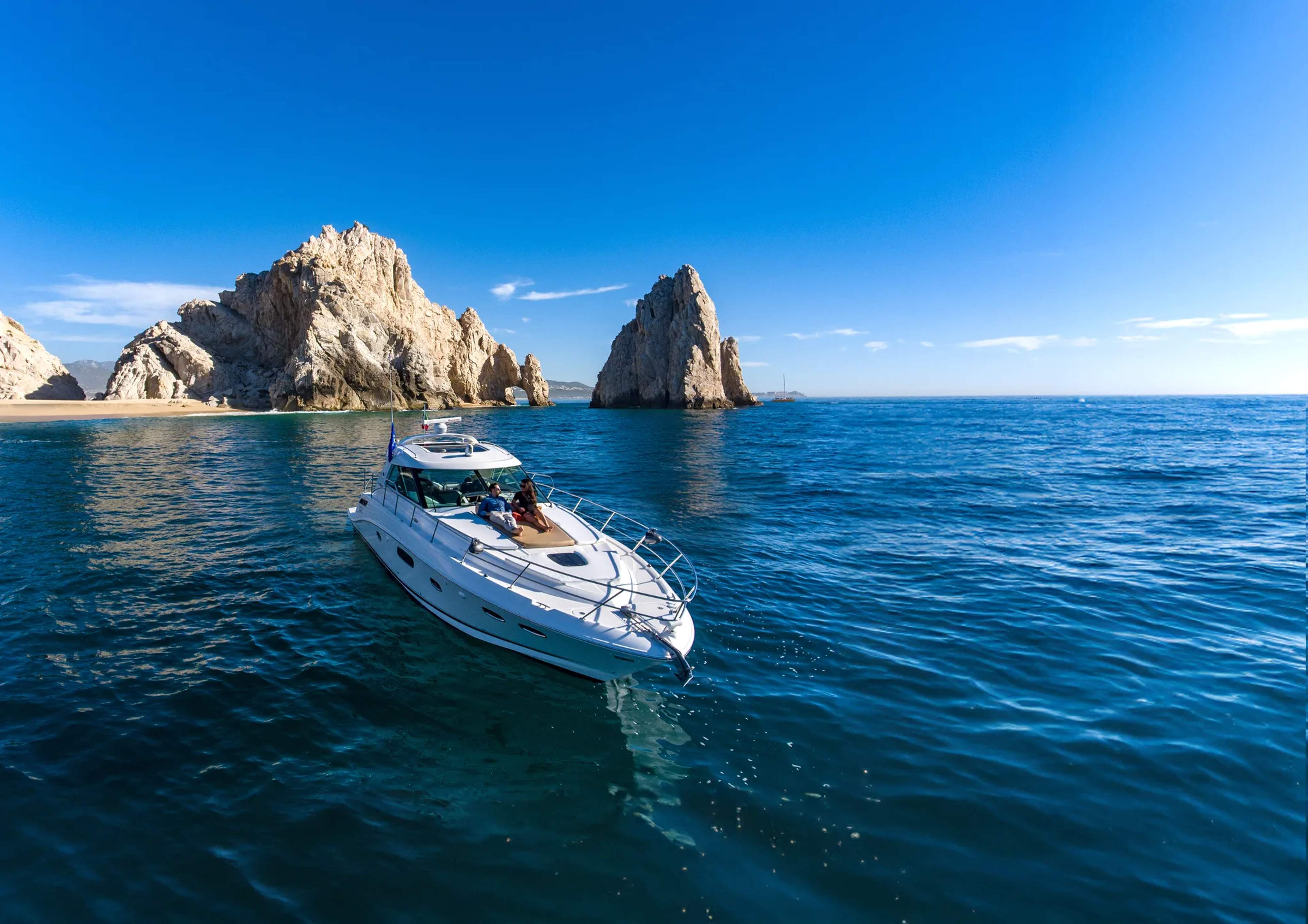
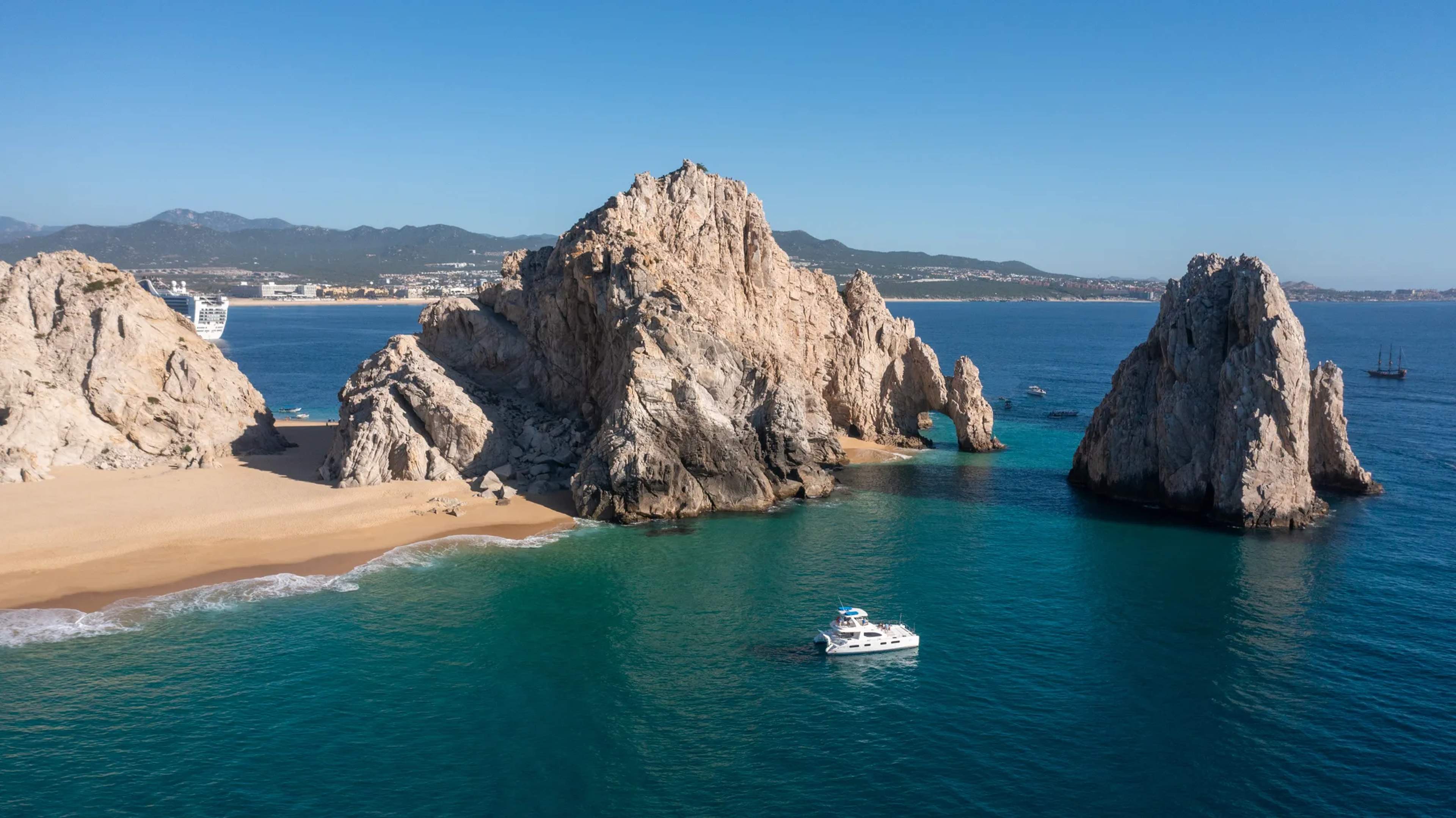
Arriving by boat from the Cabo San Lucas Marina district is the other common approach, and it's how many visitors combine Santa Maria Bay with highlights like the Arch, Land's End, and the sea lion colony.
The sand here is coarse, rice-grain sized and closer to pebbles than powder. Water shoes are not optional, especially for children. Bring plenty of drinking water and snacks, as on-site food vendors are not guaranteed.
Palapa shade structures are available but limited. Getting there early secures one; a personal beach umbrella is smart backup. Restrooms, public showers, and lifeguards are on site. Bringing your own snorkel gear is the safest bet.
Where Exactly to Snorkel
Head for the rocky areas at either end of the bay. That's where volcanic rock meets water and where fish schools are densest. The center of the bay, with its sandy bottom, is where rays and turtles tend to cruise.
Morning hours consistently deliver the best conditions: calmer water, sharper visibility, and fewer boats. Arriving early gives you the clearest, quietest window. If you'd rather have the beach to yourself with less focus on snorkeling, midafternoon is ideal.
One safety note for the rocky ends: incoming waves can push swimmers into sharp coral. Stay aware of surge near the formations and enter the water from sandy areas, not rocky sections.
How It Compares to Chileno Bay and Pelican Rock
Cabo snorkeling spots each deliver a genuinely different underwater environment.
Santa Maria Bay offers vertical rock wall snorkeling, swimming through dense fish schools pressed against the formations. It's the top pick for marine diversity and that "swimming inside a fish tank" feeling. The protected cove keeps conditions calm and accessible.
Chileno Bay features horizontal finger reefs separated by sandy channels with sea grass. It's often a strong option for waders and non-swimmers.
Pelican Rock sits in more exposed, open water with an active sea lion colony nearby, the only one of the three where you can snorkel near sea lions. But conditions are choppier, boat traffic is heavier, and it's boat-access only.
For families and first-time snorkelers, Santa Maria Bay or Chileno Bay are the clear choices. For travelers who want all three in a single day, a multi-stop boat tour from the Marina district is the simple choice.
Tours That Include Santa Maria Bay
Two Cabo Adventures options put you on the water with gear, crew, and logistics handled.
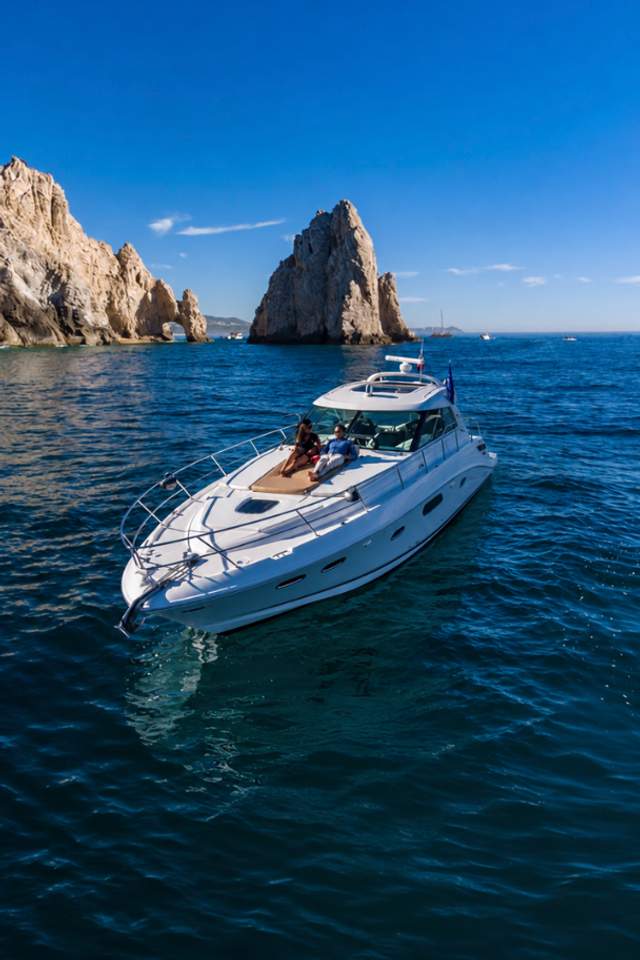
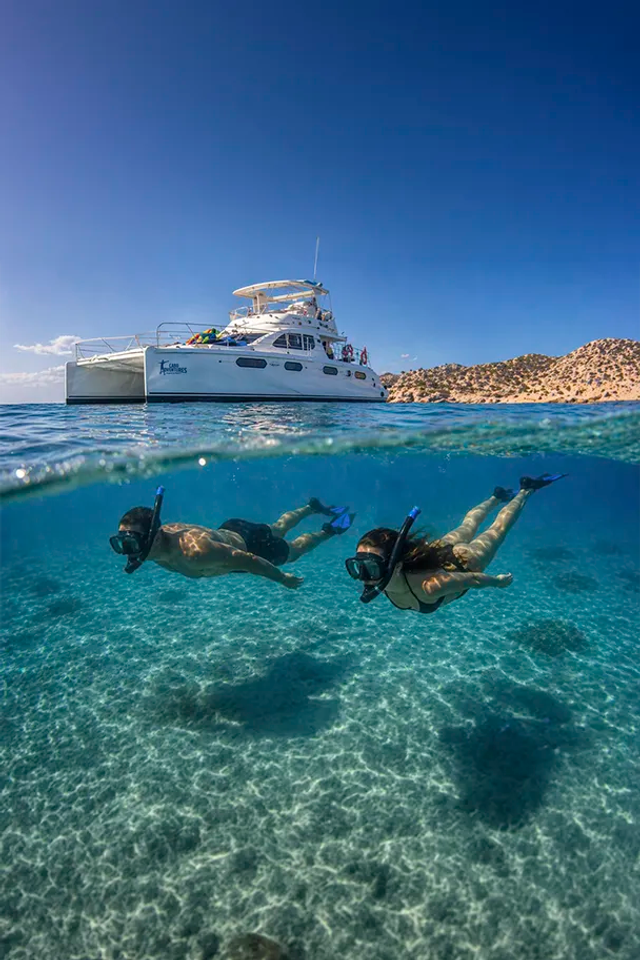
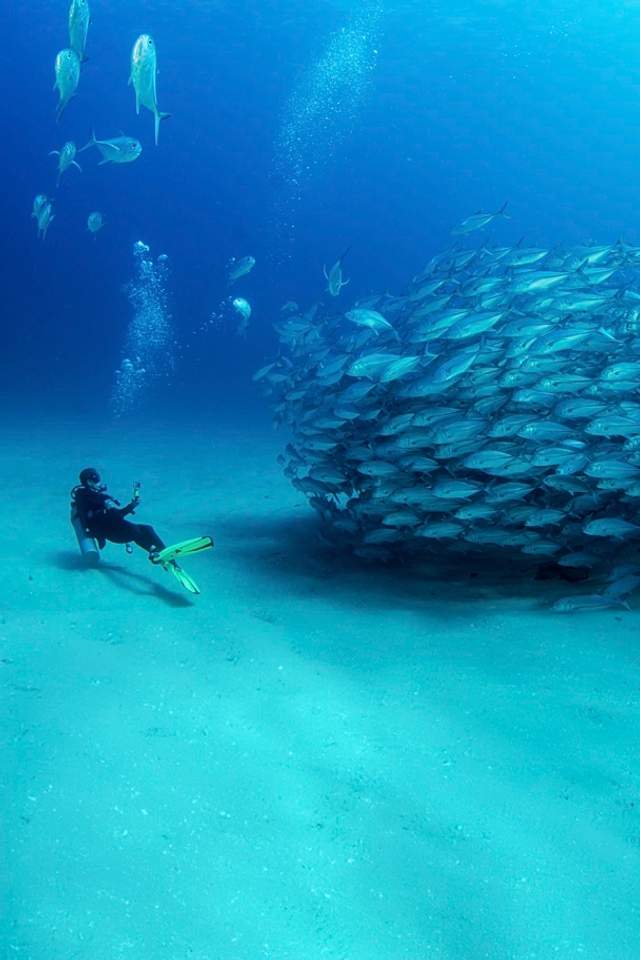
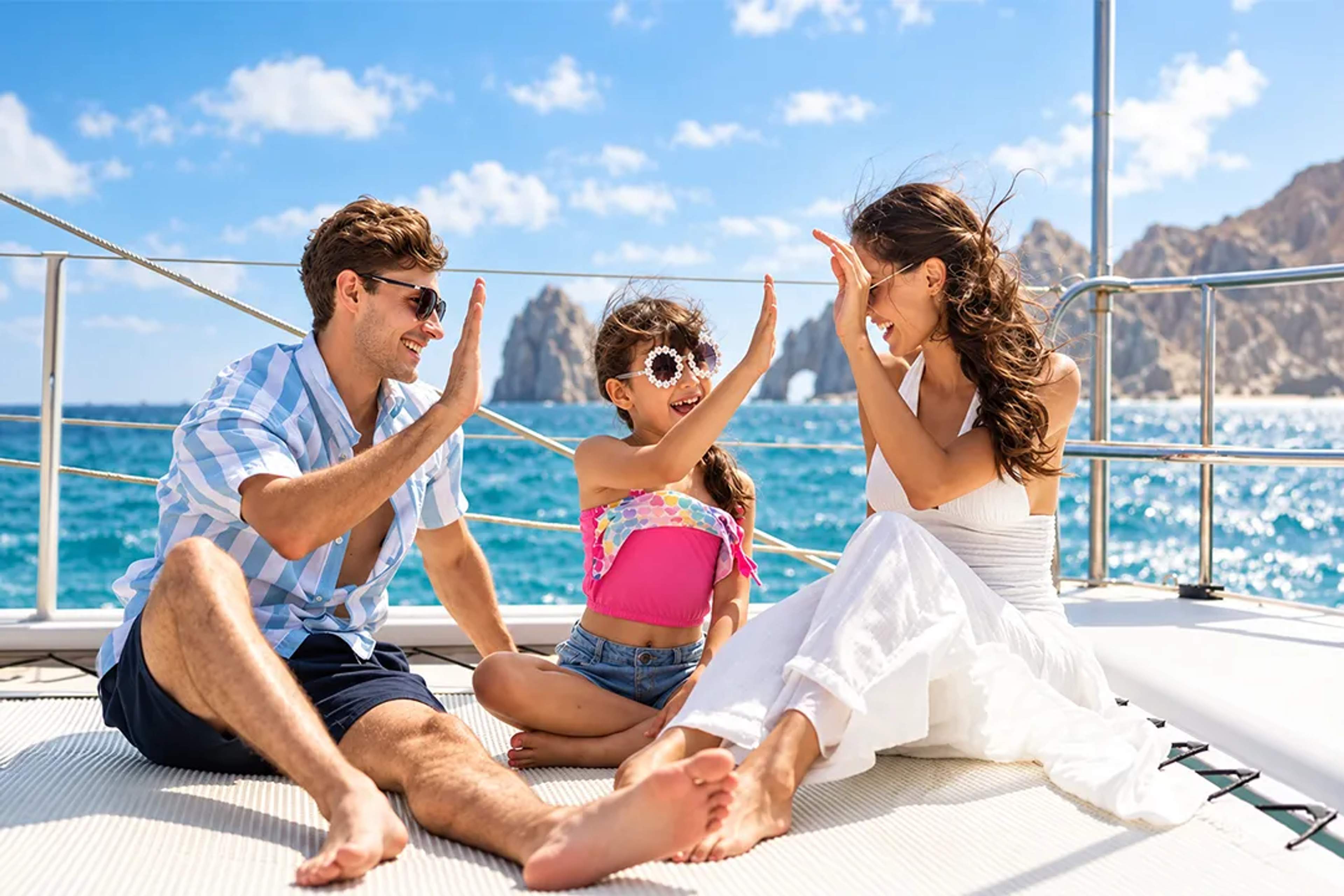
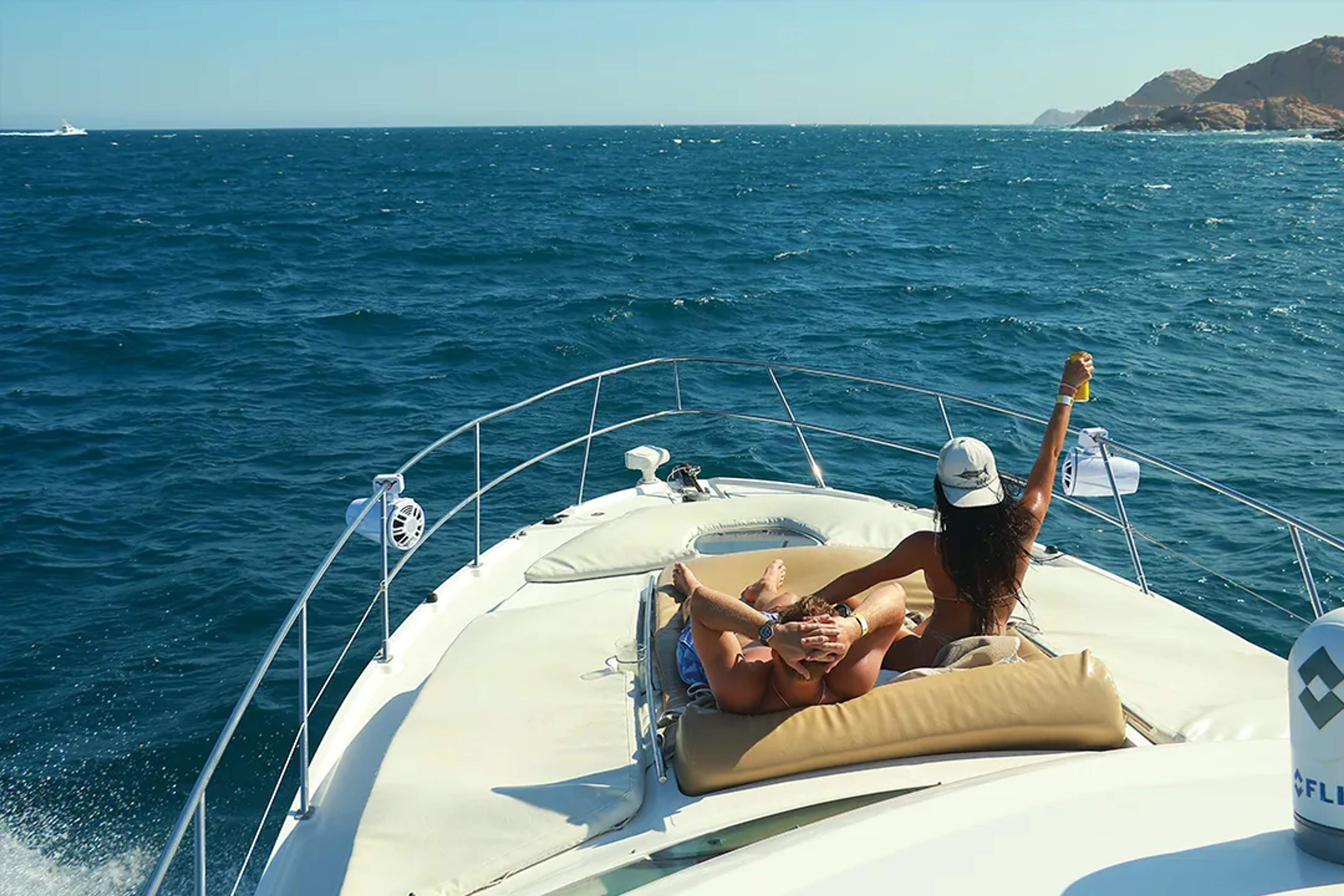
Cabo Yacht Charters & Catamarans is the tour where you can specifically request Santa Maria Bay as your destination. Choose from a fleet of six vessels, from a 40-foot VanDutch to a 51-foot double-deck Leopard Powercat, and build the day around your priorities. A bilingual crew, lunch, open bar, snorkeling gear, and paddleboards come standard. Whale watching is available December through April, and certified divers can arrange scuba diving through the travel advisors.
This is a private charter, so the itinerary is yours. Want to anchor in Santa Maria Bay for the morning, then cruise to the Arch for photos? Done. It's a strong fit for couples celebrating a milestone or small groups who want guaranteed access to the bay without sharing the vessel.
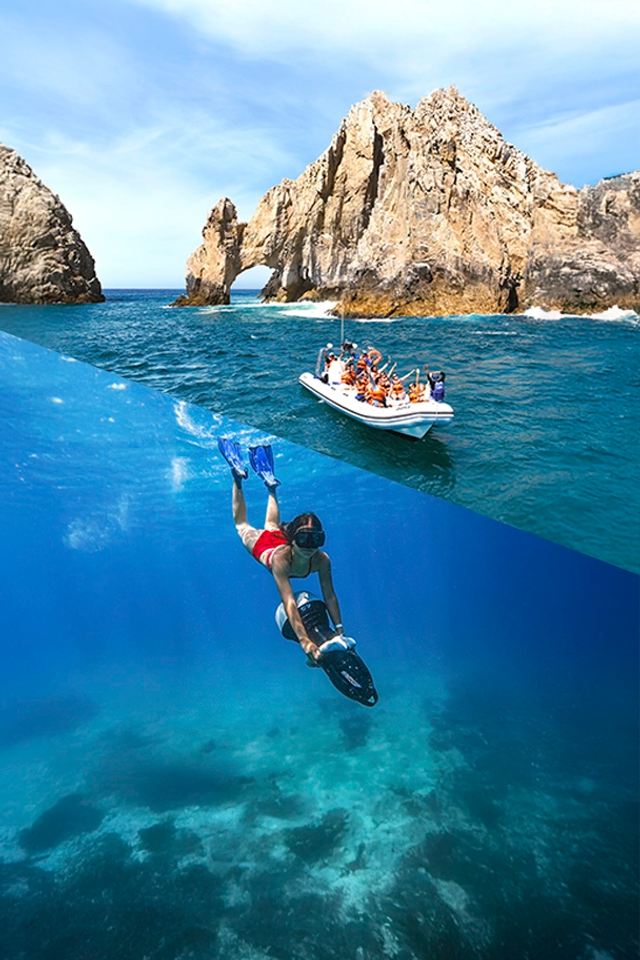
Cabo Snorkel & Land's End Arch packs Cabo's greatest hits into a three-hour speedboat tour. The route covers the Arch, Lover's Beach, Land's End, and the sea lion colony before heading to a snorkeling stop, with the location selected daily based on sea conditions, typically Chileno Bay, and sometimes Santa Maria Bay or another nearby site. Gear, kayaks, paddleboards, and underwater sea scooters are all included, with handmade quesadillas and drinks to close the day.
This one works well for active families and first-timers who want the full Cabo sightseeing circuit combined with time in the water, all in a single morning.
Protecting What Makes the Bay Worth Visiting
The marine life at Santa Maria Bay didn't happen by accident. Federal protection since 1973 created the conditions for the reef and fish populations to thrive. For context, nearby Cabo Pulmo National Park saw fish populations increase by approximately 460% after protection, one of the largest marine reserve recovery responses ever recorded.
Responsible snorkeling here means wearing a rash guard or UV-protective clothing in reef areas. It means never touching the reef; single contact can harm years of coral growth. And it means not feeding, chasing, or collecting marine life or shells.
The conservation stakes in this region are real. The Sea of Cortez UNESCO World Heritage Site was placed on the List of World Heritage in Danger in 2019 due to the critical situation of the vaquita, a porpoise endemic to the Sea of Cortez. Every visitor who treats this water with care contributes to the long-term health of an ecosystem that has supported marine life for millions of years.
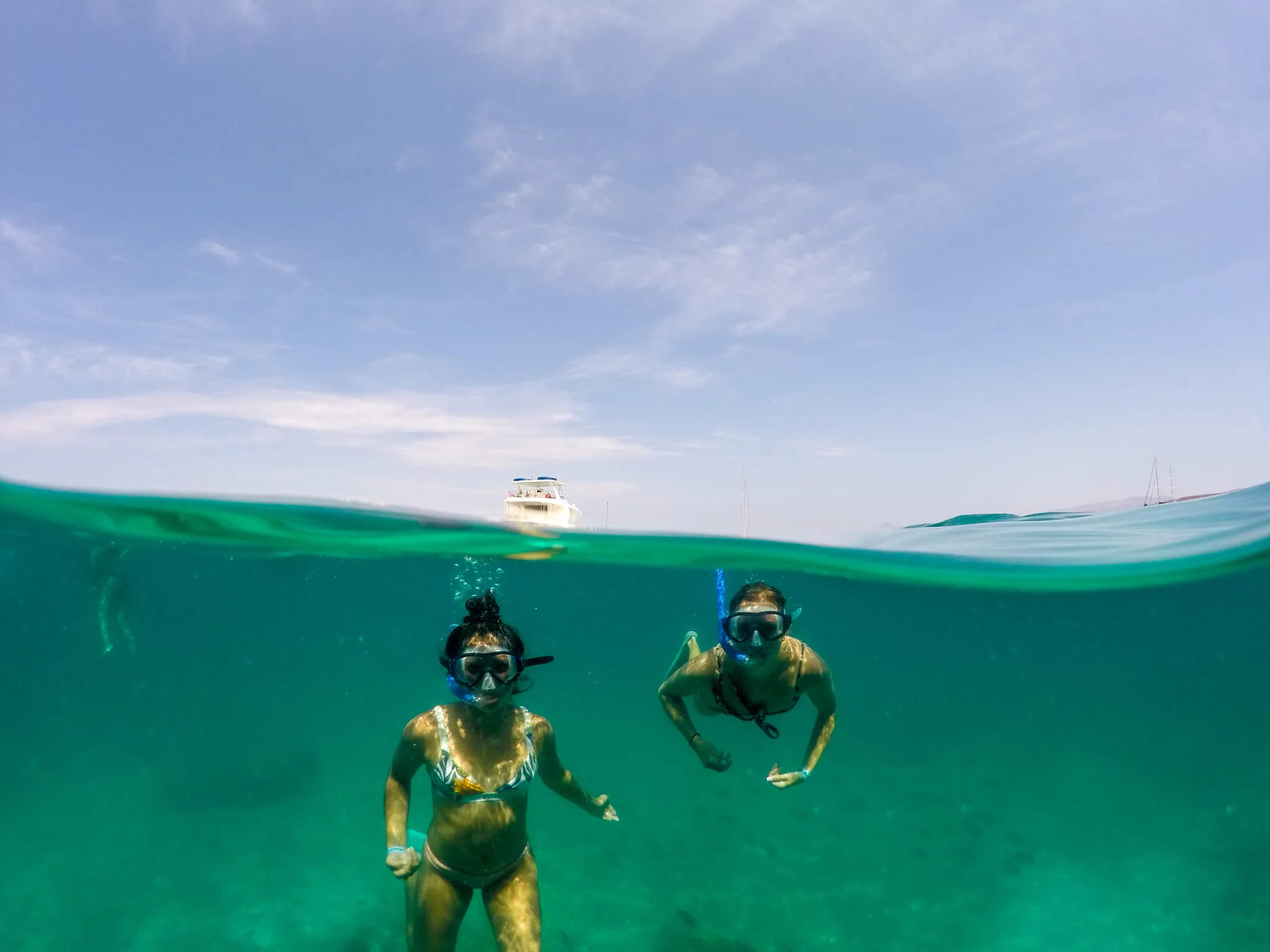
Quick Tips Before You Go
Gear: A well-fitting mask with anti-fog treatment, fins that stay snug when you lift your heel, and a flotation vest regardless of swimming ability. Test everything before you enter the water.
Sun protection: A rash guard is the most effective approach for face-down snorkeling. Cover exposed skin with sun-protective clothing whenever possible.
With kids: Practice mask breathing in a pool before the ocean. Size children's gear properly, dress them in bright colors for visibility, and establish hand signals before entering the water. Adults go in first and signal that conditions are safe.
Buddy system: Never snorkel alone. A partner who can call for help is the most basic and effective safety measure in the water.
Current awareness: If you feel a pull, swim diagonally, never fight it head-on. And if conditions feel beyond your comfort level, there's no shame in heading back to shore. The bay will be there tomorrow morning.