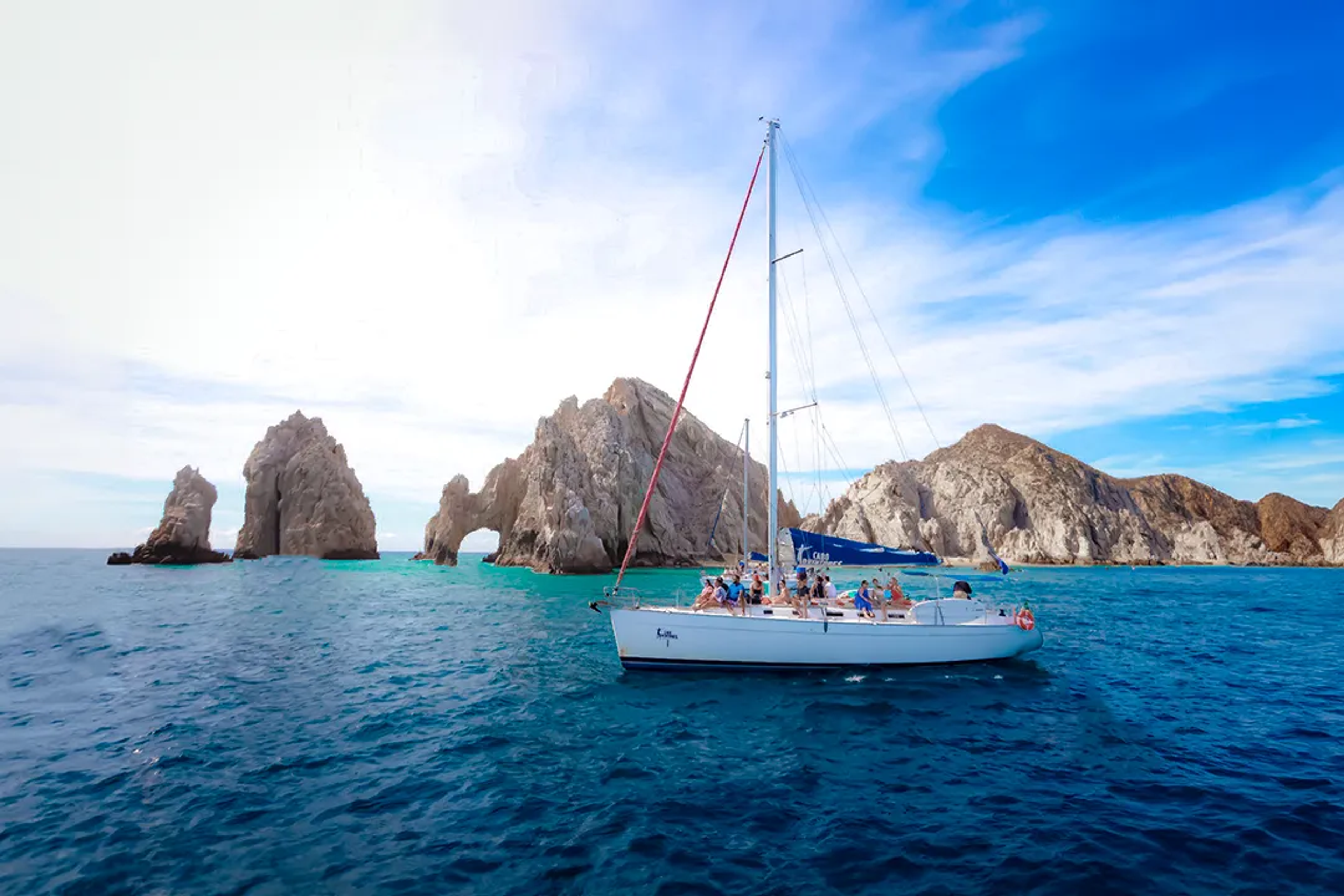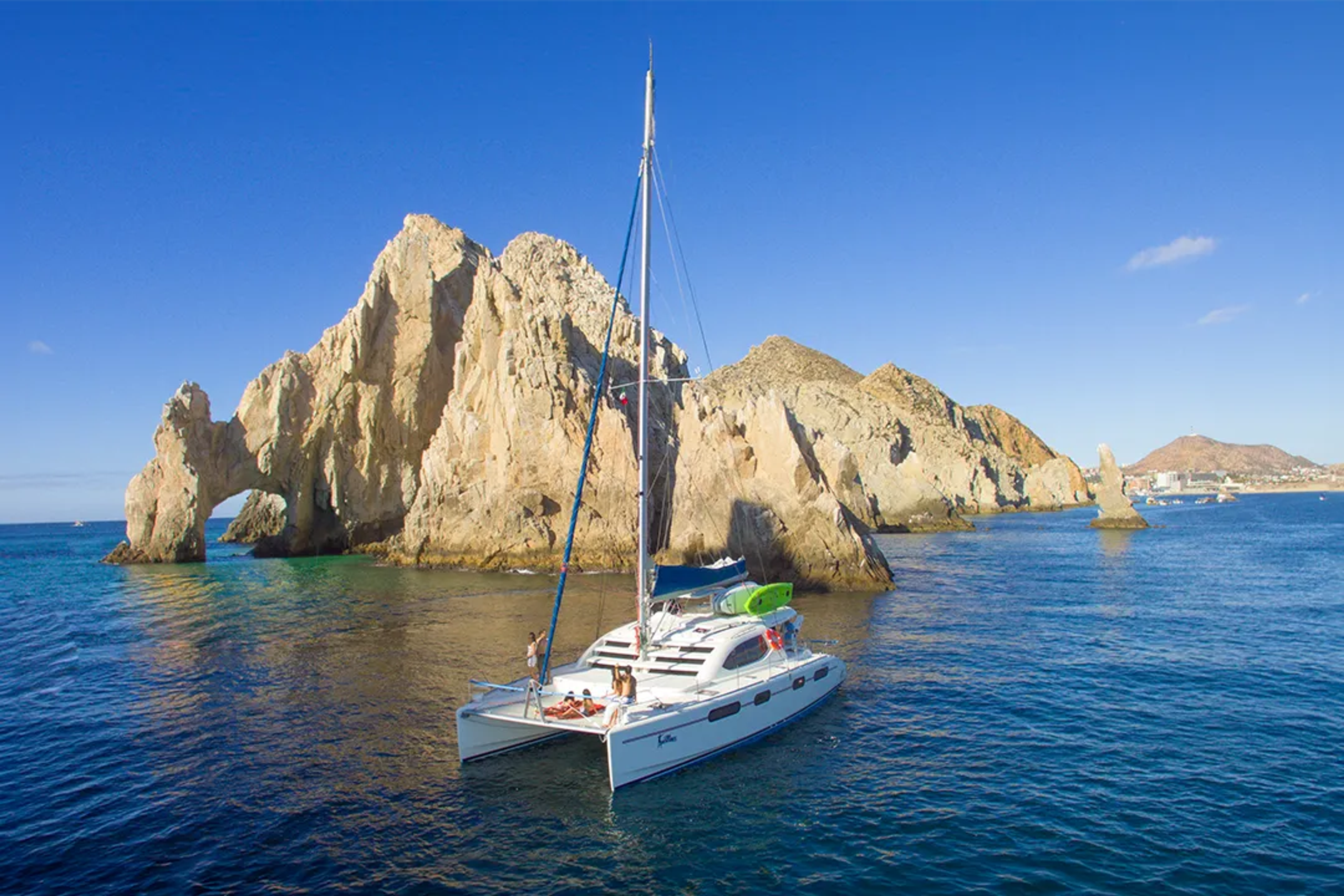
The Arch of Cabo San Lucas (El Arco) is a natural granite arch formation located at Land's End, the southernmost point of Mexico's Baja California Peninsula, where the Pacific Ocean meets the Sea of Cortez. This dramatic granite gateway rises approximately 60 feet (18 meters) above the waterline at low tide, standing as the defining landmark of the region.
If your Cabo trip so far has centered on pool views and resort restaurants, Land's End is where the destination reveals its real character. This is the point where two oceans collide, where desert cliffs drop straight into the sea, and where the natural world operates on a scale that makes everything else feel small. What waits here—above and below the water—is worth the short boat ride from the Marina.
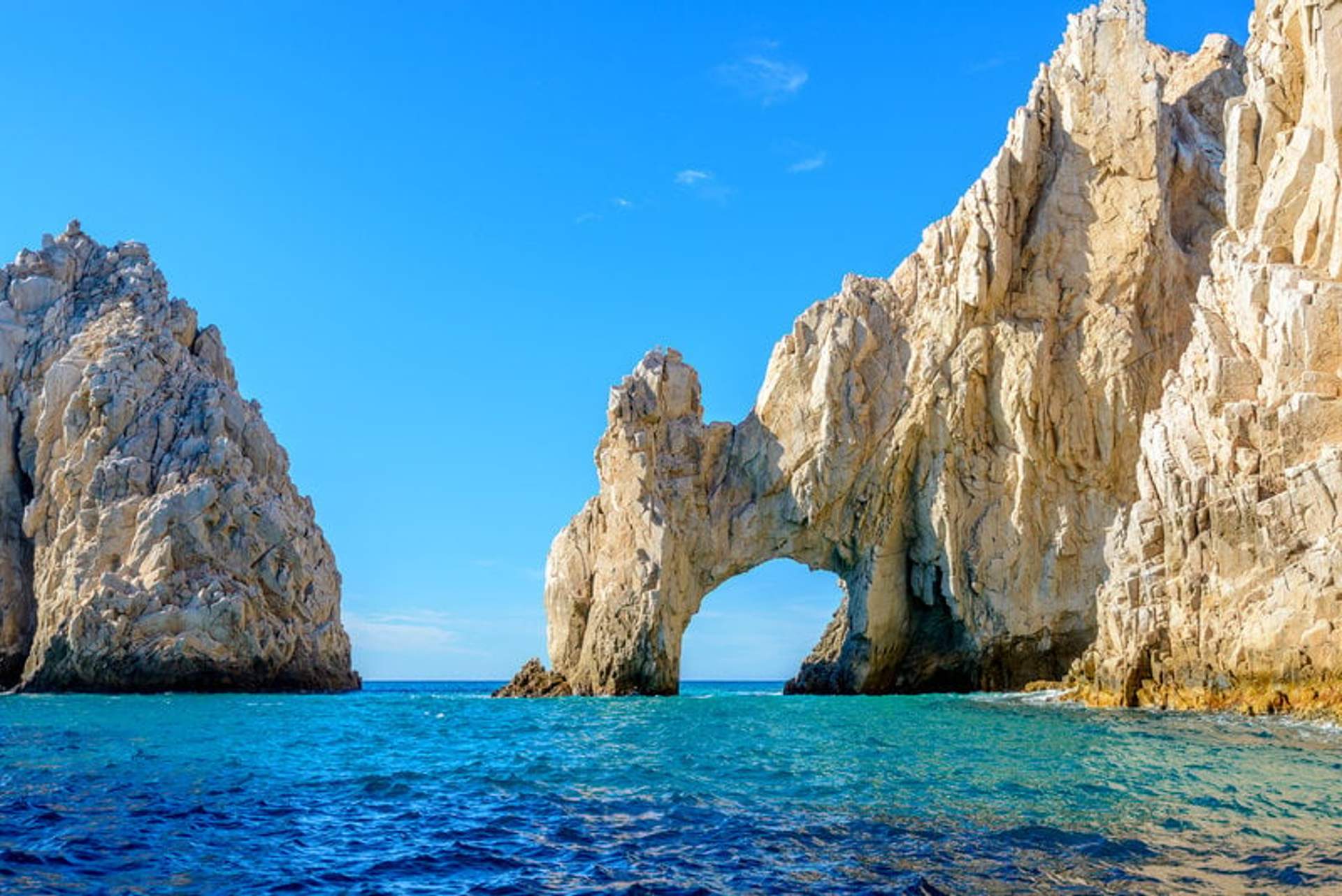
How the Arch Was Created
El Arco began developing over 30 million years ago through erosional sculpting of much older granite. The bedrock dates to the Cretaceous Period—specifically Upper Cretaceous granite that is part of the Peninsula Range batholiths, stretching from Cabo northward through Baja California and into the United States.
Millions of years of wave action, wind erosion, and tidal forces exploited natural weaknesses in this granite, carving the gateway we see today. The arch's position—where the placid Sea of Cortez sits on one side and the Pacific Ocean's powerful waves dominate the other—created ideal conditions for differential erosion to sculpt such a dramatic formation.
The indigenous Pericú people who inhabited southern Baja before European contact are believed to have considered El Arco a spiritually significant site. According to local legends, the Pericú regarded this gateway as a threshold marking the entrance to the spirit world—where the physical realm gave way to something beyond at the literal end of the land.
Land's End sits at the southern entrance to the Sea of Cortez, whose islands and protected areas hold UNESCO World Heritage status as the Islands and Protected Areas of the Gulf of California. This Pacific-Cortez convergence generates nutrient-rich upwellings that create one of the planet's most biodiverse marine environments.
How to Get to the Arch of Cabo San Lucas
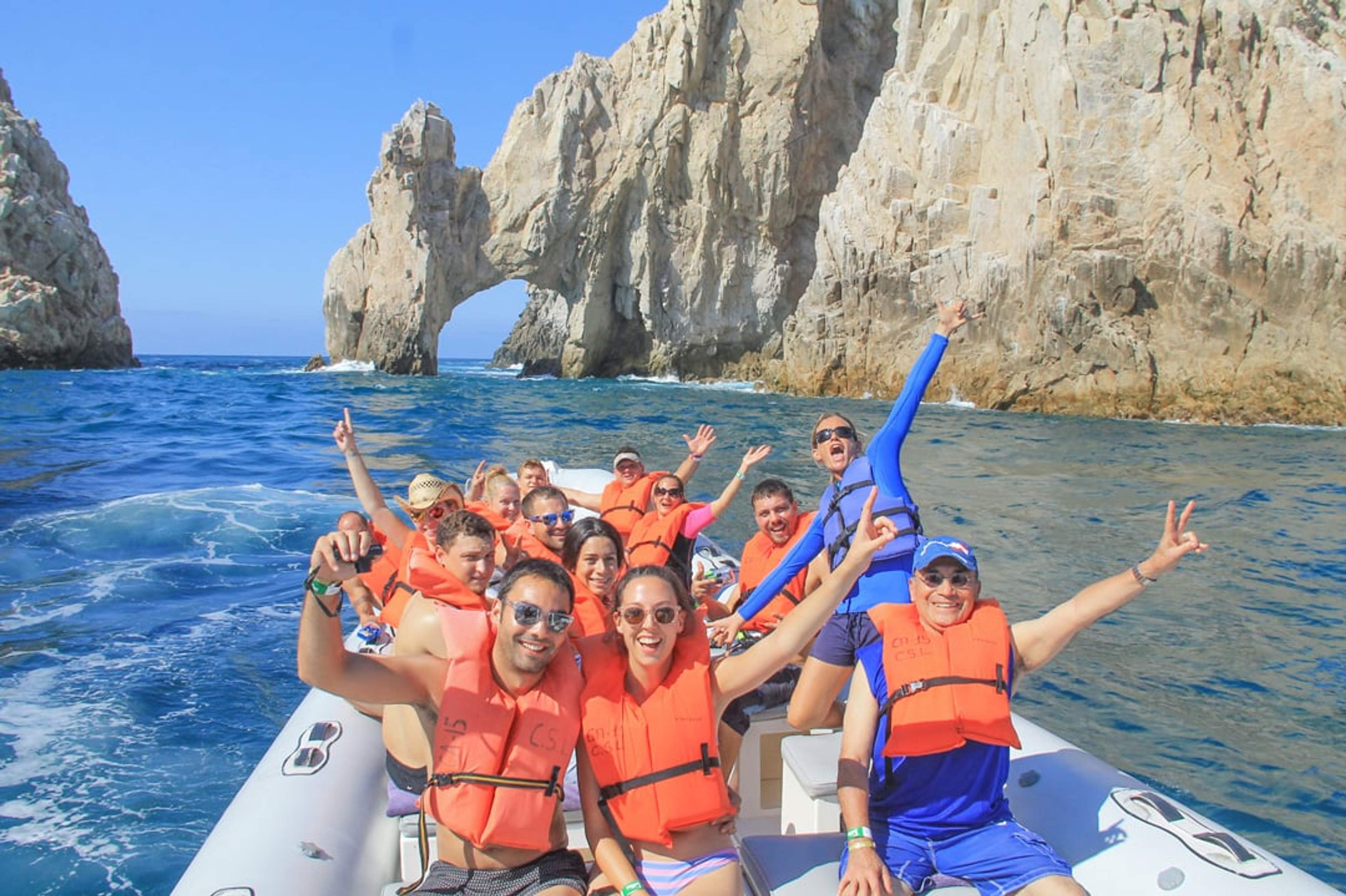
There is no road access to the Arch—you can only reach it by water. The most common independent option is a water taxi (panga) from Cabo San Lucas Marina, approximately 10 minutes each way and around $20 per person. Confirm your return pickup time since you'll have no alternative transportation once at Land's End.
Guided tours offer another way to reach the Arch with added experiences like snorkeling, sailing, scuba diving, or cultural stops in downtown Cabo. These depart from the Marina and handle all logistics, making them a good fit for visitors who prefer a structured experience with equipment and guides included.
Lover's Beach and Divorce Beach
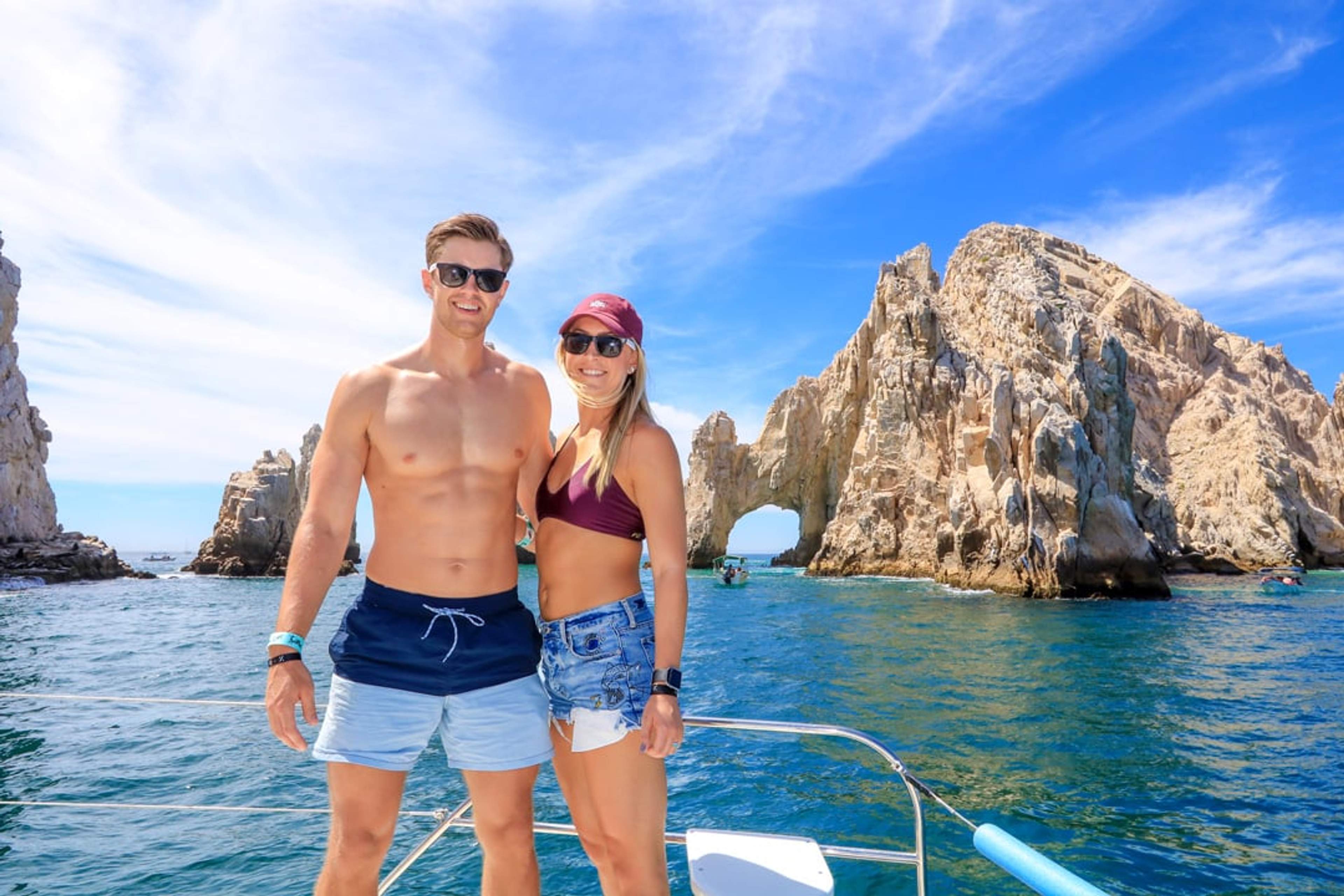
These two beaches sit back-to-back on the same narrow strip of sand at Land's End, yet couldn't be more different. Lover's Beach faces the Sea of Cortez, offering turquoise, glass-calm water safe for swimming and snorkeling.
Only reachable by boat, it has a secluded, almost private feel—couples often find a quiet stretch of sand with the Arch looming overhead, making it one of the most romantic shorelines in Los Cabos. Divorce Beach, facing the Pacific, presents powerful surf suitable only for observation. Swimming at Divorce Beach is genuinely dangerous—powerful undertows and rip currents are deadly regardless of surface appearance, even for strong swimmers.
Both beaches have zero facilities—no restrooms, food vendors, or shade. Allow 2-3 hours and arrive early.
Best Time to Visit the Arch
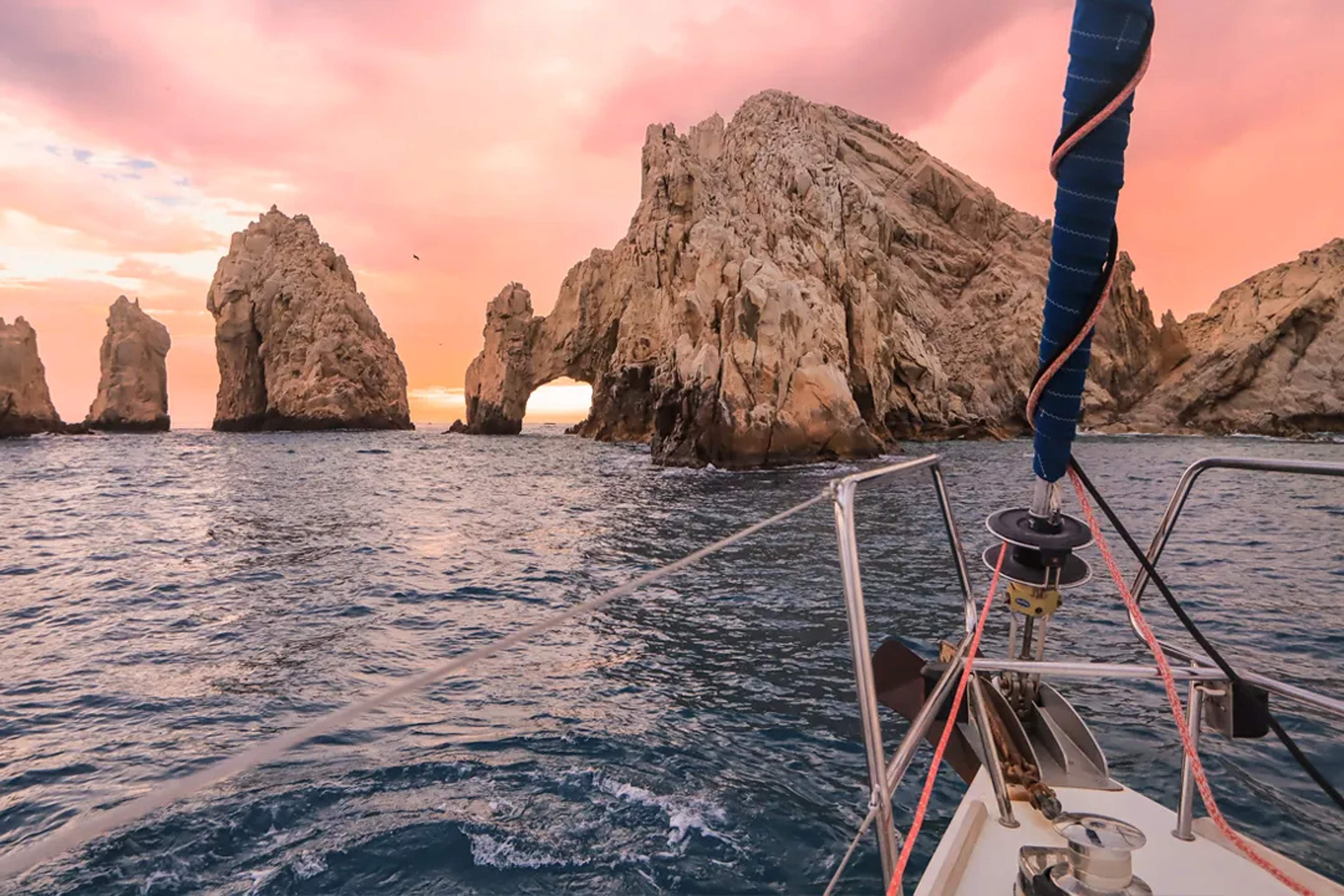
Time of Day: Early morning at sunrise delivers the best experience—ideal photography lighting with sun behind you, calm water for boat access, minimal crowds, and comfortable temperatures. Late afternoon roughly an hour before sunset offers a worthy alternative with golden-hour light and thinning crowds. Sunset is also the most romantic time on the water, when the sky shifts through amber, pink, and violet behind the granite spires.
Season: May through June and October through November balance pleasant weather with fewer tourists. The dry season (November-May) delivers exceptional stability with essentially zero rainfall. Winter months bring daytime temperatures around 77°F.
Marine Life at Land's End
The waters around the Arch support extraordinary biodiversity thanks to the Pacific-Cortez convergence. The Sea of Cortez ecosystem supports more than 900 fish species and 32 marine mammal species, and Land's End sits at the heart of this richness.
Sea Lions: California sea lions maintain colonies on rocky outcroppings year-round, with peak presence November through April. Underwater, they transform from clumsy rock-dwellers into agile acrobats—one of the most memorable wildlife experiences in Los Cabos.
Tropical Fish and Pelican Rock: Pelican Rock is the most popular snorkeling site near the Arch, with shallow protected water, high fish density, and frequent sea lion encounters. Its calm conditions make it the go-to spot for snorkelers of all ability levels. King angelfish, butterflyfish, and parrotfish can be spotted among rocky crevices year-round.
Dolphins and Rays: Dolphins appear year-round near the Arch. Hammerhead sharks frequent deeper waters January to August (peak in May), while massive mobula ray migrations occur in the Cerralvo Channel from mid-April to July.
Whale Watching (December-April): Humpback whales are the dominant species near the Arch, with peak activity mid-January through mid-March when females calve. They display spectacular breaching, tail-slapping, and spy-hopping behaviors. Morning departures offer calmer seas and better spotting. Important: Gray whales migrate to breeding lagoons further north like Magdalena Bay—don't expect gray whale encounters near the Arch.
Best Ways to See the Arch of Cabo San Lucas
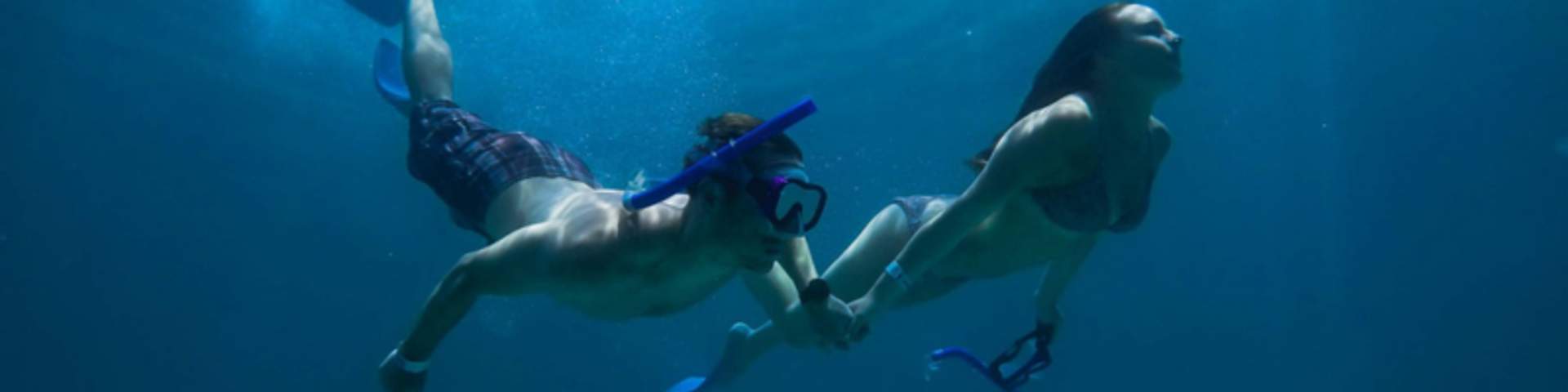
Snorkeling at Land's End
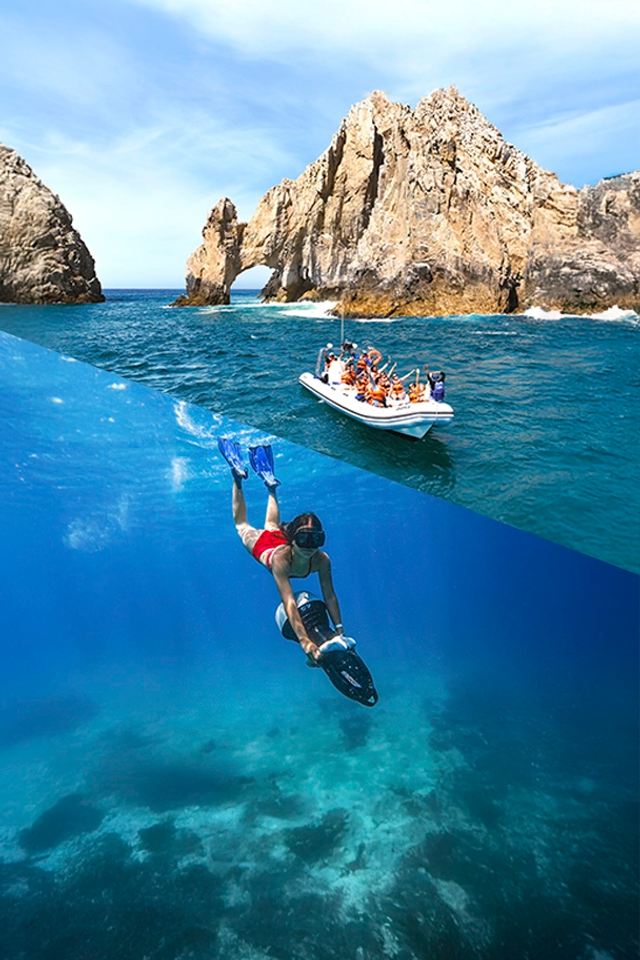
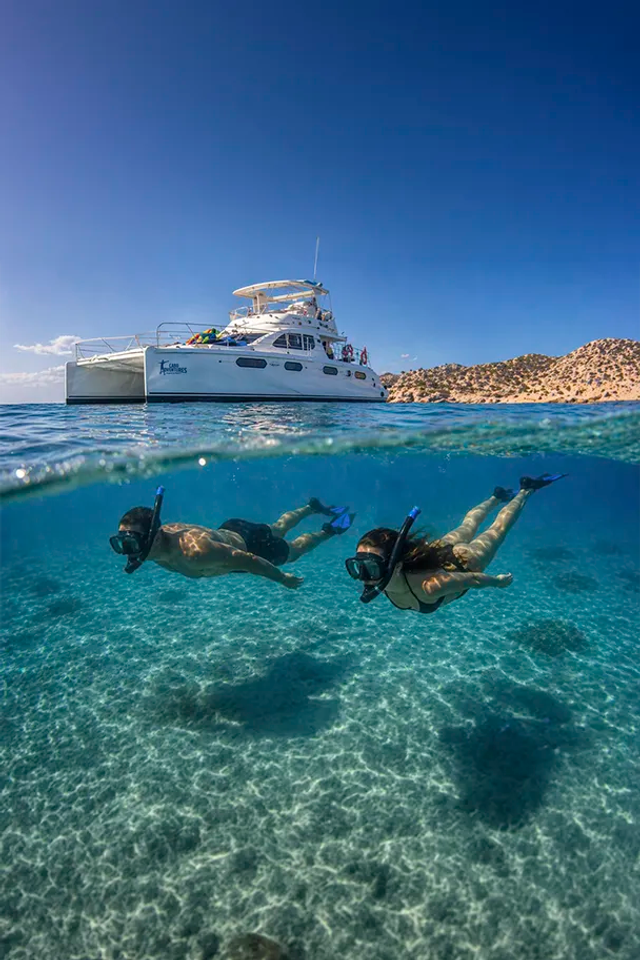
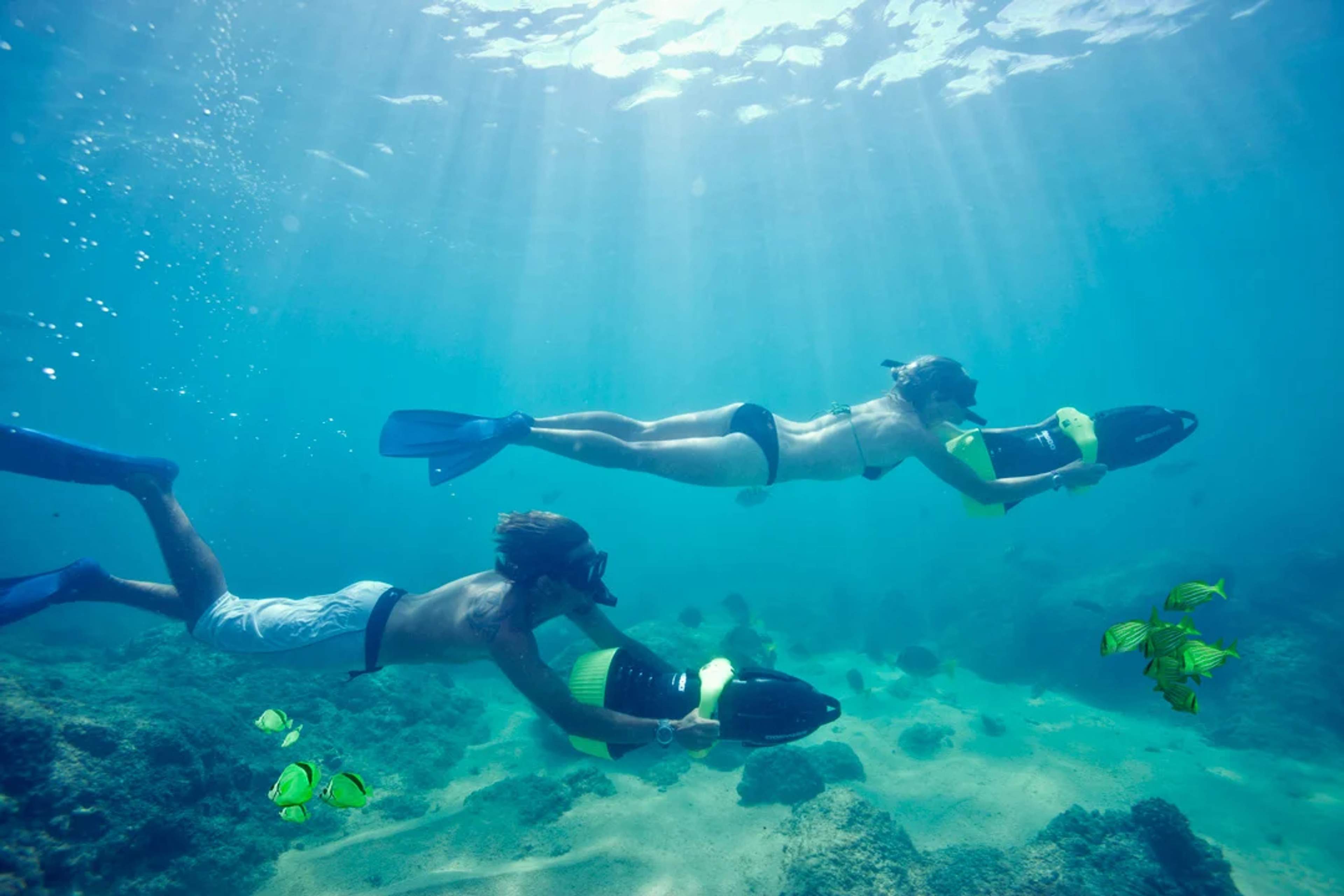
The calm, clear waters on the Sea of Cortez side offer some of the best snorkeling in Los Cabos. The area is also well suited for kayaking, stand-up paddleboarding, and power snorkeling with sea scooters. The experience works well for families with children five and older.
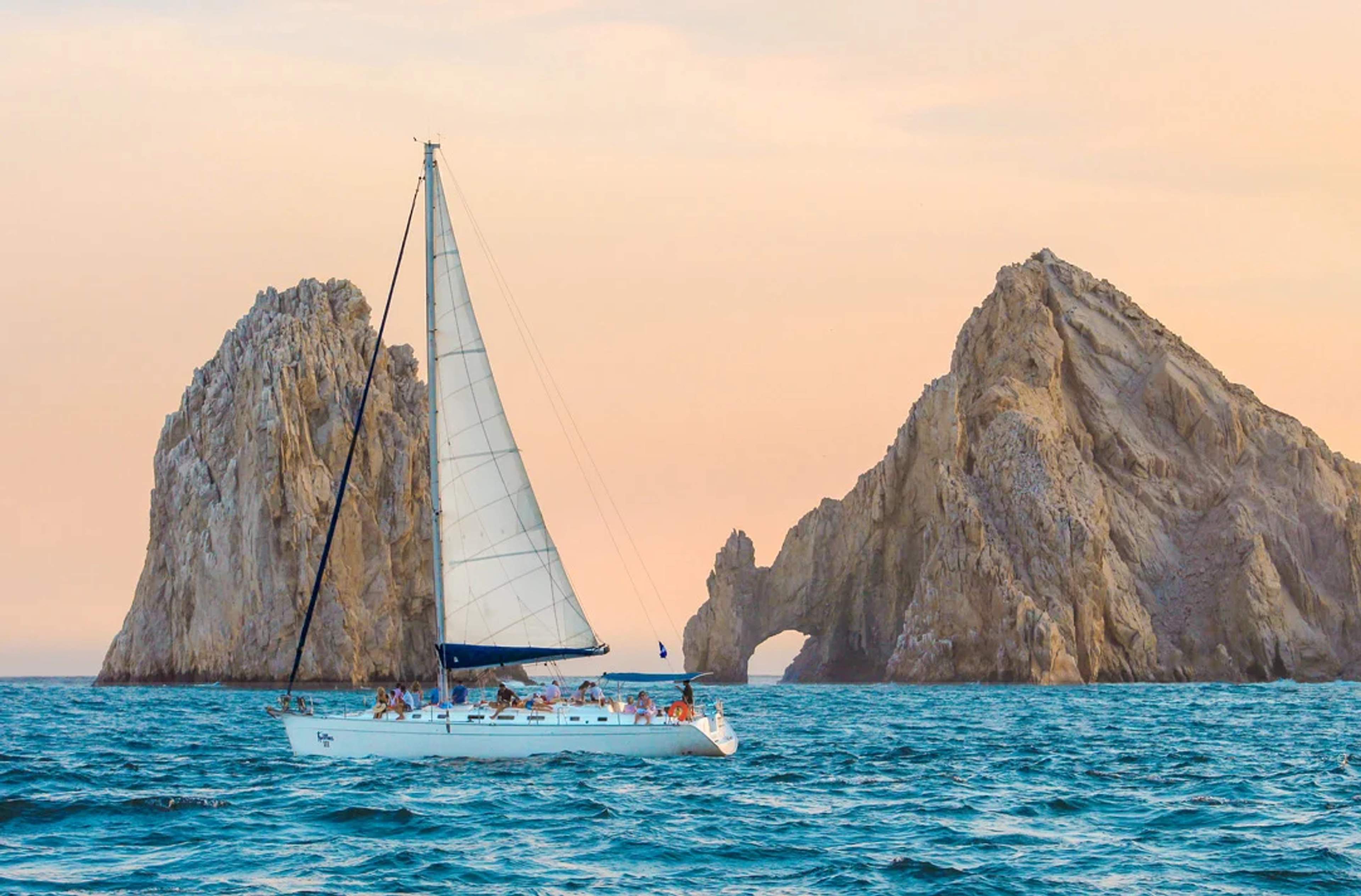
Sailing Past the Arch
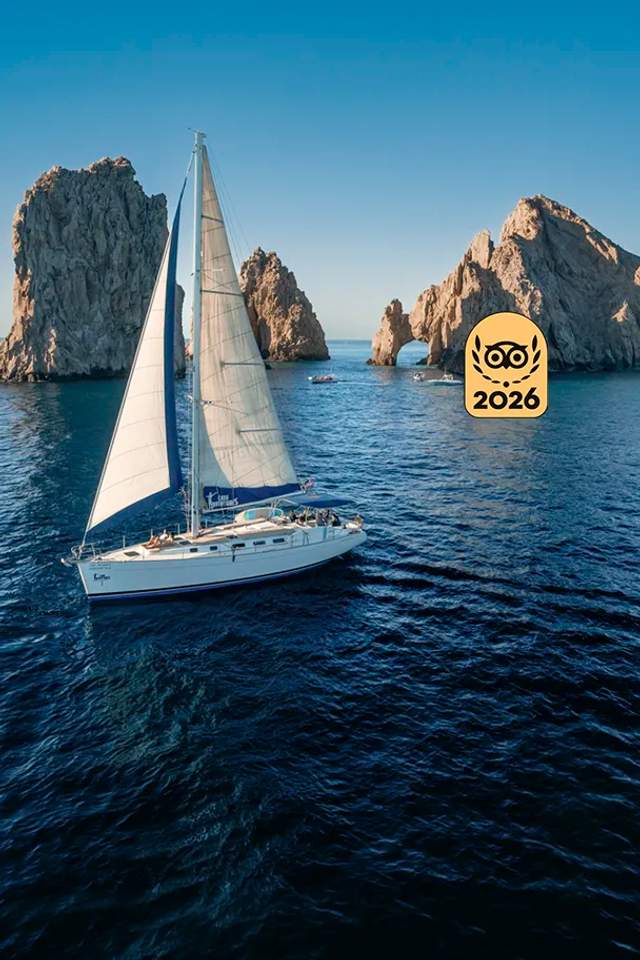
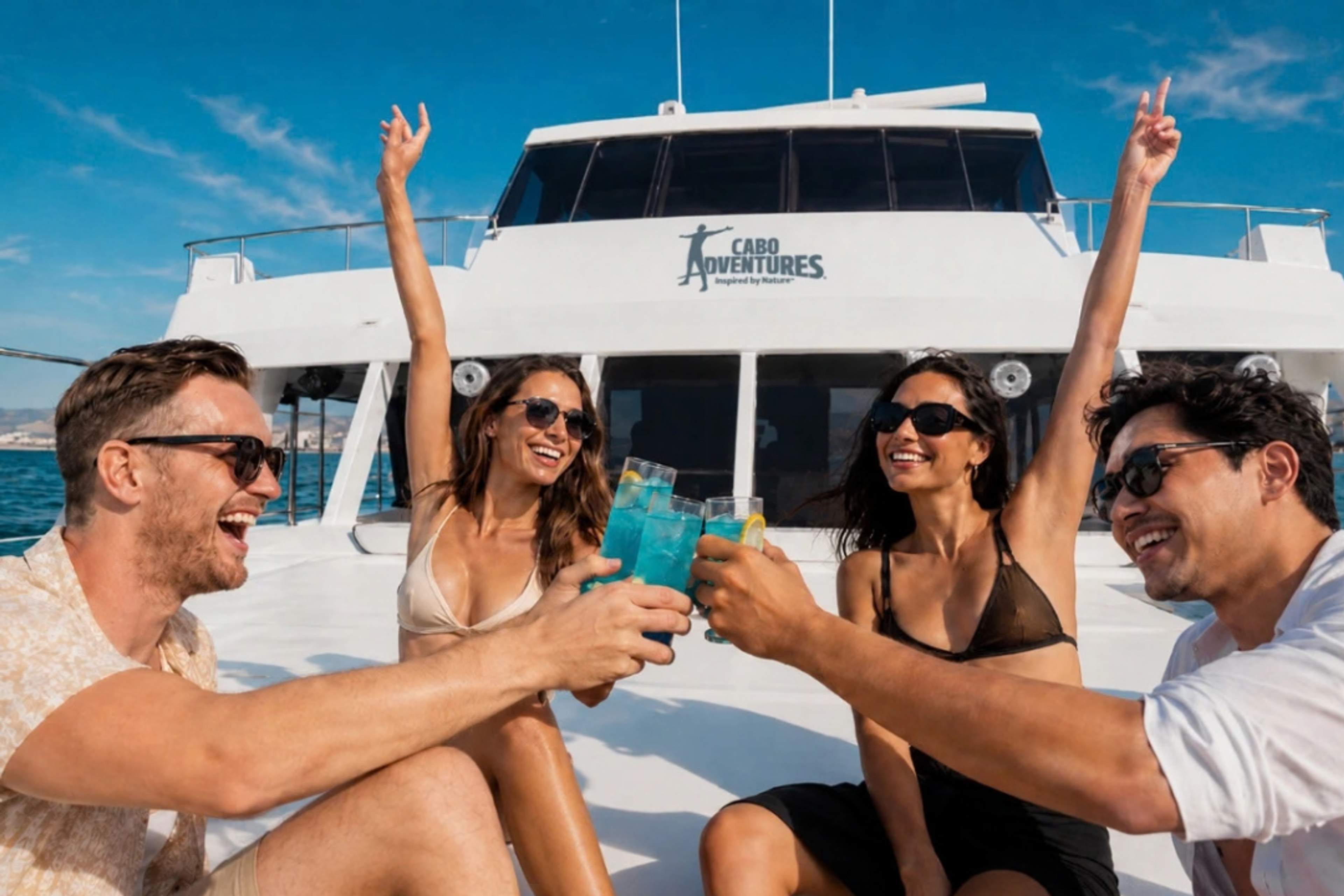
Sailing offers a slower pace past the Arch, Lover's Beach, and the sea lion colony before anchoring in a calm bay for snorkeling or paddleboarding. The unhurried rhythm—gourmet food, an open bar, wind filling the sails—creates the kind of afternoon that makes you forget about whatever's happening back at the resort. During winter months, keep watch for humpback whales and dolphins surfacing nearby.
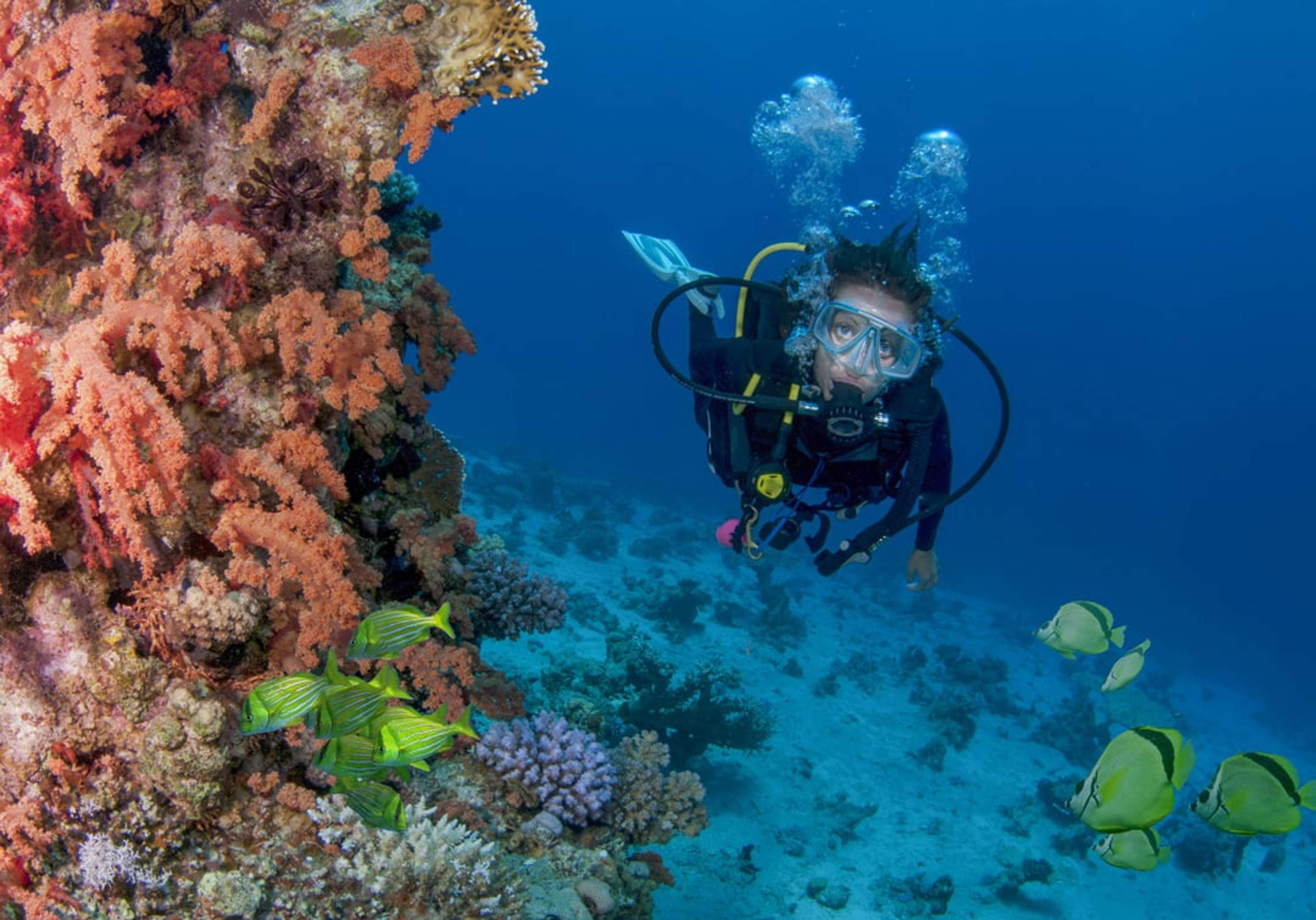
Scuba Diving the Submarine Canyon
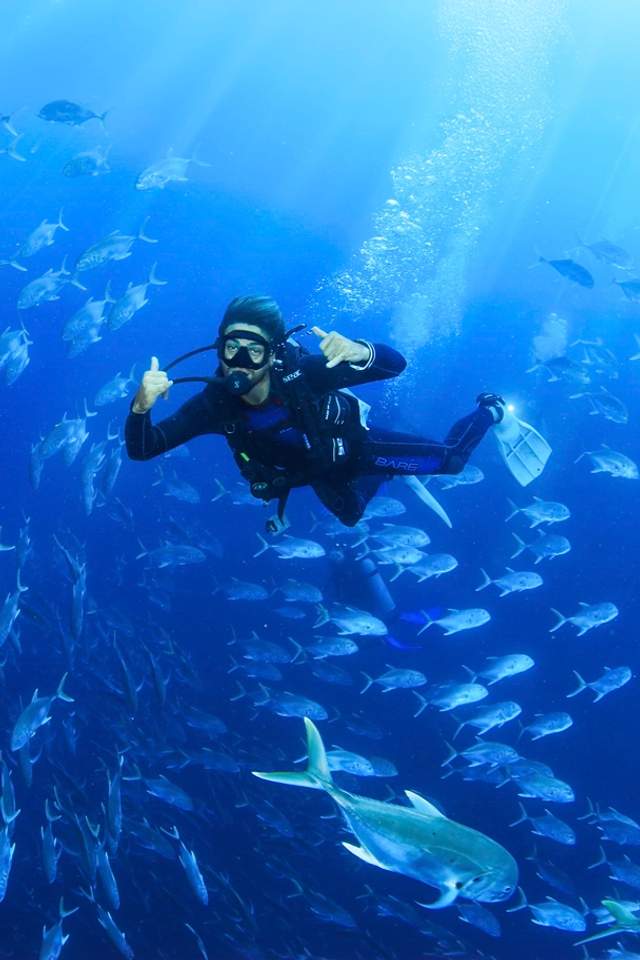
Certified divers discover a completely different landscape beneath the surface. A massive submarine canyon plunges over 2,000 feet, bringing deep-water conditions close to shore. Neptune's Finger presents dramatic vertical walls where schools of snapper congregate and the famous sand falls phenomenon creates visuals unlike anything in typical reef environments. Non-certified visitors can try introductory dives through PADI Discover Scuba programs, which require no prior experience.
Combining the Arch with Cabo's Cultural Side
The Pericú people considered El Arco a sacred site—the entrance to the spirit world where physical and spiritual realms converge. This symbolic importance endures today. Pairing the boat cruise with time exploring downtown Cabo's glassblowing artisans, pearl jewelry, tequila tastings, and the Marina Boardwalk reveals how the landmark connects to the region's living culture.
Recommended Tours at the Arch
Cabo Snorkel & Land's End Arch: This three-hour experience combines cruising past the Arch and sea lion colony with snorkeling, sea scooters, kayaking, and stand-up paddleboarding—all equipment included. Bilingual guides lead the way, making it well suited for active travelers and families with children five and older.
4-hour Luxury Cabo Sailing Boat Tour: A half-day balancing sightseeing with relaxation. After sailing past the Arch and sea lion colony, anchor in a calm bay for snorkeling and paddleboarding. Gourmet lunch arrives in bento boxes alongside an open bar. Choose between a sleek sailboat for intimate groups or a spacious catamaran for a social setting.
Cabo Whale Watching: Available December through April, marine mammal specialists guide you to active humpback whale areas aboard speedboats equipped with hydrophones—letting you listen to whale songs beneath the surface. Peak encounters occur mid-January through mid-March during calving season.
Luxury Cabo Sunset Cruise: Timed to golden hour, this cruise sails past the Arch and Land's End as the sky shifts through amber, pink, and violet. Gourmet appetizers and an open bar set the tone aboard a luxury sailboat or catamaran. Ideal for couples celebrating an anniversary or honeymoon, or anyone who wants the most romantic way to experience the Arch.
Photography Tips
Timing matters most. Sunrise puts the sun behind you for ideal front-lighting on the granite. Golden hour—one hour before sunset—delivers warm, dramatic light. Mid-morning (10-11 am) also works well with fewer crowds and calmer water.
Location: Lover's Beach provides close-up shots from the Sea of Cortez side. For the most dramatic perspective, shoot from across the bay with a telephoto lens to compress the scene against the Pacific backdrop.
What to Bring
Sun protection: Long sleeves, wide-brimmed hat, UV-blocking fabrics, and biodegradable sunscreen (reef-safe, free of oxybenzone and octinoxate)—conventional sunscreens damage the coral and marine life that make this area worth visiting
Footwear: Water shoes for rocky areas, non-slip soles for boats
Hydration: Bring your own water—dehydration sneaks up quickly
Cash: For water taxis and tips
Camera: Waterproof bag or case essential
Light layer: Mornings can feel cool, especially in winter
Snorkeling gear if visiting beaches independently
Plan Your Visit to Land's End
The Arch of Cabo San Lucas marks where the Pacific meets the Sea of Cortez, where desert cliffs meet the sea, and where one of the world's most remarkable marine ecosystems thrives beneath the surface. The ancient Pericú peoples recognized something sacred at this gateway—a spiritual significance modern travelers continue discovering in their own ways.
Whether you cruise past at sunset, dive alongside sea lions, or photograph the granite spires during golden hour, Land's End delivers experiences that justify venturing beyond resort boundaries.
Looking to explore more? Chileno Bay is the next-best snorkeling spot after Pelican Rock, with protected waters in a national marine park setting. Cerritos Beach offers the Pacific-side surf experience that Divorce Beach's dangerous conditions won't allow. And Todos Santos—a charming artistic town about an hour north—pairs well with the Arch visit as a cultural day trip.
Frequently Asked Questions About the Arch of Cabo San Lucas
Is the Arch of Cabo San Lucas at risk of collapsing?
El Arco is a natural formation shaped by ongoing erosion, and geologists acknowledge that it will eventually collapse—though no timeline exists for when that might happen. The same wave action, wind, and tidal forces that created the arch continue reshaping it today.
For now, the formation remains stable and safe to visit by boat. This natural impermanence is part of what makes seeing it in person worth prioritizing.
Can boats go through the Arch of Cabo San Lucas?
Passing through the Arch is not allowed for either boats or people.