You can get to the best swimmable beaches in Cabo if you know where to go! Cabo San Lucas has some of the most stunning coastline in Mexico, but here's something that catches many visitors off guard: the majority of those beautiful sandy beaches are not safe for swimming. The Pacific side of the peninsula produces powerful waves, steep underwater drop-offs, and dangerous rip currents that make entering the water life-threatening, even on days when the ocean looks perfectly calm.
The good news is that Cabo also has protected bays and calm shorelines where swimming, snorkeling, and splashing around with your family are not just safe but genuinely world-class. The key is knowing which beaches fall on the right side of that divide before you go.

Why Most Cabo Beaches Aren't Safe for Swimming
Los Cabos sits at the southern tip of the Baja California Peninsula, where the Pacific Ocean collides with the Sea of Cortez. That convergence creates the dramatic scenery the region is famous for, but it also creates a sharp safety divide between the two coastlines.
The Pacific side exposes beaches to the full force of the California Current system, powerful swells driven from thousands of miles away directly into shore. There's almost no continental shelf here, so the ocean floor drops off steeply just feet from the waterline, and waves retain their full energy until they crash onto the sand, creating punishing shore breaks and strong undertow.
The Sea of Cortez side is a different story. The peninsula shields east-facing beaches from Pacific swells. Protected bays like Chileno, Santa Maria, and Medano offer calm, clear water with gradual sandy entries, conditions you'd expect at a Caribbean beach, not on Mexico's Pacific Ocean shoreline.
This geographic reality is permanent. Pacific beaches are dangerous year-round, no matter how inviting they look. Sea of Cortez beaches remain swimmable year-round. If a gorgeous stretch of sand is completely empty, there's usually a reason: locals already know it's unsafe.
Understanding the Beach Flag System in Cabo
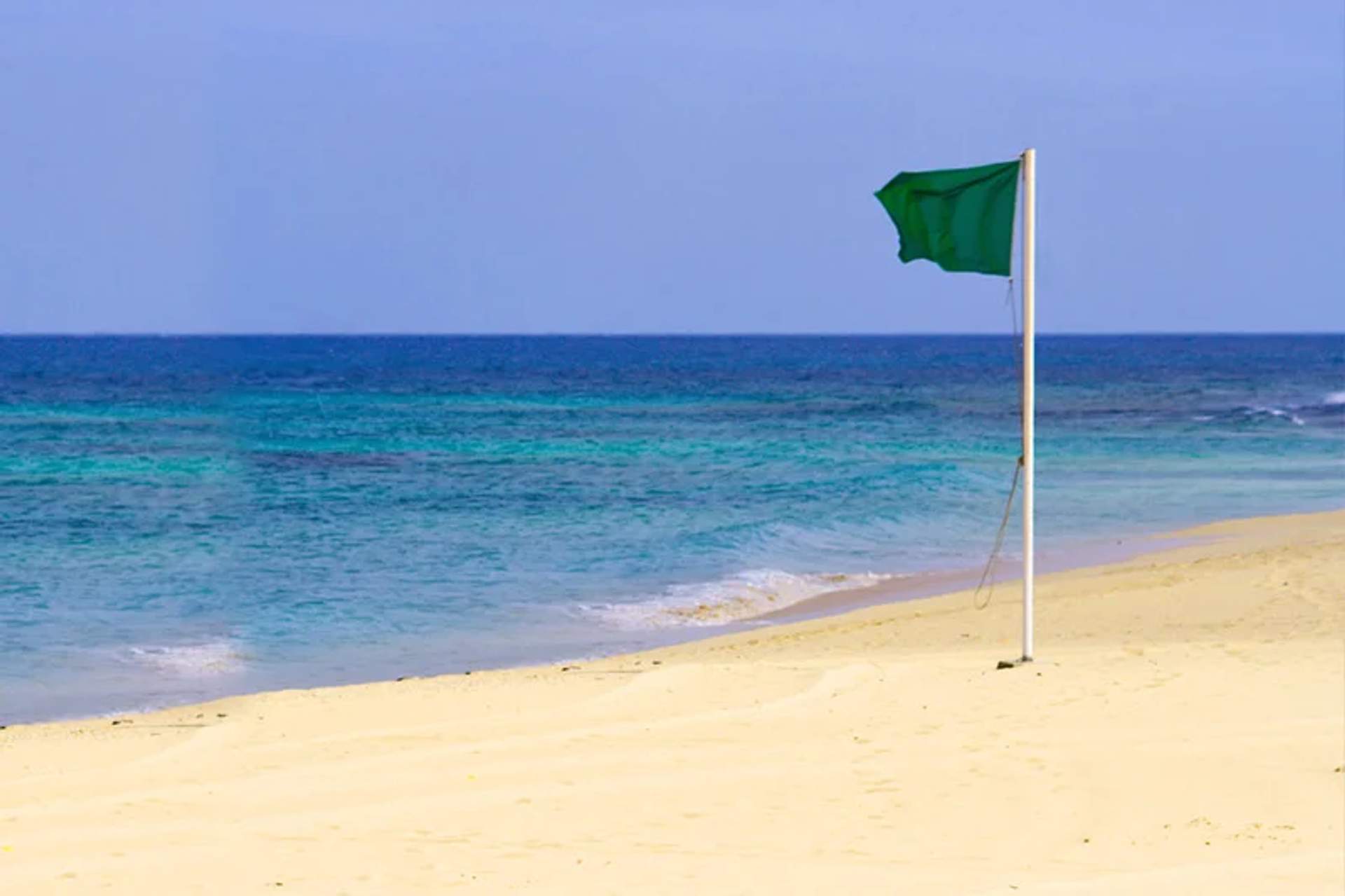
Los Cabos uses a color-coded flag warning system managed by ZOFEMAT (the Federal Maritime Terrestrial Zone agency), and understanding it is non-negotiable for your safety. New info boards have been installed at the highest-traffic beaches including Medano, Palmilla, Chileno, and Santa Maria.
Here's what each color means:
Green flag: Safe swimming conditions. Still swim near a lifeguard and keep an eye on children.
Yellow flag: Moderate hazard. Choppy waves or mild currents are present. Confident swimmers only, and stay close to shore.
Red flag: High hazard. Strong currents or powerful waves make conditions dangerous. Stay out of the water, even if you consider yourself a strong swimmer.
Black flag: Beach closed. Extreme danger. Do not enter the water for any reason.
Flags can change throughout the day, so check them every time you return to the water, and treat them as commands. Drowning incidents here are directly linked to swimmers ignoring posted flags. Flags may also differ at opposite ends of the same beach, so look for the nearest mast to where you're actually swimming.
When Is the Best Time to Swim in Cabo?
Because the safest swimming beaches sit on the Sea of Cortez side, you can swim in Cabo year-round. Water temperatures stay comfortable across all seasons.
That said, conditions shift with the calendar:
Summer and early fall (July–October): Deliver the warmest water and the calmest Sea of Cortez conditions. The trade-off is hurricane season.
Winter (November–April): Brings cooler but still swimmable water in the low 70s°F. This is also whale migration, so you may spot humpbacks from shore while you swim.
Late spring (May–June): Is a sweet spot: water warming back up, lighter visitor volume, and Sea of Cortez conditions reliably gentle.
One timing tip that applies across seasons: wind typically picks up around 1:00 PM. If you're heading to Chileno or Santa Maria for snorkeling, we recommend arriving before 10:30 AM for the calmest water and best visibility.
The Best Swimming Beaches in Cabo San Lucas
1. Medano Beach
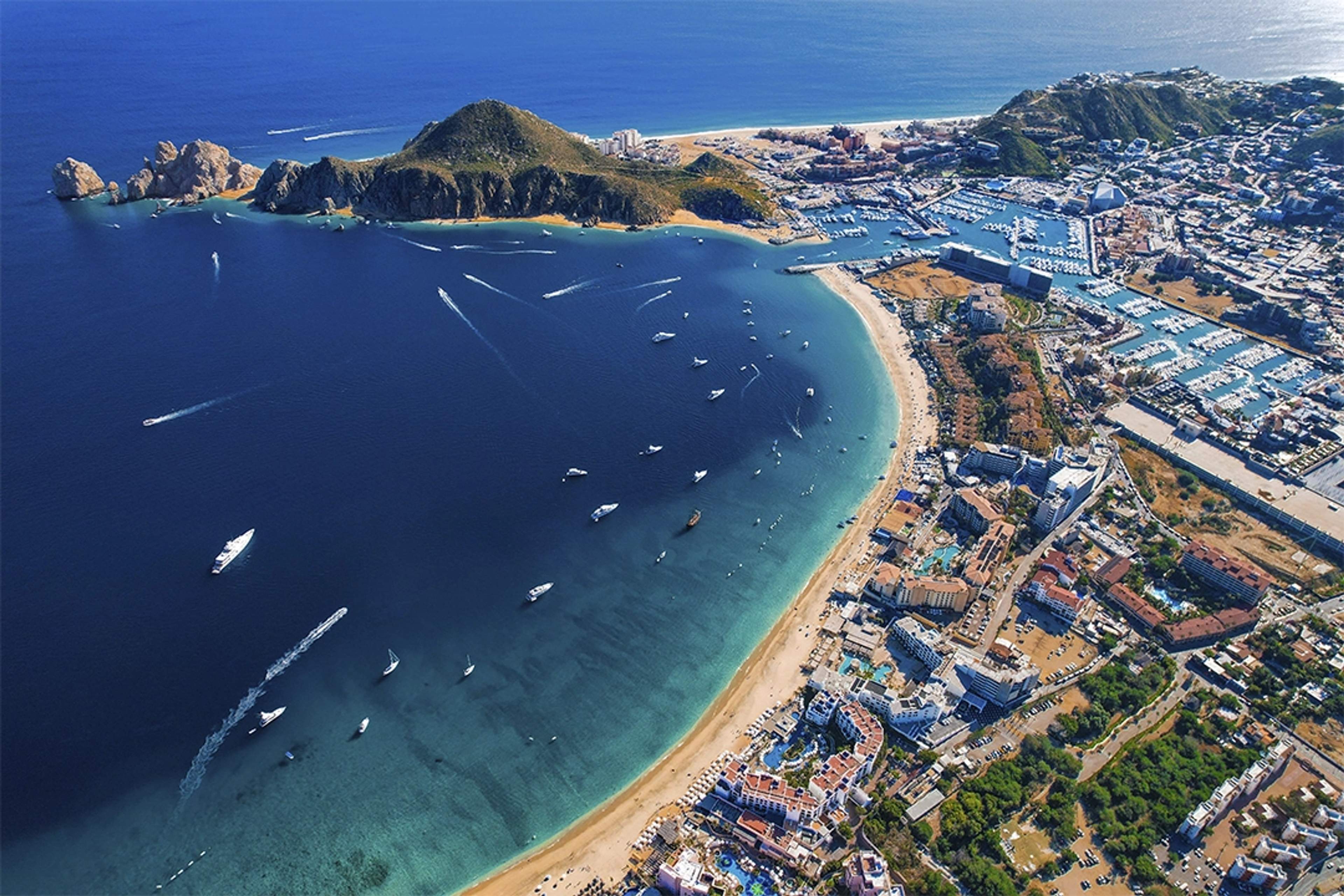
The longest and most accessible swimmable beach in Cabo, stretching along the protected bay in downtown Cabo San Lucas.
Best for: Families, social beachgoers, anyone wanting a lively beach day with full amenities.
Water conditions: Calm bay with a sandy bottom and gradual depth. Lifeguards on duty throughout the day with a reliable flag system.
How to get there: Walk from most downtown Cabo San Lucas hotels, or take a short taxi ride.
What to know: This Medano guide covers the on-beach basics (food, restrooms, rentals). That convenience comes with a lively atmosphere, especially during spring break and peak winter travel. The beach stretches nearly two miles, so walk a few minutes from the main cluster for more space.
2. Lover's Beach
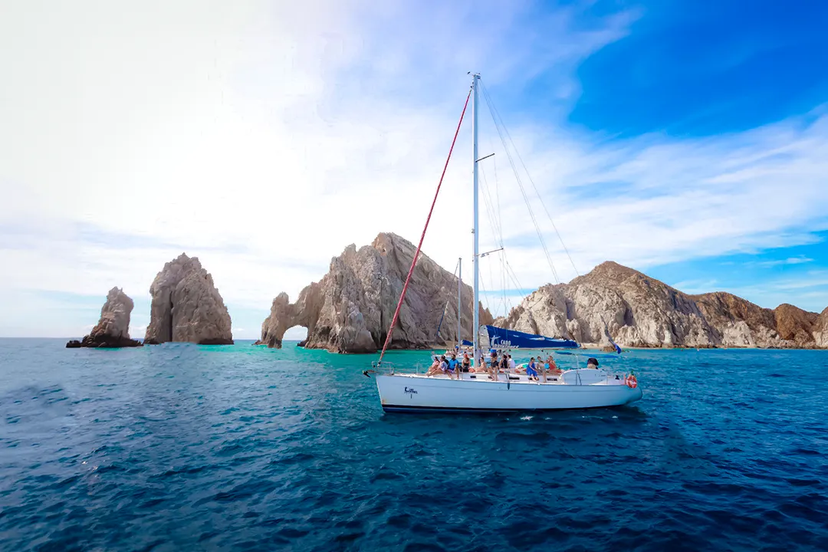
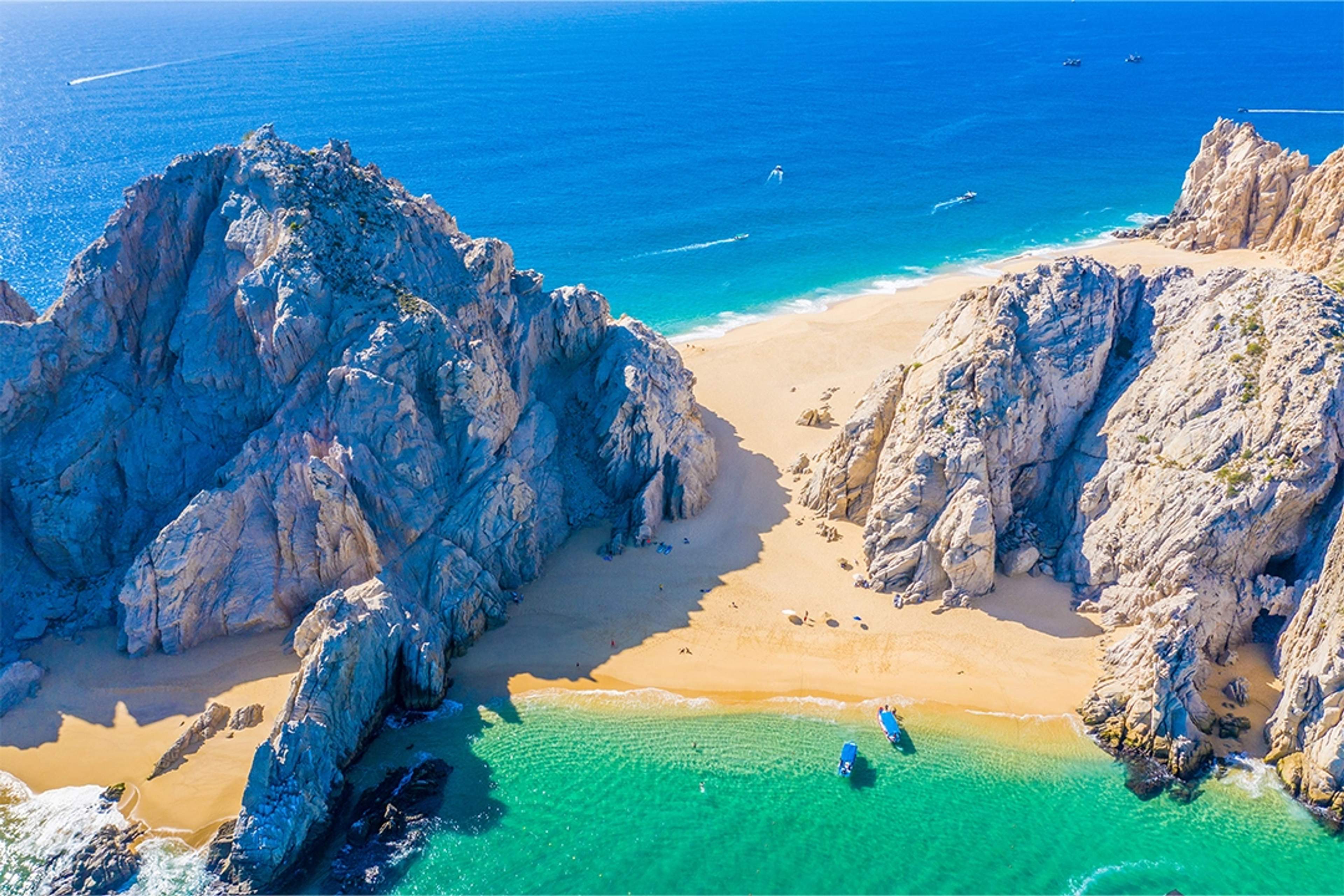
This small, iconic beach sits near Land's End and El Arco, reachable only by water. The boat ride passes directly by the famous Arch and a colony of sea lions lounging on the rocks.
Best for: Couples, day-trippers, anyone who wants that classic Cabo photo with El Arco in the background.
Water conditions: The Sea of Cortez side offers calm water for swimming and snorkeling. The opposite side, Divorce Beach, faces the Pacific and is extremely dangerous. Never swim on the Pacific side.
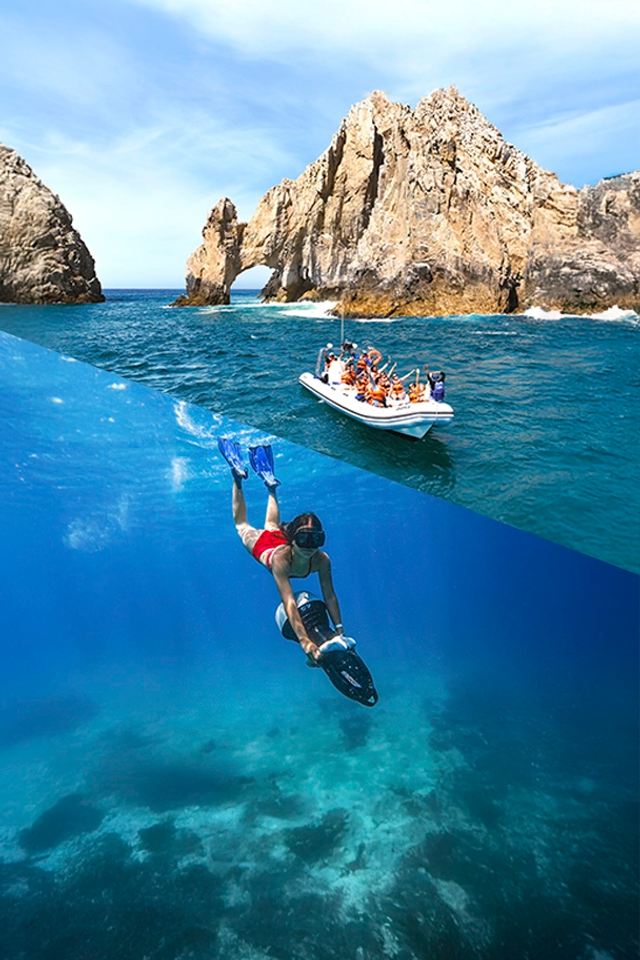
How to get there: Consider the Cabo Snorkel & Land's End Arch tour. It cruises past the Arch, Lover's Beach, and the sea lion colony by speedboat, then stops for snorkeling, kayaking, and paddleboarding in a protected bay. All gear, guides, and quesadillas with drinks are included.
3. Chileno Beach
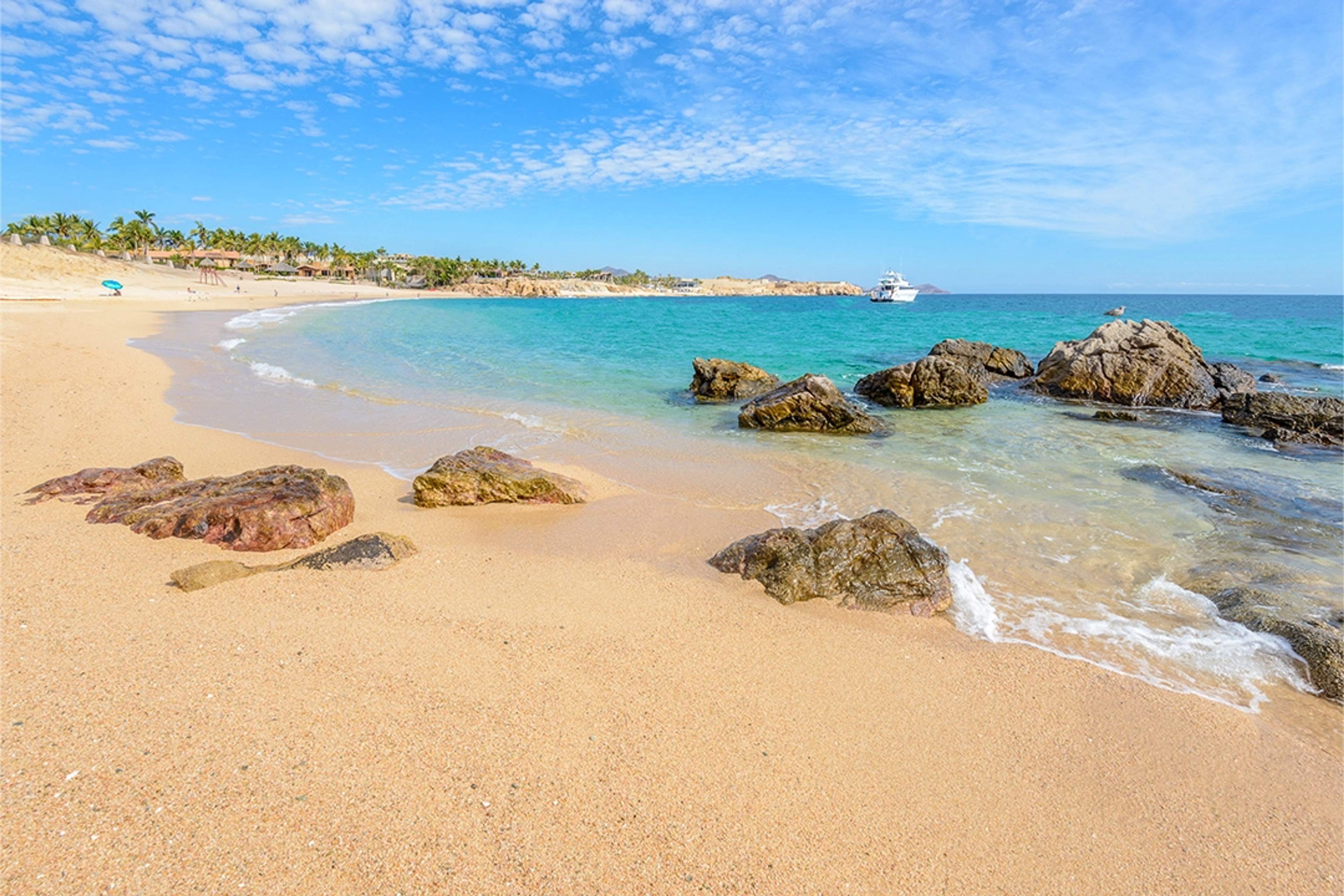
Located at Km 14.5 on the Tourist Corridor, Chileno is a Blue Flag beach public beach inside a horseshoe-shaped bay. Locals consider it one of the best spots in Los Cabos, and it consistently delivers calm, clear water with excellent snorkeling right from shore.
Best for: Families with young children, snorkelers, anyone wanting solid amenities without Medano's bustle.
Water conditions: Soft sand with a gentle, flat entry, comfortable for toddlers and older adults alike. Underwater visibility can extend up to 100 feet on good mornings. Rocky outcrops along the south side create underwater scenery with boulder formations, overhangs, and coral coverage.
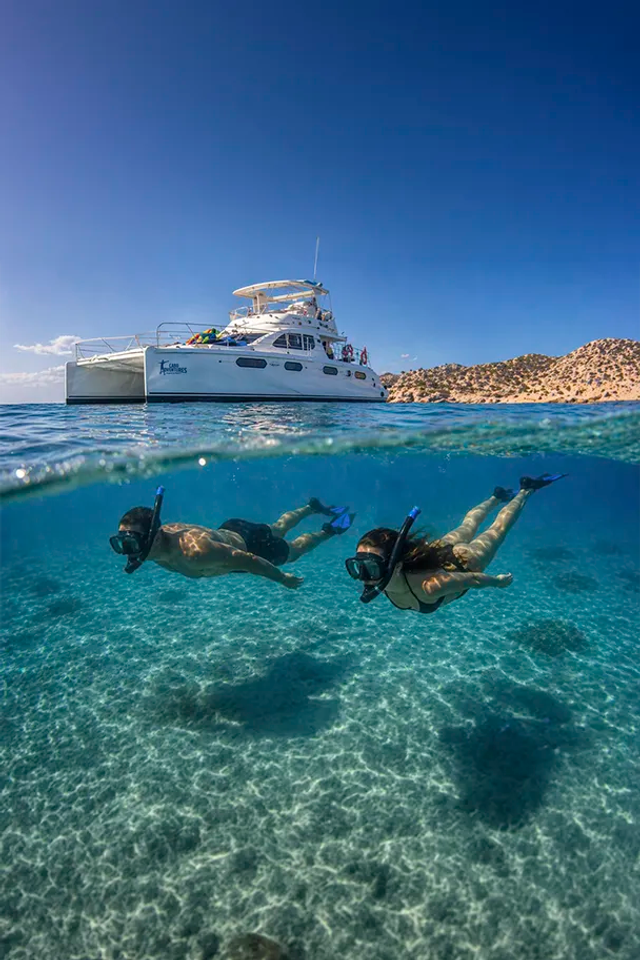
How to get there: If you want to access both Chileno and Santa Maria by water, the Luxury Two-Bay Snorkel is the way to do it. The route sails aboard a French-made catamaran past the Arch and a sea lion colony before anchoring in two of Cabo's top snorkeling bays. All gear, paddleboards, lunch, and an open bar are included, and during winter months you may spot dolphins and migrating humpback whales from the deck.
4. Santa Maria Beach
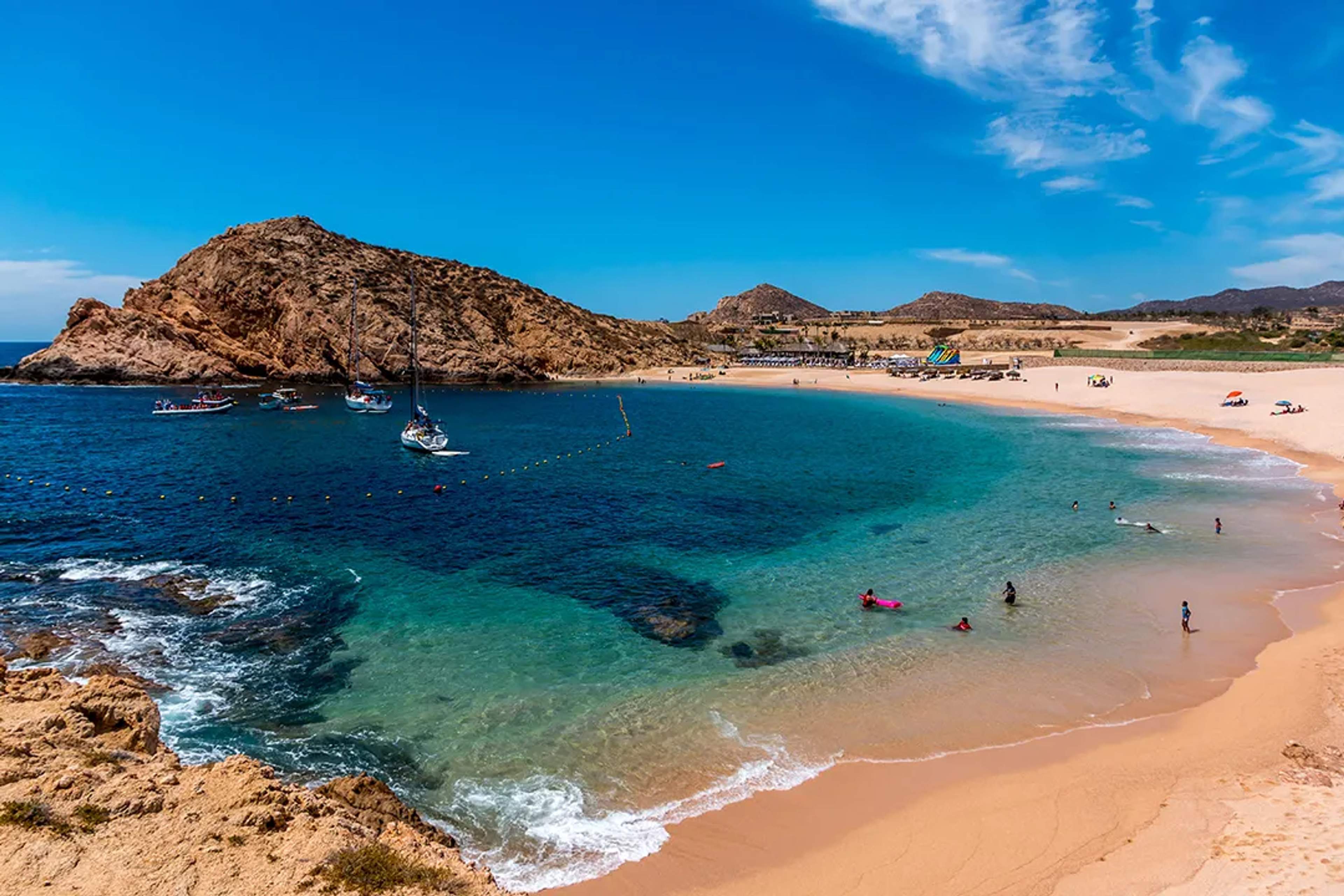
This Blue Flag beach sits inside a natural cove at Km 13 on the Tourist Corridor, flanked by granite formations that block open-ocean swells. The result is a sheltered bay with some of the clearest water in Los Cabos and dense schools of tropical fish along the rock walls.
Best for: Snorkelers who want a quieter alternative to Chileno, couples seeking a more secluded atmosphere.
Water conditions: Calm, gentle waves inside the protected cove. Sandy bottom with good visibility, especially in the morning before afternoon winds pick up.
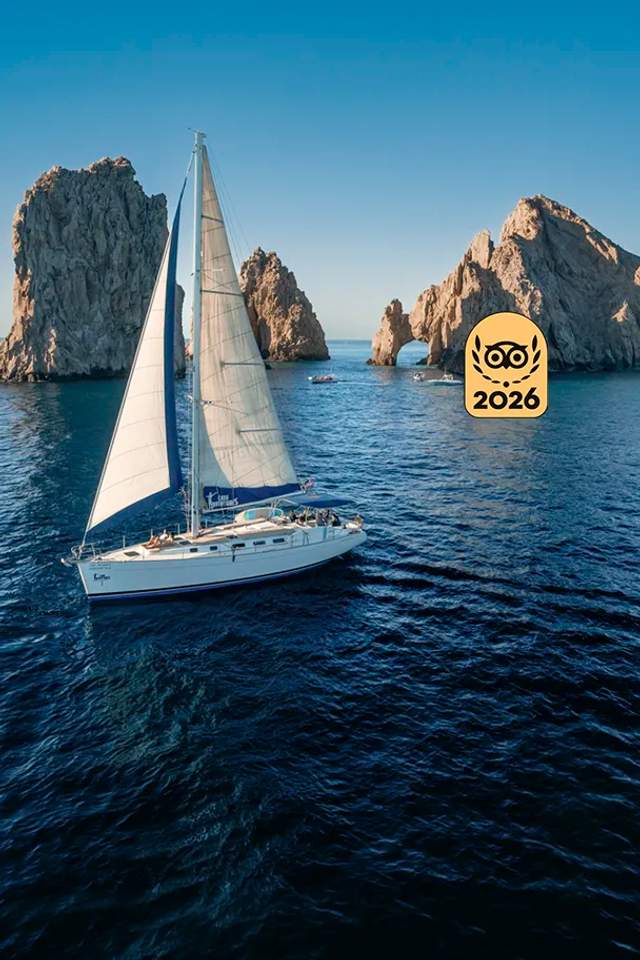
How to get there: For a premium way to enjoy this bay, check out the 4-hour Luxury Cabo Sailing Boat Tour. The route cruises past El Arco and Lover's Beach before anchoring in a protected bay for snorkeling and paddleboarding, with lunch and an open bar served aboard a French-made sailboat or catamaran.
5. Palmilla Beach
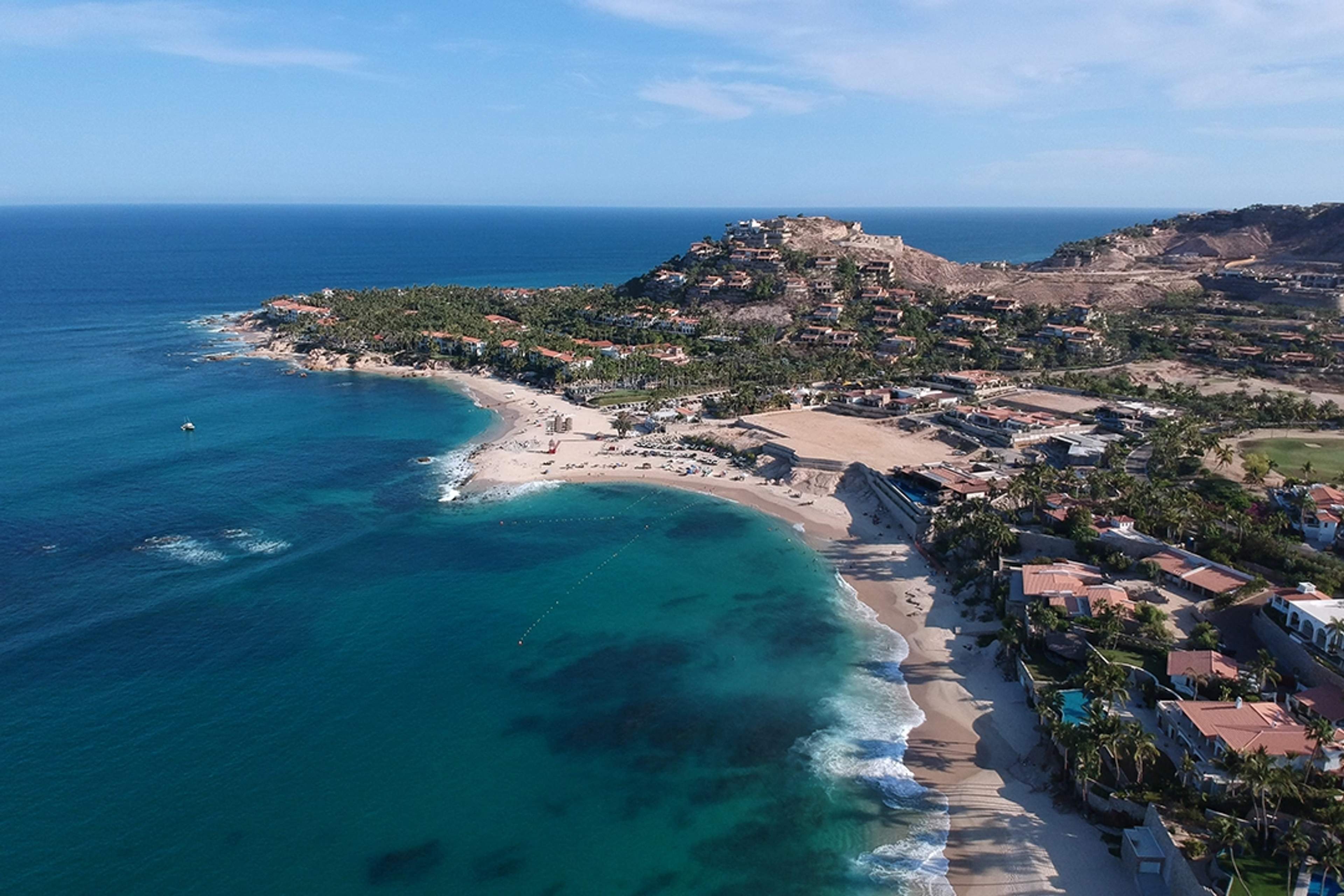
A crescent-shaped beach between Cabo San Lucas and San José del Cabo with some of the gentlest water in the region. The gradual sandy entry and calm, shallow water feel almost pool-like.
Best for: Families with toddlers or young kids, beginner swimmers, anyone wanting an upscale but low-key atmosphere.
Water conditions: Protected bay with soft sand and a very gradual slope into calm water. Consistently gentle conditions make this one of the safest spots for small children.
How to get there: Car or taxi. The beach sits within the Palmilla development near San José del Cabo. Public access is available through the community entrance.
What to know: Limited public amenities. No food vendors, so pack a picnic. A small playground sits near the beach area, a bonus for families.
6. Cannery Beaches
Just inside the marina entrance in the Marina district, the Cannery Beaches, including Coral Negro and El Balconcito, fly under the radar for most visitors. This is where locals go.
Best for: Locals, travelers wanting a quick walkable beach without the tourist scene, budget-conscious visitors.
Water conditions: Calm and clear, considerably quieter than Medano. Fine sand and protected water.
How to get there: Walking distance from the Marina district. Not prominently marked, so ask a local for directions to Playa Coral Negro or Playa Empacadora.
What to know: Zero facilities. Bring everything you need. Weekday mornings are often nearly empty.
7. Cabo Pulmo
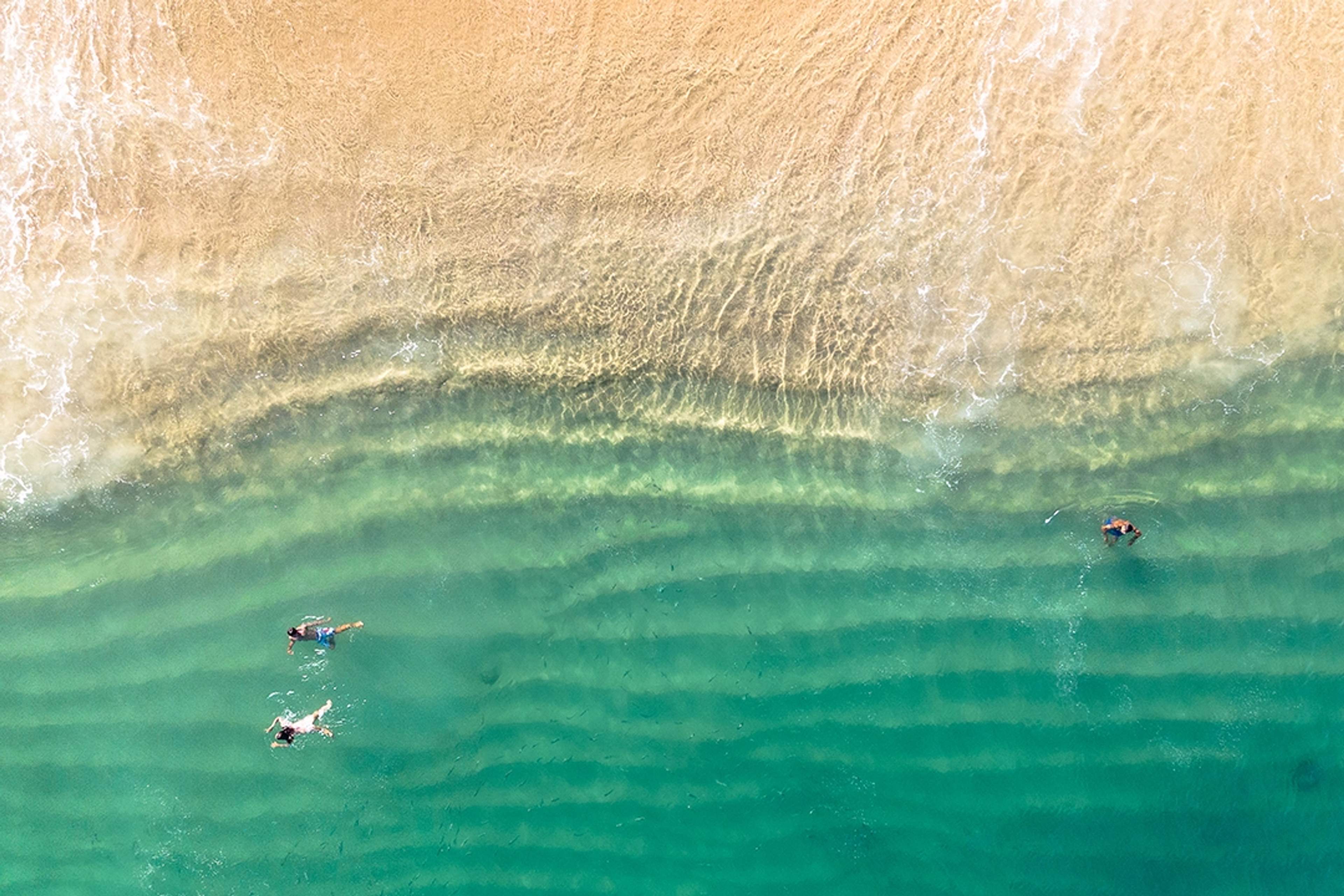
Located about two hours from San José del Cabo, Cabo Pulmo National Marine Park is home to the only living hard coral reef in the Sea of Cortez, a protected ecosystem roughly 20,000 years old.
Best for: Serious snorkelers and divers, marine life enthusiasts, anyone willing to invest a half-day of travel for an extraordinary underwater day.
Water conditions: Crystal-clear water inside a protected national park. Review the park's swimming rules before you go.
How to get there: The Cabo Pulmo Snorkeling Expedition takes care of everything. It handles transportation, provides expert guides and all snorkeling gear, and includes a Baja-style lunch, making it realistic to snorkel the reef as a day trip from your hotel.
More Swimmable Beaches
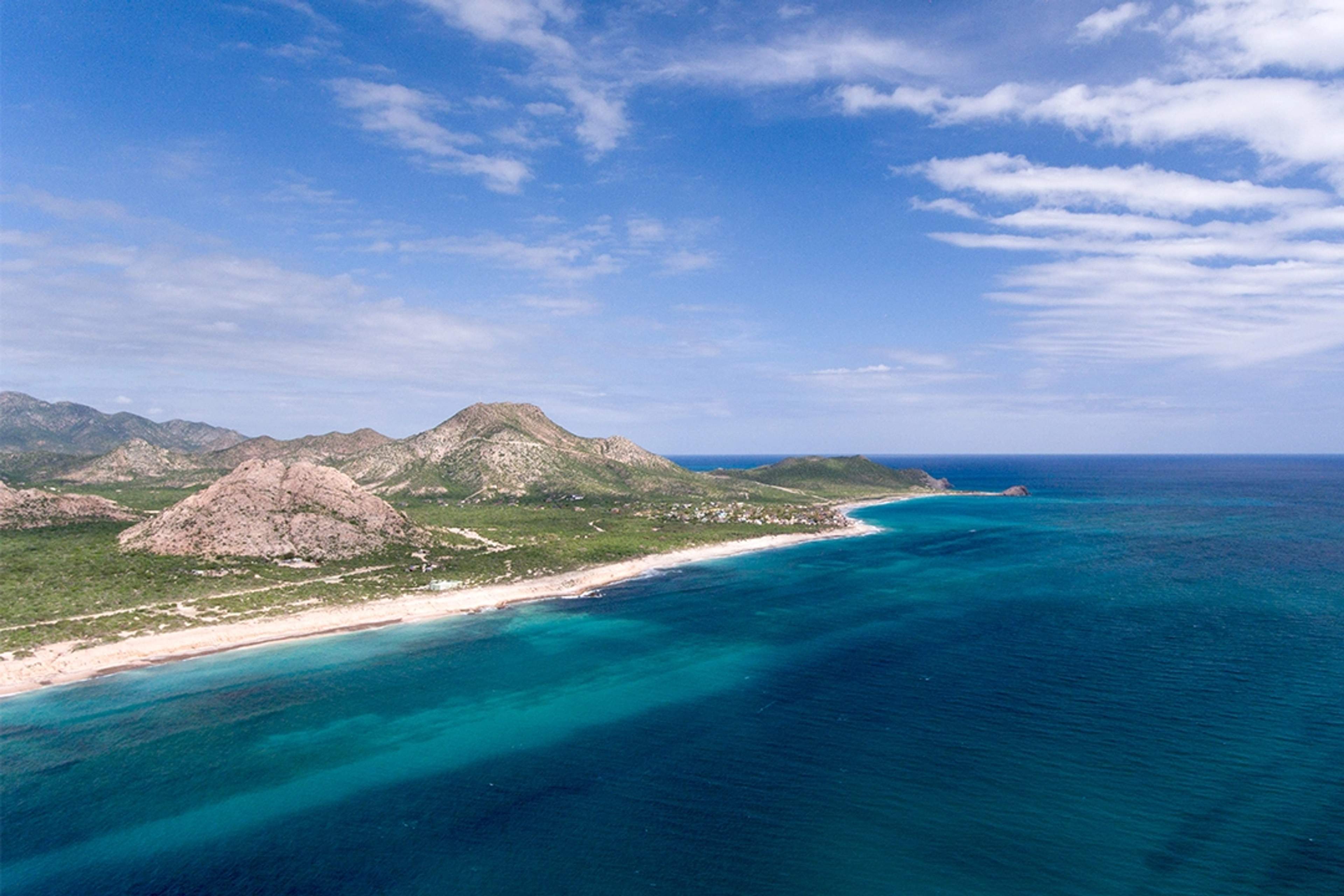
Tequila Cove (Playa Bledito): A man-made breakwater keeps water reliably calm. Best for resort guests along the Corridor wanting guaranteed gentle conditions.
Playa Acapulquito: Near San José del Cabo, this local-favorite beach suits mellow swimmers and beginner surfers. Gets busy on weekends.
Los Cerritos: 15 minutes north on Highway 19 toward Todos Santos. Calmer than most Pacific beaches, with free chairs, umbrellas, and a beach shack bar. Pair it with an afternoon in Todos Santos.
Playa Hotelera: San José del Cabo's hotel beach offers safe swimming near downtown dining and the Art District.
Where Swimming Is Dangerous in Cabo
The following beaches are explicitly not safe for swimming due to strong Pacific currents, steep underwater drop-offs, and powerful shore breaks:
Divorce Beach: The Pacific side of Land's End, directly adjacent to Lover's Beach. The pounding waves here have killed swimmers. Never enter the water.
Playa Solmar: Dramatic and photogenic, but the Pacific surf is deadly. Many Pacific-facing resorts have infinity pools precisely because the ocean isn't swimmable.
Costa Azul (Zippers): Strong waves make this a surf spot, not a swimming beach.
If a Pacific-facing beach looks empty and pristine, that's usually the clearest sign that locals know to stay out of the water.
Swimming Safety Tips for Families
Cabo is a fantastic family destination, but the safety divide between the Sea of Cortez and the Pacific beaches is especially important when children are involved.
Choose your beach based on who's in your group. For toddlers and very young kids, Palmilla's pool-like conditions are hard to beat. Chileno offers the best combination of gentle water, lifeguards, and accessibility, including an ADA boardwalk and beach wheelchair. Medano provides the most amenities and lifeguard coverage, though it's the busiest option.
Always confirm lifeguard presence visually before letting children into the water. Lifeguards are stationed at Medano, Chileno, and other major tourist beaches, but coverage across the entire Los Cabos coastline is limited.
Teach older children to recognize rip currents and swim parallel to shore, never against the current.
Pack rash guards or UV-protective shirts for children since sun exposure is intense on the water, especially midday.
Making the Most of Your Time in the Water
Stick to the protected Sea of Cortez beaches, check the flag system before every swim, arrive early for the best conditions, and bring what you need since many of the best spots have limited amenities.
Some of the best moments here happen at a slower pace. Bring a snorkel mask and a packed lunch to Santa Maria and spend an unhurried afternoon watching king angelfish cruise along the rock walls. The swimmable beaches here reward both the planned adventure and the spontaneous detour, and we just want to make sure you know which ones are safe before you go.
For more ways to get out on the water, and even below the surface, explore our full range of tours.