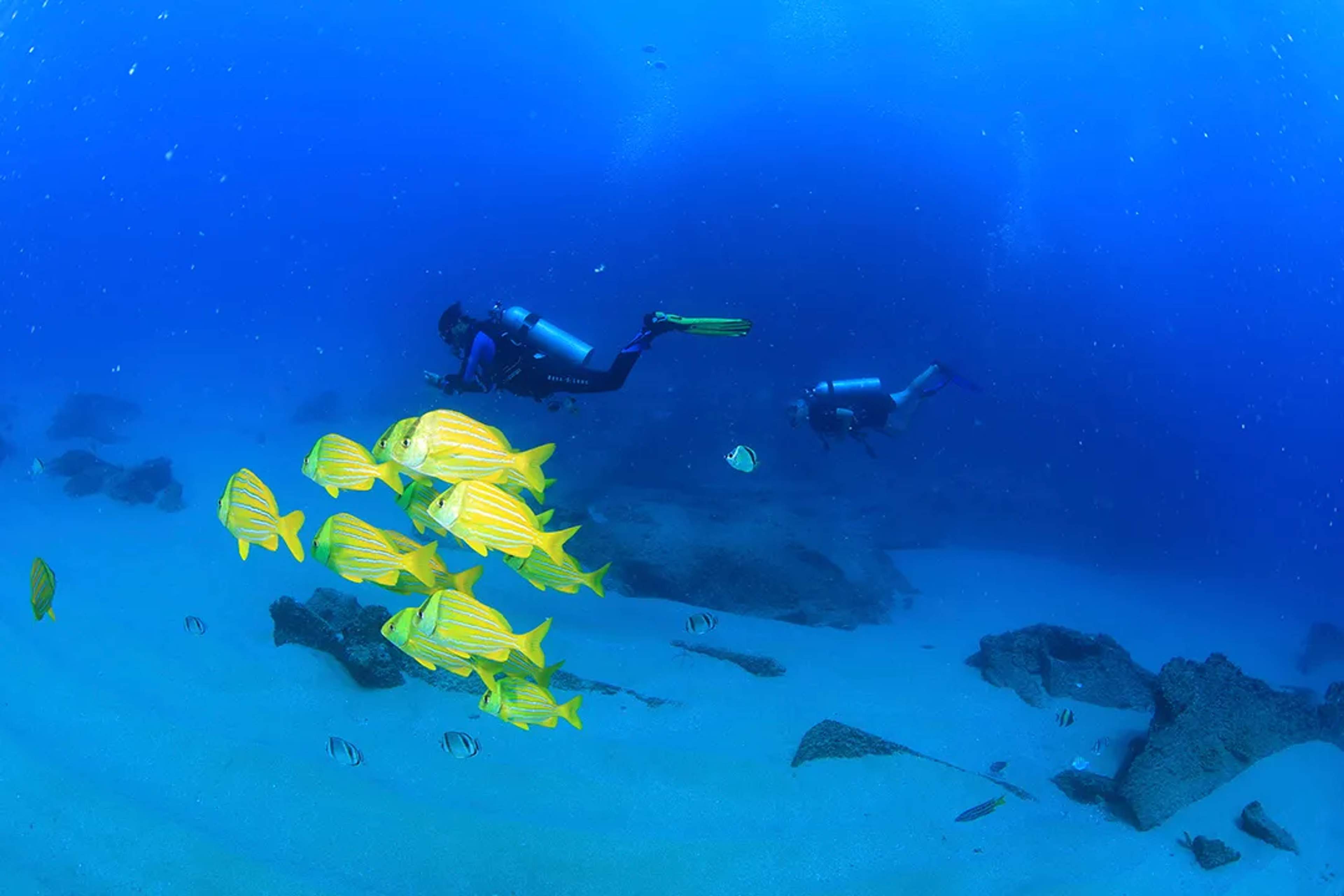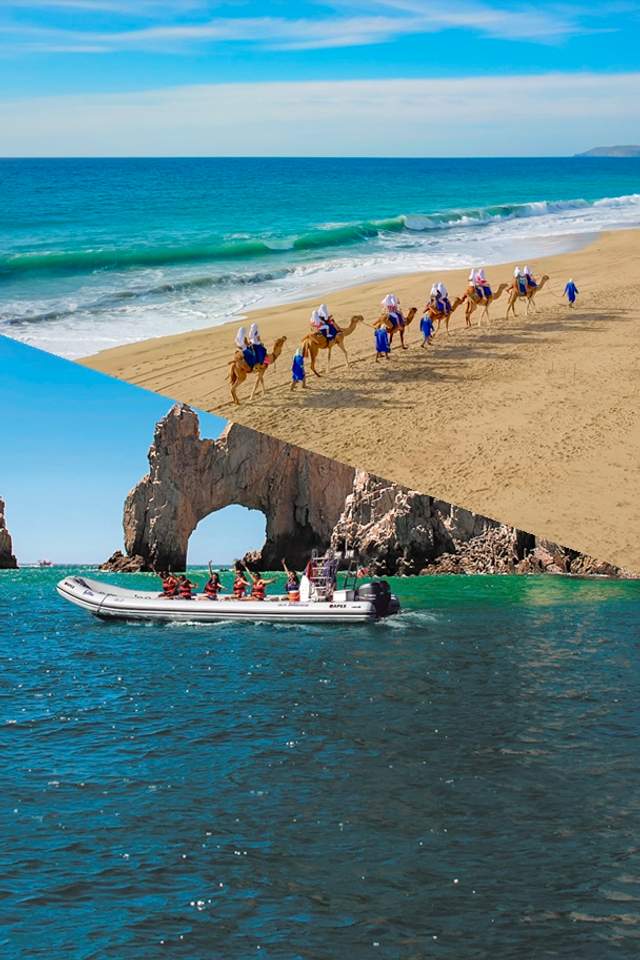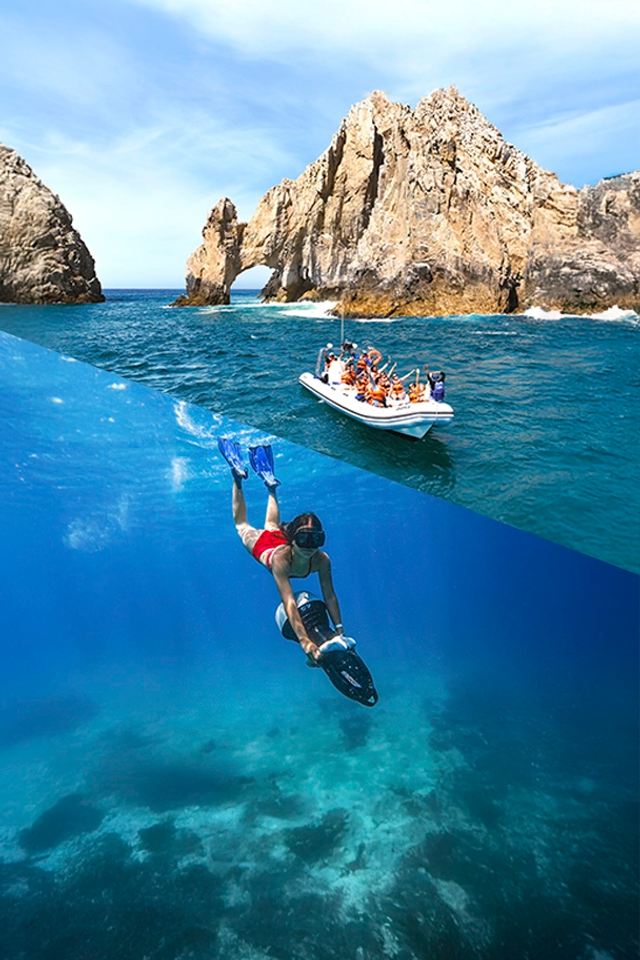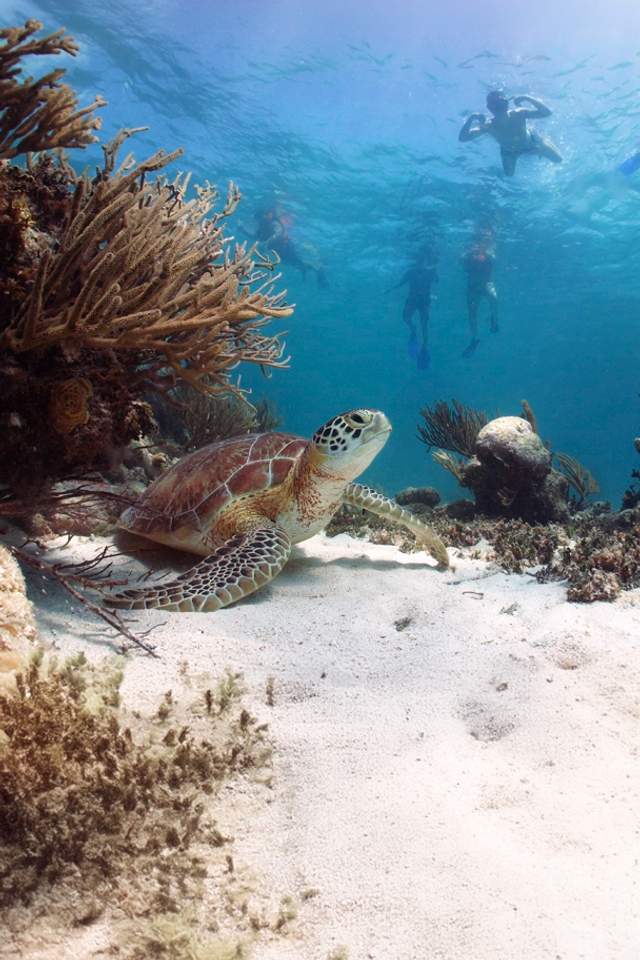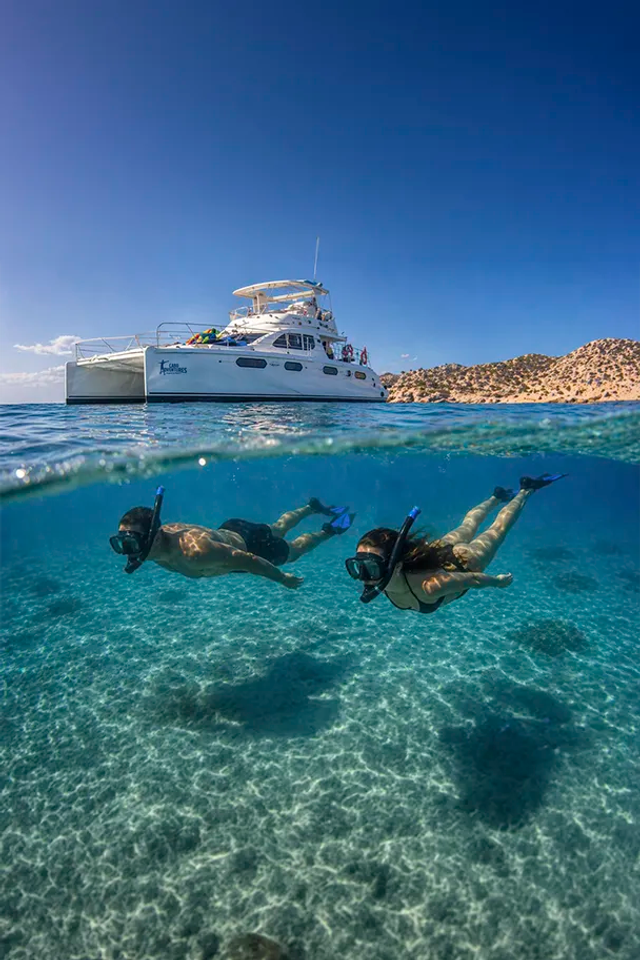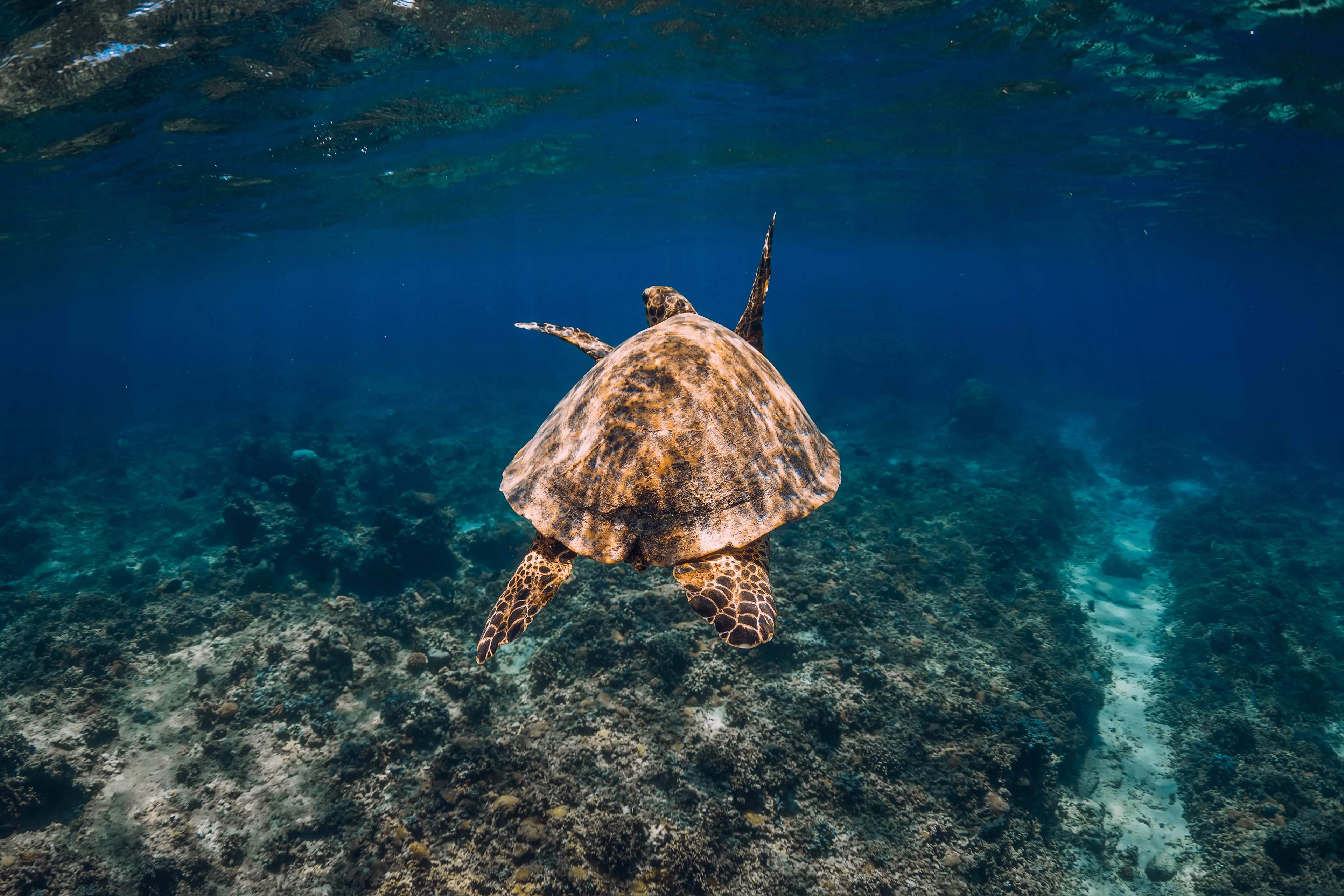
Few destinations pack as much underwater variety into as little distance as Cabo. Snorkeling begins right from the sand, with reef rock at knee depth where sergeant majors flash yellow and silver before you have even adjusted your fins. Sea turtles glide past sandy points, sea lions loop around granite pinnacles, and in winter humpback song carries beneath the surface.
This guide walks through twelve top spots, from drive-up Corridor coves to Cabo Pulmo, where protection rebuilt fish biomass by 463 percent, and turquoise bays near La Paz.
1. Cabo Pulmo National Park
Drive northeast until the pavement turns to washboard dirt and you reach the only coral reef in the Sea of Cortez, a reef ecosystem that hosts over 800 marine species and 226 reef fish species. The reef is roughly 20,000 years old, among the oldest in the eastern Pacific Ocean, and the bay has been closed to fishing since 1995.
That fragility is why rangers hold visitors to the park rules. Snorkeling inside the marine park requires authorized guides and mandatory life jackets in the water. Only biodegradable products may be used on your skin. Independent snorkelers can enter from shore at Playa Los Arbolitos, where a small cash access fee applies.
The village runs on cash and has no ATMs or gas station, and a daily conservation bracelet is paid in pesos at the entrance, with children under twelve, seniors, and disabled visitors exempt.
Cabo Pulmo Snorkeling Expedition
Reaching the reef without a rental car is straightforward. The Cabo Pulmo Snorkeling Expedition carries you from the desert to the Sea of Cortez with round-trip air-conditioned transport, snorkel gear, expert guides, and a Baja-style lunch at a local restaurant. Book the expedition early in your trip, in case Cabo weather shuffles your days.
2. Chileno Bay
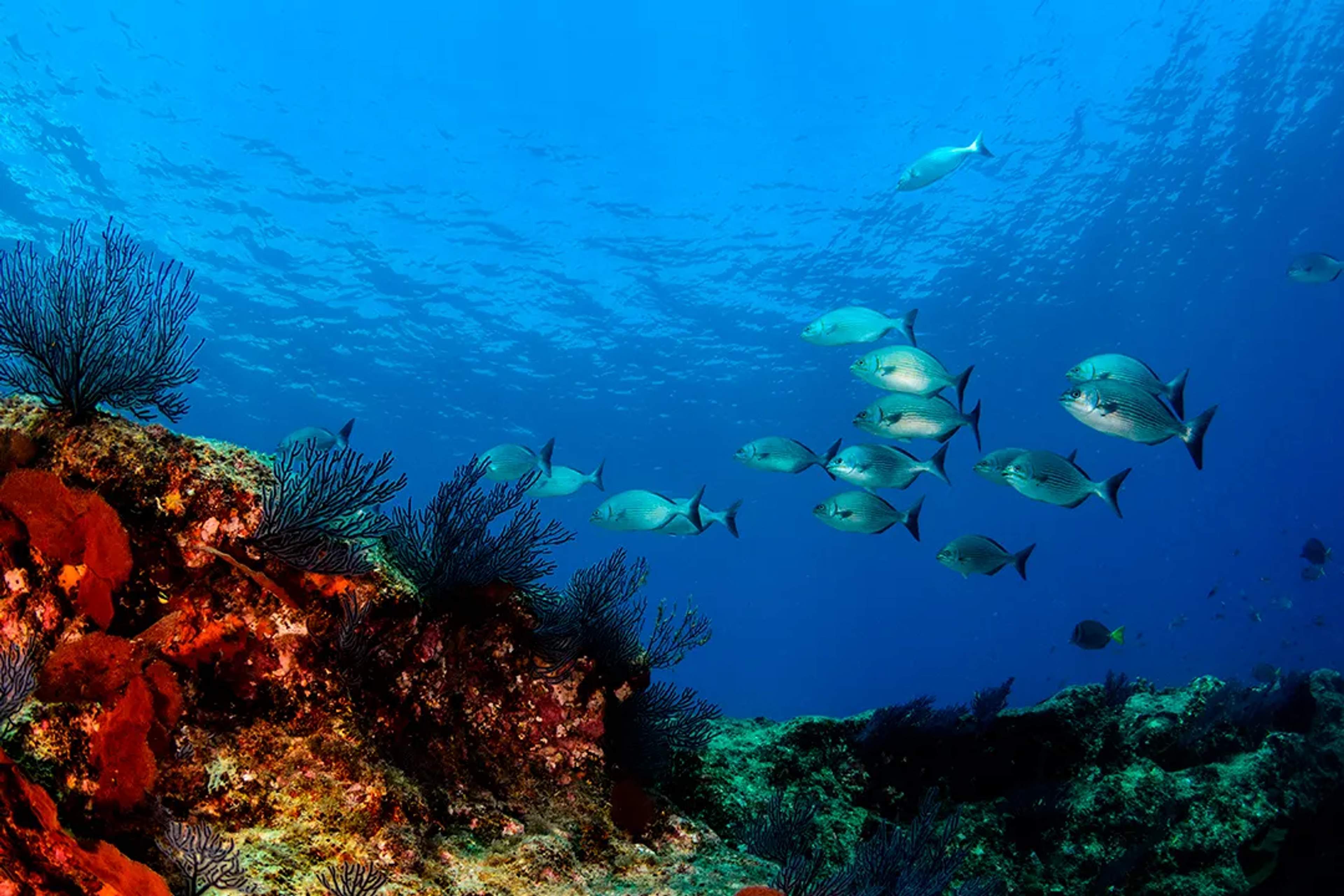
Chileno has the easiest water entry on the Corridor and reef fingers that run parallel to the beach, shallow enough at the inner edge for children to float over. Visibility often runs fifty to sixty feet, and reaches ninety in the clearest late-summer and fall water.
Parrotfish, angelfish, butterflyfish, and moray eels work the rock, while sea turtles pass through the deeper water toward the point. From December through April, float still and you can sometimes hear humpback whale song carrying through the bay.
This Blue Flag beach is the only one on the Corridor with restrooms, and its lifeguard stand is the most reliably staffed of the Corridor snorkel beaches; it also has showers and palapas. Arrive early: the paved lot fills by 11 AM in high season, and the water stays calmest before the afternoon chop builds.
Luxury Cabo Snorkeling in Two Bays reaches Chileno by boat. It cruises past Land's End before anchoring to snorkel two bays. Lunch, an open bar, paddleboards, and snorkel gear come aboard with you, so see the itinerary when planning your week.
3. Santa María Bay
Two granite headlands wrap Santa María into a horseshoe about 200 meters across and block most surf and wind. Inside is a federally protected marine sanctuary where volcanic rock walls and white coral heads wait within a few fin kicks of shore. Golden sea fans are there too.
Work the rocky ends for king angelfish schooling tight against the walls, Moorish idols, and moray eels in the crevices, then drift the sandy center for eagle rays and turtles. Enter on the right side facing the water and wear water shoes, because the rock is sharp underfoot.
Free parking sits just off Highway 1 near the km 12 marker, a short walk from the sand. Mornings bring the best visibility, and snorkel cruise boats arrive midday, so early birds get the bay nearly to themselves.
Luxury Cabo Sailing anchors here on its runs across the Sea of Cortez, with snorkeling and paddleboarding once the anchor drops. Lunch and an open bar come aboard, and humpbacks often surface along the route in winter, so reserve a sail ahead.
4. Palmilla Beach
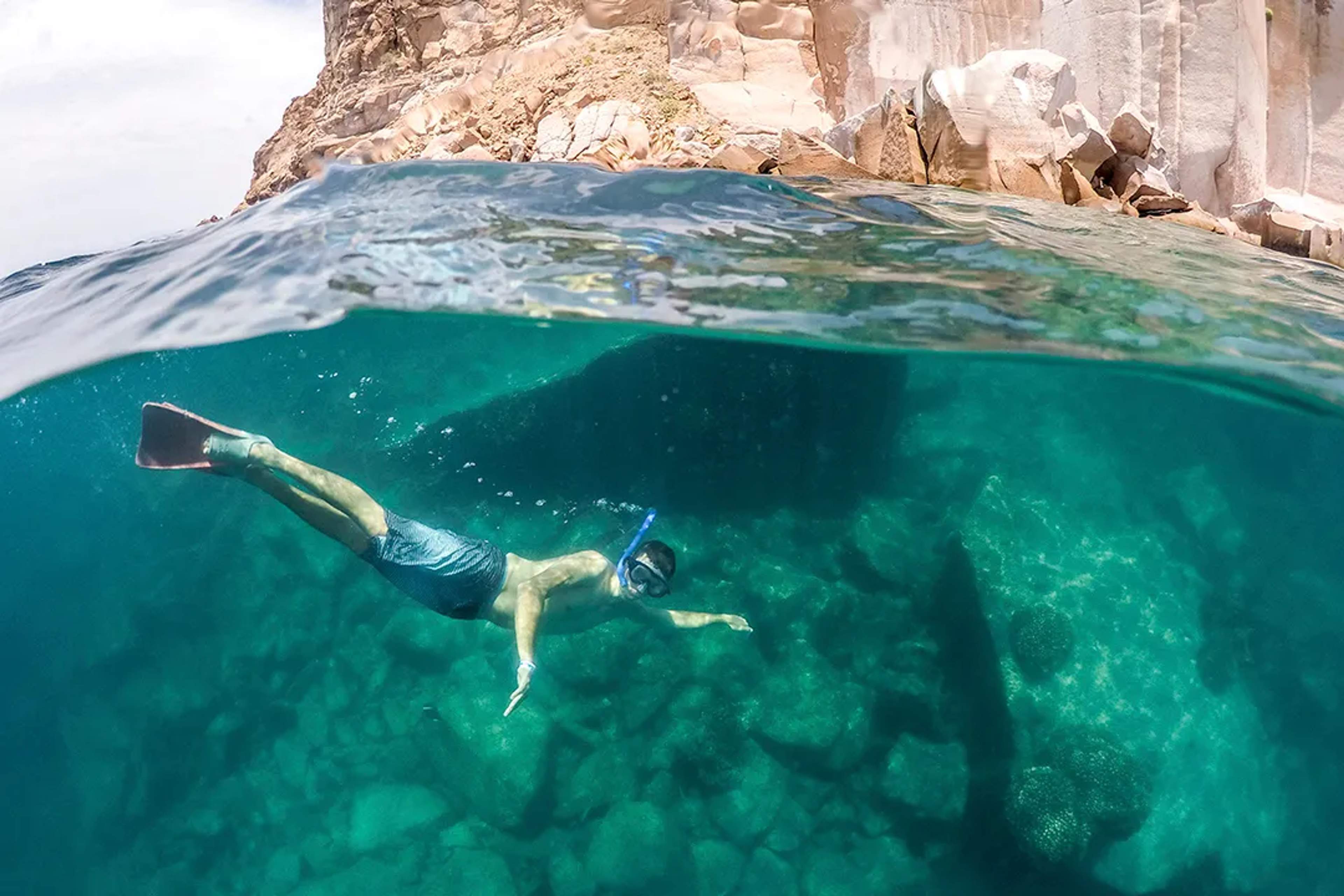
Palmilla is a protected cove at km 27 with calm, shallow water and a Blue Flag rating. Reef fish and the occasional ray patrol the rocky points, close to San José del Cabo.
The sandy middle stays gentle enough for small kids and nervous first-timers. A dive shop near the hotel grounds rents equipment, and parking is limited, so weekday mornings work best.
5. Playa Las Viudas
Las Viudas has excellent tide pools and volcanic rock formations, with reef life just below the surface on calm days. It still has the quiet atmosphere of a local secret. Use Las Viudas for snorkeling only on flat, green-flag mornings.
The turnoff sits near km 12, followed by a rough dirt track, and no vendors operate here. Bring your own gear and water. Pack shade too.
6. Playa Barco Varado
Shipwreck Beach is now known for its tide pools and rocky shallows, and swimming here is not recommended for small children.
Access runs through the Cabo del Sol entrance near km 10, beside the Sheraton, with a long drive in from the highway.
7. Playa Acapulquito
Acapulquito, known locally as Old Man's, is first a surf beach at km 27.5, but when the swell rests its clear water opens for snorkelers and swimmers.
Read the water from the sand before gearing up, since the surf decides the day here. Calm mornings give the friendliest window.
8. Pelican Rock
Pelican Rock rises from the water wearing a coat of purple sea fans, with a buoyed surface area reserved for snorkelers. Snorkel depths run 6 to 25 feet, and the fish are completely used to people. Pelican Rock and nearby North Wall, another favorite of the PADI Five Star Dive Center, have an average dive depth of 40 feet, with visibility up to 100 feet.
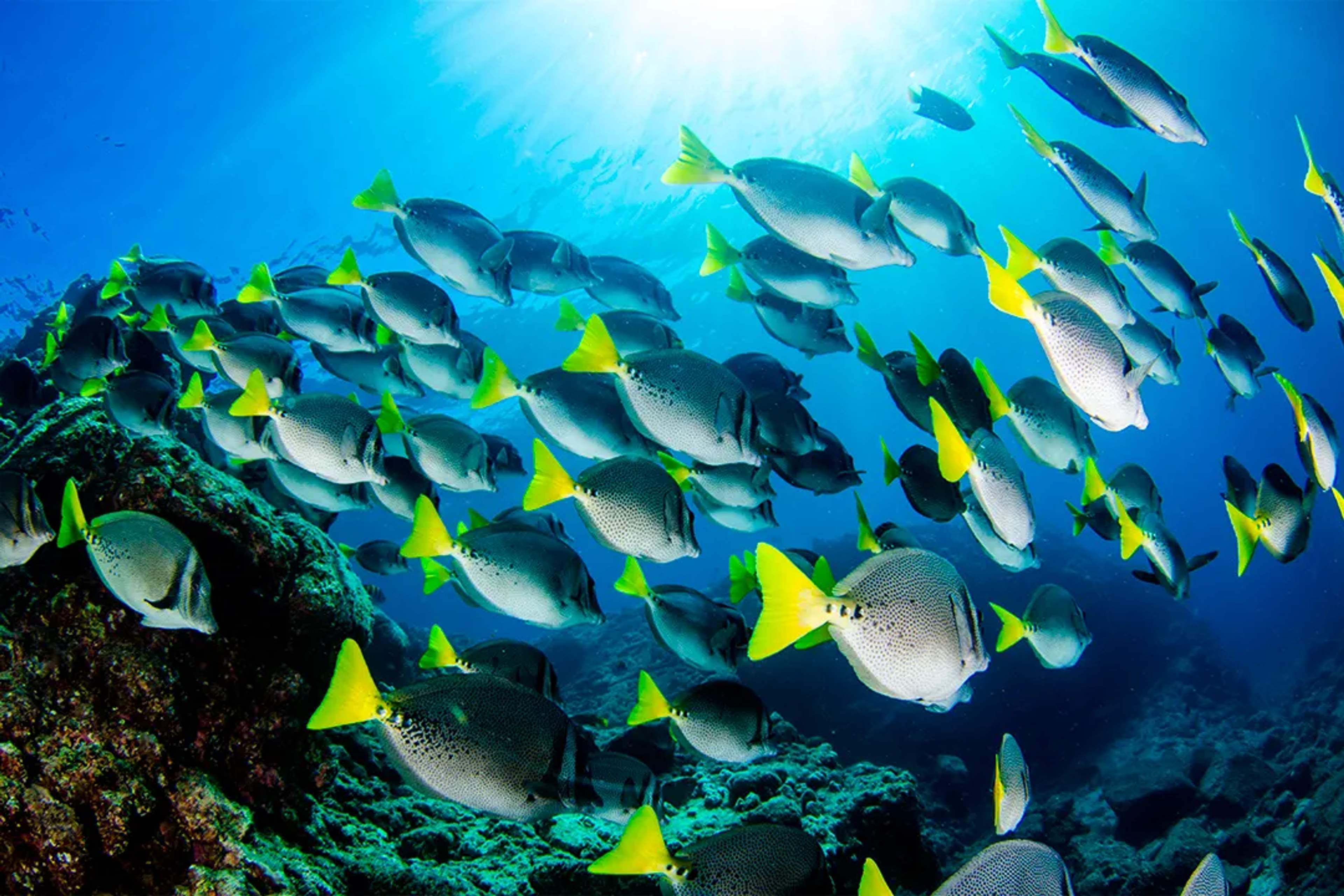
Yellowtail surgeonfish, sergeant majors, king angelfish, Moorish idols, and pufferfish crowd in close, and sea lions from the nearby colony cruise through most often between November and April.
Discover Scuba Diving in Cabo teaches underwater breathing and equipment basics before a first dive in the Sea of Cortez, led by a PADI-certified instructor, no certification required. If the reef tempts you deeper, try a dive.
9. Lover's Beach
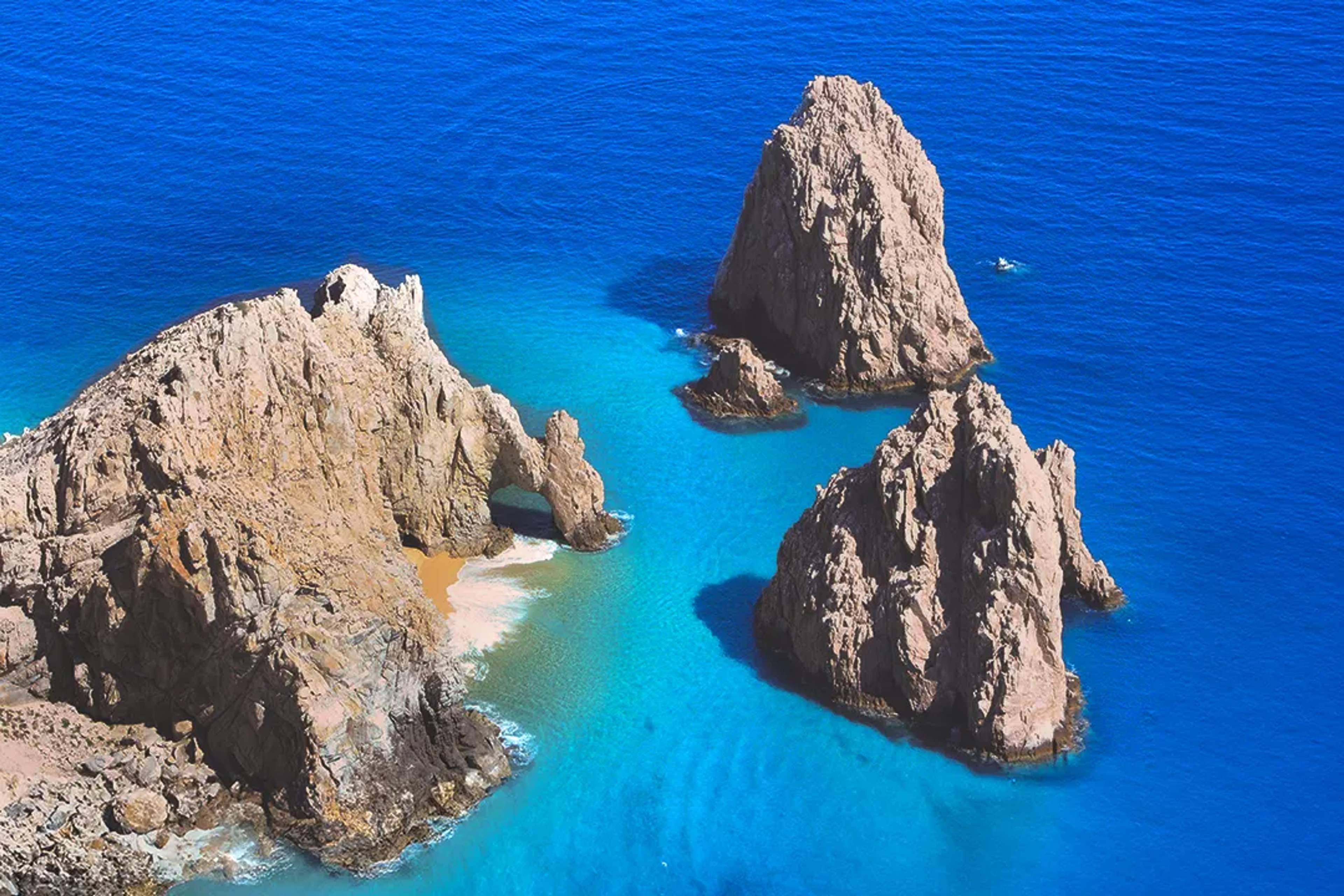
Playa del Amor tucks between the granite walls at Land's End and can only be reached by water, which keeps it wilder than anything on the Corridor. Snorkel the calm Sea of Cortez side, where colorful coral and tropical reef fish sit close to the rocks.
There are no facilities here, so carry water, shade, and everything else you need. Mornings bring the calmest water, and conditions can shift even when the surface looks glassy, so stay near your group and trust your boat captain's read of the day. On high-surf days captains may not be able to land passengers at all, so check the day's flag before you book a taxi.
The Pacific Ocean-facing sand behind it, Divorce Beach, is a no-swim beach with no lifeguards, a violent shore break that has forced rescues, and black-flag closures that sometimes shut access entirely. Keep all swimming on the Sea of Cortez side and stay well back from the water line when surf is up.
10. El Arco and the Sea Lion Colony
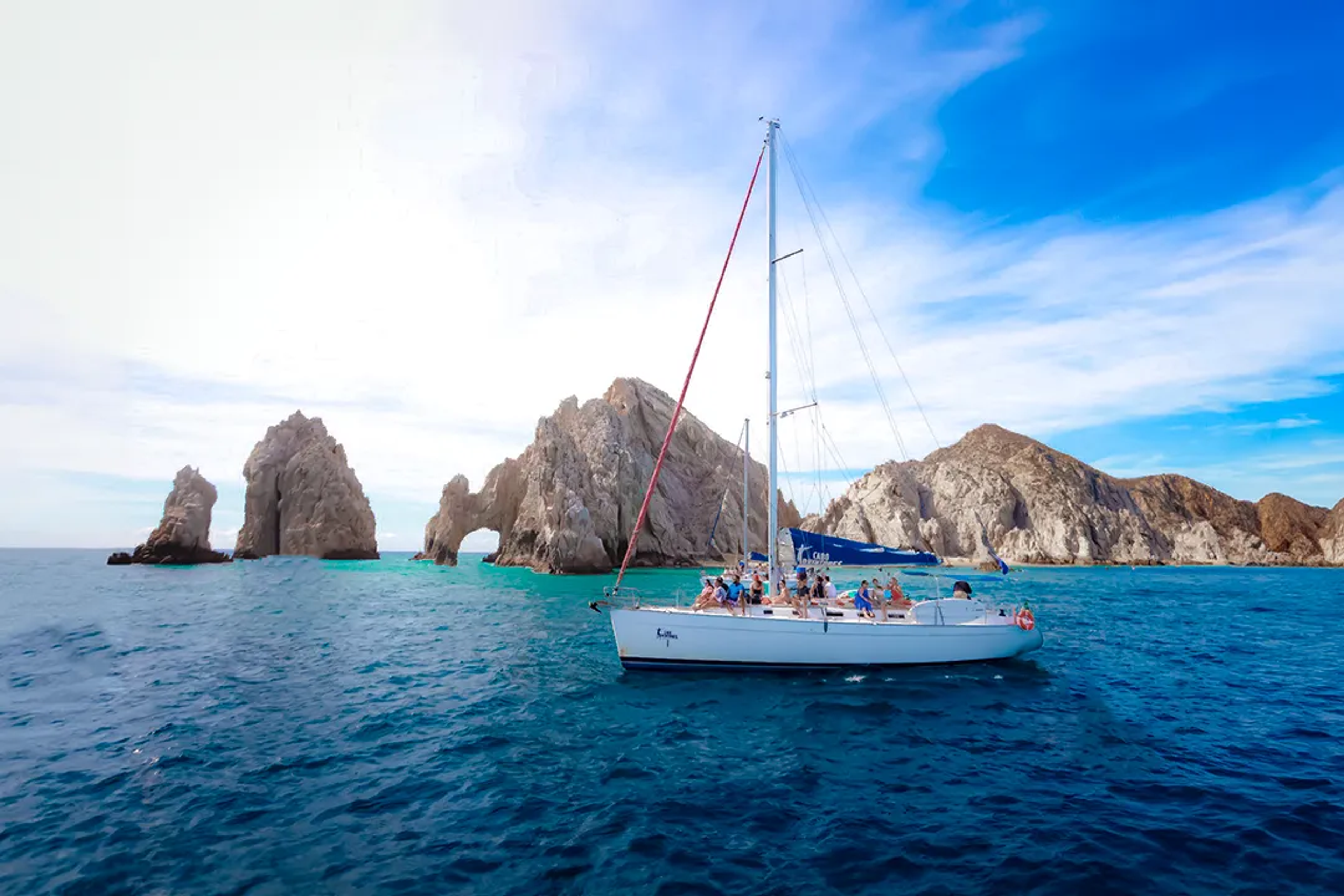
The granite arch at the peninsula's tip is within a protected natural area, and California sea lions haul out on the rocks nearby.
Between November and April the sea lions spend more time in the water and often loop past snorkelers out of pure curiosity. In winter you can sometimes hear humpback song below the surface.
Cabo Arch Tour & Snorkeling
The Land's End sites are reachable only by water, and Cabo Arch Tour & Snorkeling is the quickest way to string them together. A speedboat runs to the arch before guests snorkel and kayak in sheltered bays. Paddleboarding is also included, and the bays attract sea turtles and surgeonfish as well as rays. Snorkel gear comes aboard, so check availability for your dates.
11. Balandra Beach
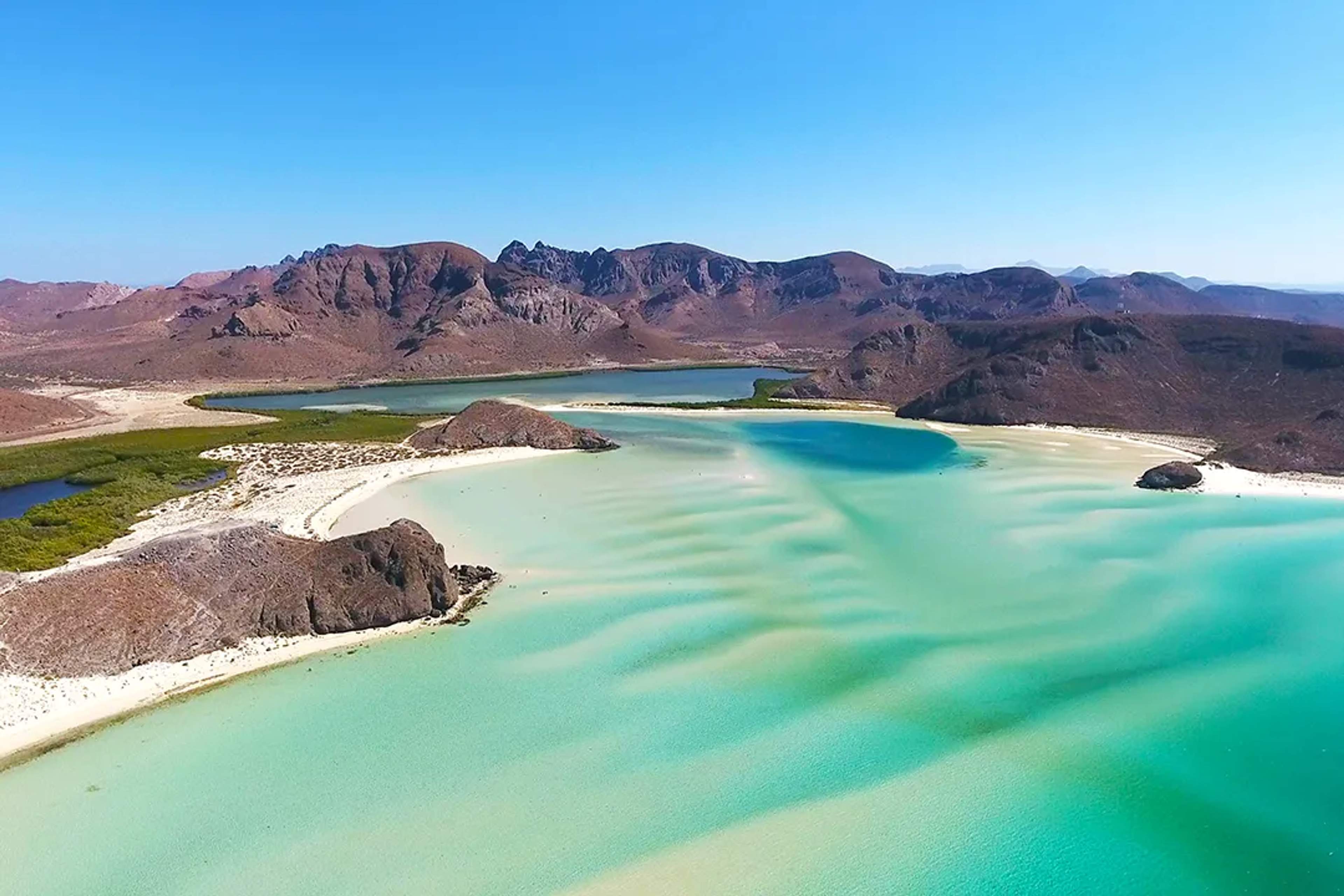
Balandra spreads across connected bays of knee-deep turquoise over white sand, so shallow you can walk enormous distances with water barely past your knees. The bay offers calm-water observation of small colorful fish and coral formations near the rock walls, making it a gentle counterpart to the sea lion colony farther north.
Balandra sits roughly two and a half hours north of Cabo by road, near La Paz, so a visit runs as a full day with a dawn departure. The bay is a protected area watched over by El Hongo, the mushroom-shaped rock in every photo; climbing it, or the dune, is prohibited. The recommended visiting period runs from October through March.
Entry is capped at 450 visitors per shift across two daily shifts, with afternoon access reserved online through a digital bracelet and QR code. Download the code before leaving La Paz, because the beach has no signal.
Balandra Beach & La Paz Snorkeling
Skipping the reservation puzzle is easy with a guided tour. Balandra Beach & La Paz Snorkeling folds the whole day together: a catamaran cruise with breakfast, lunch, and an open bar, snorkeling in Balandra Bay, and round-trip transport included. Plan the day and pair it with a Los Islotes trip for the full La Paz experience.
12. Los Islotes at Espíritu Santo Island
At the northern tip of Espíritu Santo Island, the islets of Los Islotes hold hundreds of California sea lions, the only colony in the Sea of Cortez that has kept growing for three decades. Juvenile sea lions treat snorkelers like slow new toys. They loop past masks and nibble at fins.
In-water visits run from the start of September through the end of May; each summer the colony gets its breeding season to itself, and boats observe from a respectful distance instead.
Snorkel Your Days Away in Cabo
Sea of Cortez water varies by season without becoming truly cold here. Late-winter water is cooler and rewards a 3mm wetsuit, while late summer is warm and asks for nothing more than a long-sleeved rash guard, which also handles the sun better than anything from a bottle.
August weather through November brings the clearest water, with visibility between 40 and 90 feet; December through April adds whale song beneath the surface; mobula rays aggregate offshore from December through March. Hurricane season runs mid-May through November and peaks in late summer, when big-swell days can close the port. Build one flexible day into your plan.
Check the daily beach flags before entering: green means swim, yellow means caution, red closes the water, black closes the beach, and white warns of stinging marine life. A Blue Flag is an annual certification held by 27 Los Cabos beaches, and never overrides that morning's flag. Carry pesos in cash for bracelets and rentals. Set some aside for water taxis, and break big bills in town.
Frequently Asked Questions
Do you need to be a strong swimmer to snorkel in Cabo San Lucas?
No, though comfort in the water helps. Chileno Bay is the friendliest starting point, with a flat-sand entry. The inner reef begins at wading depth, and a lifeguard watches the beach. An inflatable snorkel vest lets weaker swimmers float face-down without effort. At Cabo Pulmo, life jackets are mandatory for all snorkelers throughout the marine park. Guided outings add a spotter on the surface and a captain reading conditions. Stay inside the protected coves, keep a buddy within arm's reach, and save the boat-access sites for green-flag days.
Are there sharks at the snorkeling beaches?
Cabo Pulmo has larger species, including bull sharks, whose presence there is seasonal and peaks in spring. Whale sharks gather near La Paz in the cooler months, and despite the name they are filter feeders that eat plankton. In practice, sunburn and dehydration spoil far more vacation days than anything with teeth. So does stepping on a sea urchin.
Should I bring my own snorkel gear or rent it at the beach?
Bring at least your own mask if you can. Rentals exist at Chileno Bay and Santa María Bay, but the vendors keep loose hours, and there is no guarantee the stand will be open when you arrive. A borrowed mask that leaks can ruin an otherwise perfect morning. Boat outings solve the problem differently, since quality equipment comes included and gets fitted before you enter the water. Water shoes are worth adding for the rocky-entry beaches, where sharp stone sits right where you want to stand.
How do you get to Chileno Bay or Santa María Bay without a rental car?
The Ruta del Desierto public buses run along the Corridor highway between Cabo San Lucas and San José del Cabo from early morning until late evening. They stop near the beach exits, a short walk down to the sand. Taxis and rideshare apps also reach both beaches from downtown in well under half an hour. Arrange a return pickup time with your driver to be safe. Boats from the Cabo San Lucas Marina district can reach Santa María as well. The commute becomes a short coastal cruise.
Are the beaches in front of resorts open to the public?
Yes. Chileno Bay is publicly accessible: a luxury resort sits beside it, yet the beach keeps a public parking lot and a boardwalk anyone can use. The same holds at Palmilla and the other Corridor coves, where marked access points lead in from the highway. What resorts control is their own furniture, so bring a towel and shade.
Is Cabo Pulmo worth the drive when Chileno Bay is minutes away?
They answer different questions. Chileno is the easy, repeatable morning: shore entry, a lifeguard, and reliable fish close to your hotel. Cabo Pulmo takes most of a day to visit. Its living coral reef has fish populations rebuilt by decades of protection. The drive eats much of the day, the village runs on cash, and the park requires guides and life jackets. The simplest way to go without a rental car is a guided excursion, which handles transport, gear, guides, and lunch.