In Mexico, all beaches are public. Resort frontage, hotel decks, and boat-only access do not change that.
Under Mexican federal law, the sand belongs to everyone, and no resort can legally keep you off it. Choosing among the public beaches in Cabo San Lucas comes down to how you can reach the sand, whether by walking through town, driving the corridor, or arriving by boat.
Every Beach in Mexico Is Public, Even the Resort Ones
Mexican law is clear on this point. Beaches and the federal tide zone are federal public property that cannot be privatized. The regulation states plainly that the beach and the Zona Federal Marítimo Terrestre (ZOFEMAT) "may be enjoyed by every person."
In practice, the public zone has two layers. There is the beach itself, meaning the wet sand that the tide covers and uncovers. Then there is the ZOFEMAT, a 20-meter strip of dry, walkable land measured landward from the maximum high-tide line.
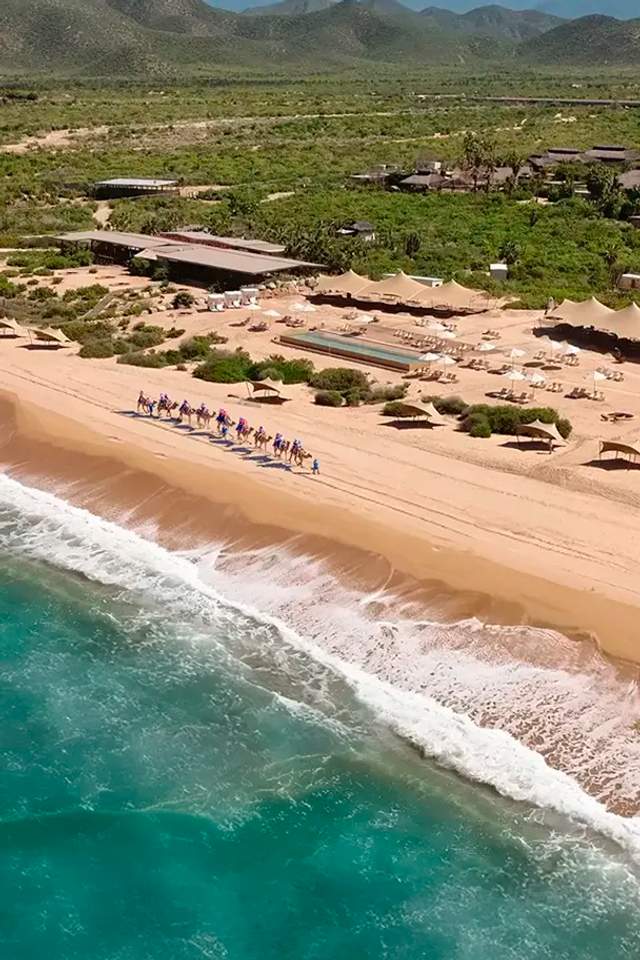
When a resort sits right on the shore, you can sit on the sand within that zone, swim in the ocean, and bring your own food and drinks. If a security guard tells you it is a "private beach," that is not accurate. You have the legal right to be there.
You cannot use the resort's private amenities: their lounge chairs, palapas, bathrooms, or pools. Those belong to the hotel. The sand is public; the elevated deck and everything on it is private property.
The system's one honest gap is beach access paths. The law guarantees the sand is public, yet it does not always guarantee a convenient corridor through private land to reach it. Sometimes there is a marked public access point beside a resort, and sometimes you ask at the resort entrance to get to the shoreline.
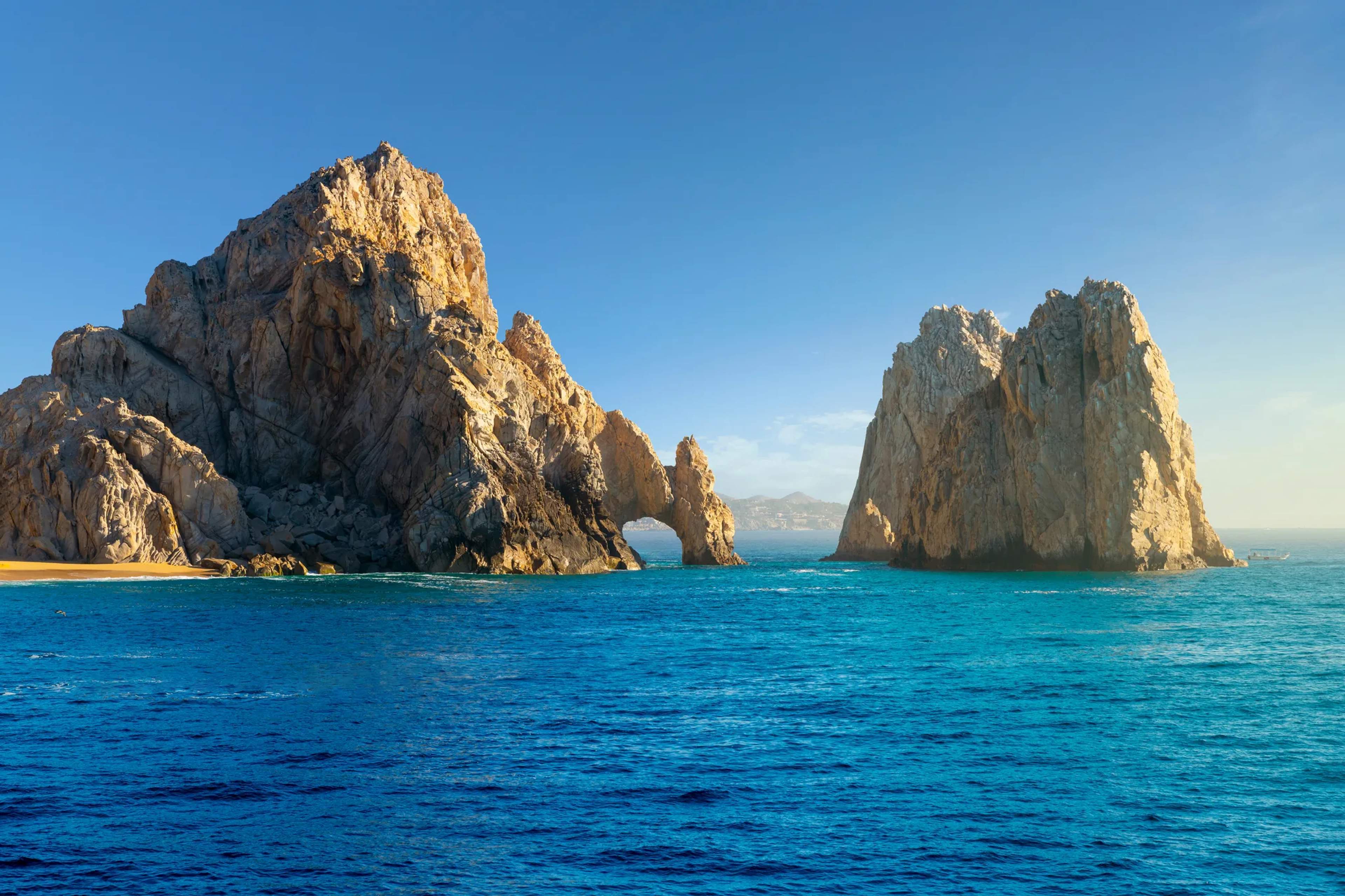
The Beaches You Can Walk or Drive To
El Medano, the Town Beach
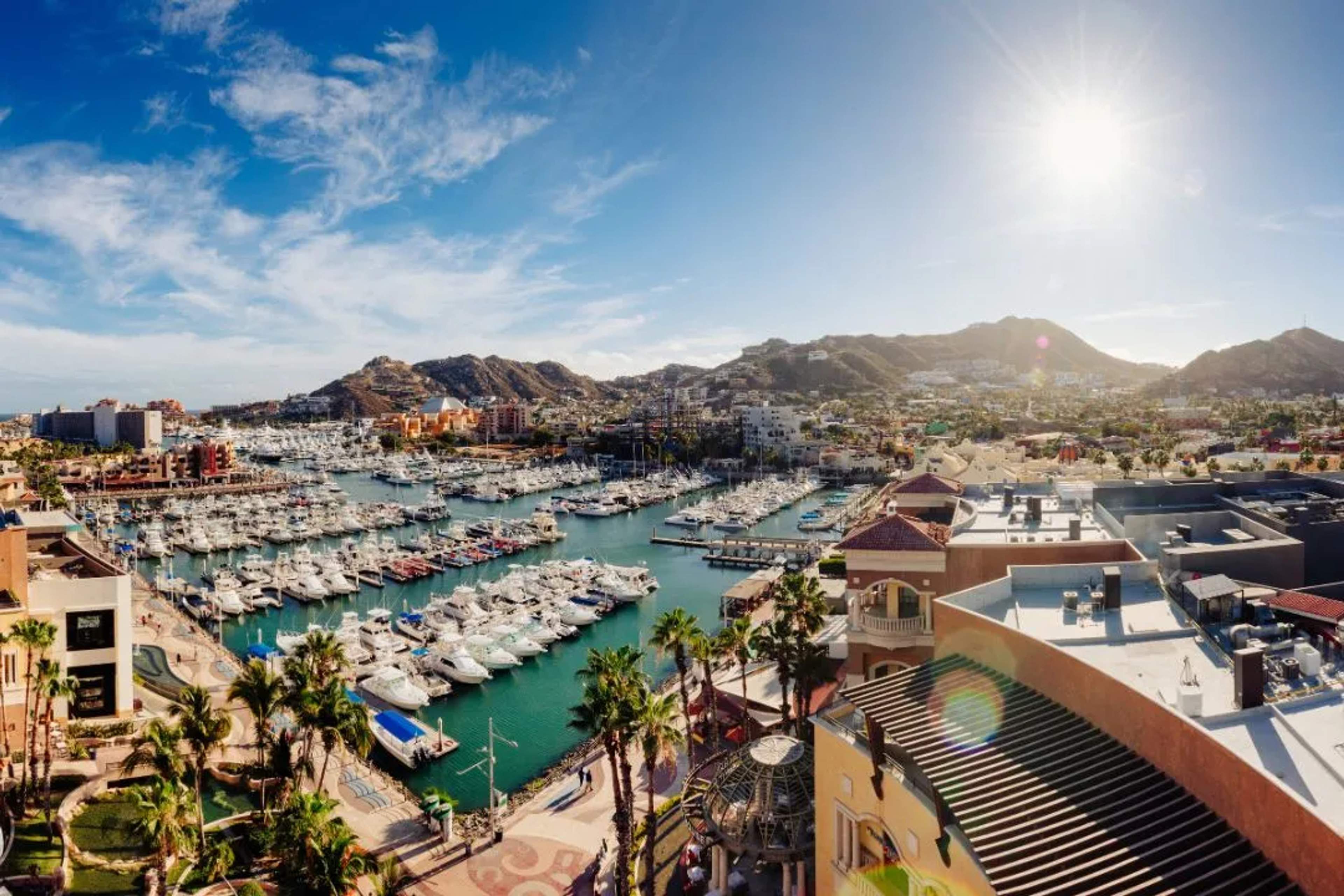
If you want the easiest public beach in Cabo San Lucas, start with Playa El Medano. It sits on the east side of the harbor entrance, right in the hub of town, and stretches two miles from the harbor toward Villa del Palmar with clear views of Land's End and El Arco.
You can walk directly from the marina or downtown to El Medano, with no gates or barriers. From the cruise port area, pass Luxury Avenue at Puerto Paraíso Mall, take the sidewalk between the mall and Marina Fiesta, then turn left to reach the sand.
El Medano curves inside Cabo San Lucas Bay, sheltered by Land's End and open only to the calm Sea of Cortez. Lifeguards work the beach, and roped-off zones mark swim areas.
A color-coded flag system shows current conditions, which makes it one of the few places in Los Cabos where you can swim comfortably year-round. It is also a popular launch point for kayak trips and boat rides out to El Arco, which matters for reaching Lover's Beach later.
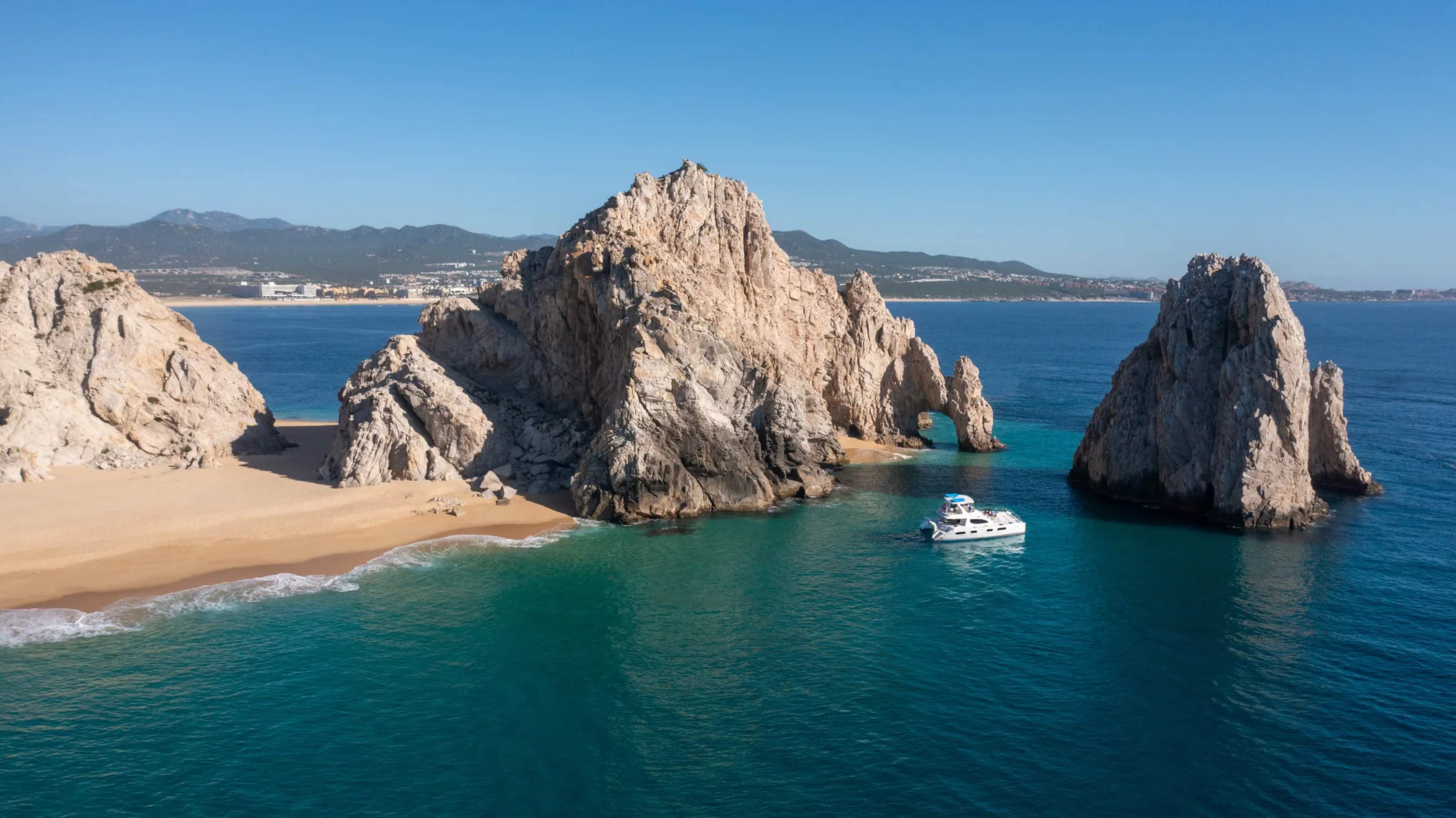
Chileno, Santa Maria, and Palmilla Along the Tourist Corridor
Head east on Highway 1 toward San José del Cabo and you reach Chileno and Santa Maria first, with Palmilla farther along. These public beaches have some of the region's easiest access and best facilities. Each has marked signage, its own parking, and on-site facilities.
Chileno Beach sits at roughly Km 14, next to Auberge Chileno Bay Resort, with public access maintained regardless of the hotel. Watch for the "Playa Chileno" signs, and a paved path leads from the free parking lot to the sand.
The lot fills early during high season, so arrive before 10 or 11 a.m. On-site you will find showers, portable toilets, trash disposal, and a lifeguard stand, with no entrance fee and no set hours.
Chileno is Blue Flag certified, and the coral reef near the point draws snorkelers straight from shore. By taxi it is about 15 to 20 minutes from Cabo San Lucas.
The Ruta del Desierto public bus also runs from Puerto Paraíso Mall roughly every 8 to 10 minutes for about 37 to 40 pesos one way. There is a formal Ruta del Desierto stop near Chileno, around Km 14.5, about 400 meters from the beach parking lot.
Santa Maria Beach lies about 1.5 miles south of Chileno, near the Twin Dolphin hotel, around Km 12 to 13. Look for the well-marked "Playa Santa Maria" sign, then follow the road about a quarter to a half mile to a paved lot.
Santa Maria has bathrooms, showers, a changing area, and lifeguards on duty, and it is accessible for people with disabilities. Its sheltered cove sits between two granite headlands that block surf and wind.
That shelter makes it a reliable choice for swimming and snorkeling. Marine life includes hundreds of tropical fish species, coral, sea turtles, and rays, and morning hours give the best visibility.
Palmilla Beach rounds out the corridor trio near San José del Cabo. It has marked public access points and parking near the Palmilla community, and its rocky reef edges draw surgeonfish, angelfish, parrotfish, rays, and the occasional sea turtle. It tends to be quieter than Chileno.
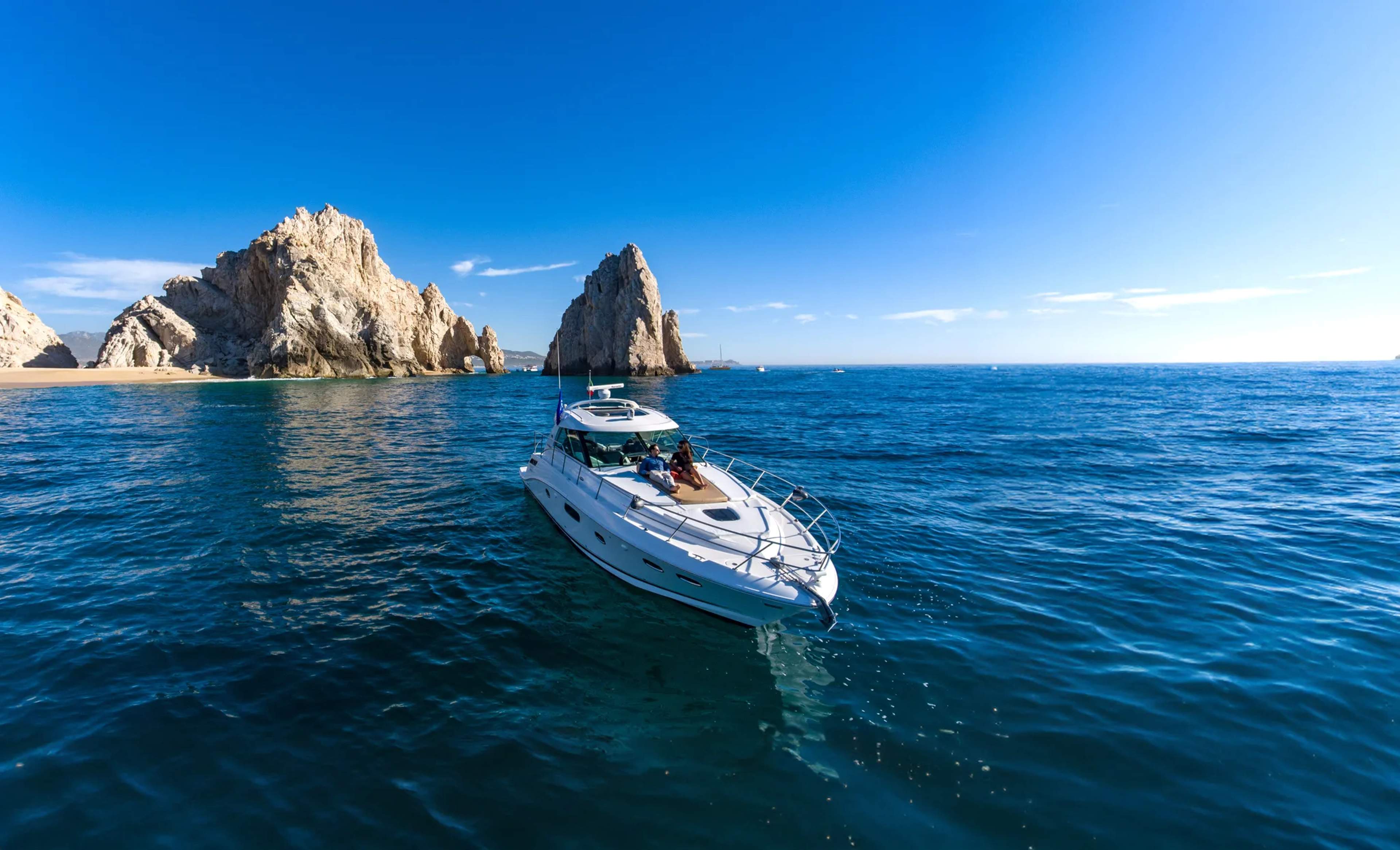
A Word on Blue Flag Beaches
If you want a shortcut for picking a well-maintained public beach, look for the Blue Flag. It is an international eco-label from the Foundation for Environmental Education, awarded for water quality, safety, accessibility, and environmental management. When one is flying, the beach is clean, safe, and monitored.
Los Cabos holds 27 Blue Flag certified beaches on the official regional list, more than any other destination in Mexico. Chileno, Santa Maria, Palmilla, and several Medano stretches all hold Blue Flag status.
Special Beach Locations to Explore
Lover's Beach at Land's End
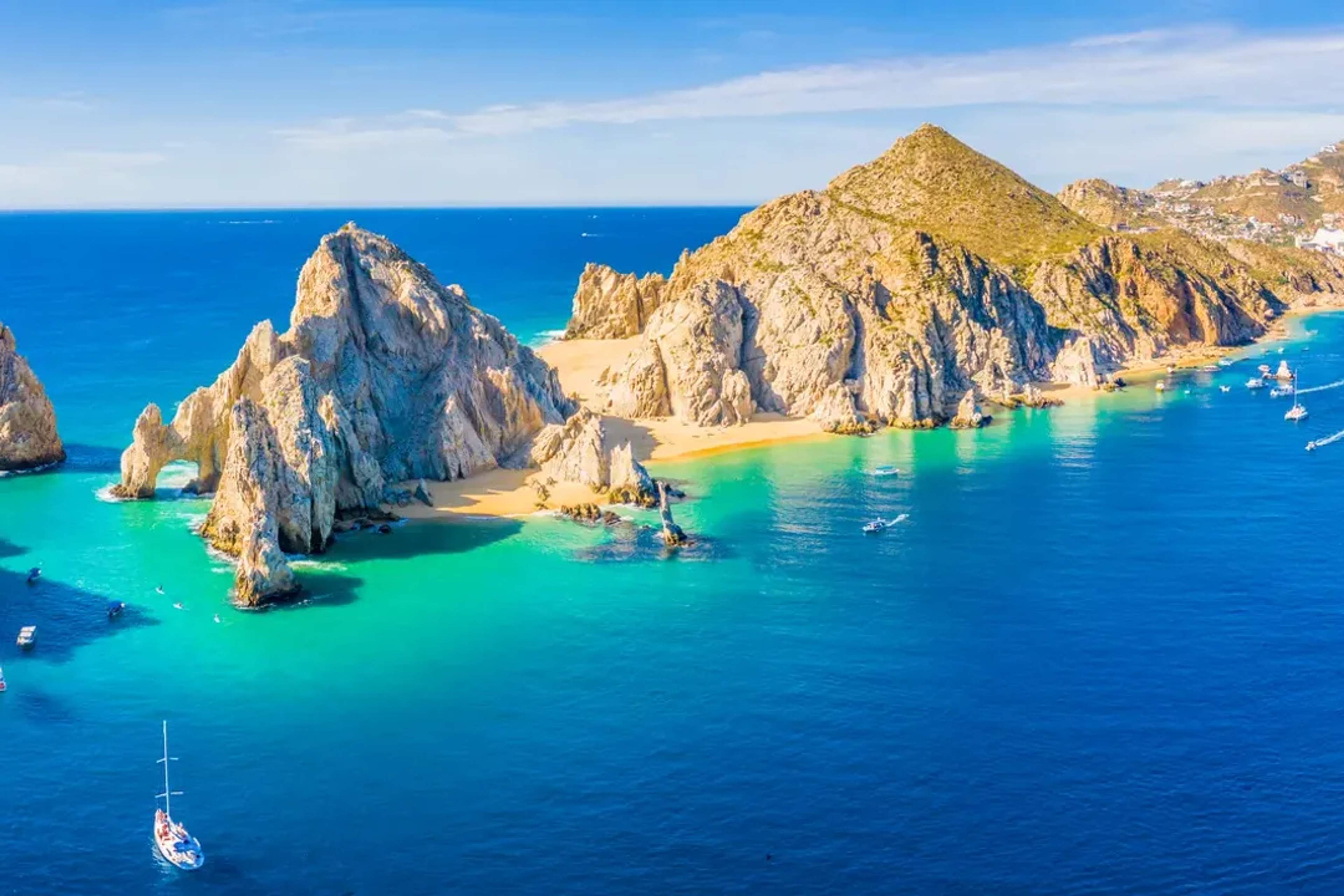
Playa del Amor sits at the very tip of the Baja California Peninsula between the granite cliffs of Land's End on the Sea of Cortez side. It is public and free like every other beach here. Rocky cliffs cut it off from the rest of Cabo, with no roads, no parking, and no walking route in. Climbing the rocks from Playa Solmar is not suggested.
Anyone who reaches Lover's Beach by water is free to settle in. There are no beach services and no permanent dock, so you coordinate your pickup with your boat captain before you go.
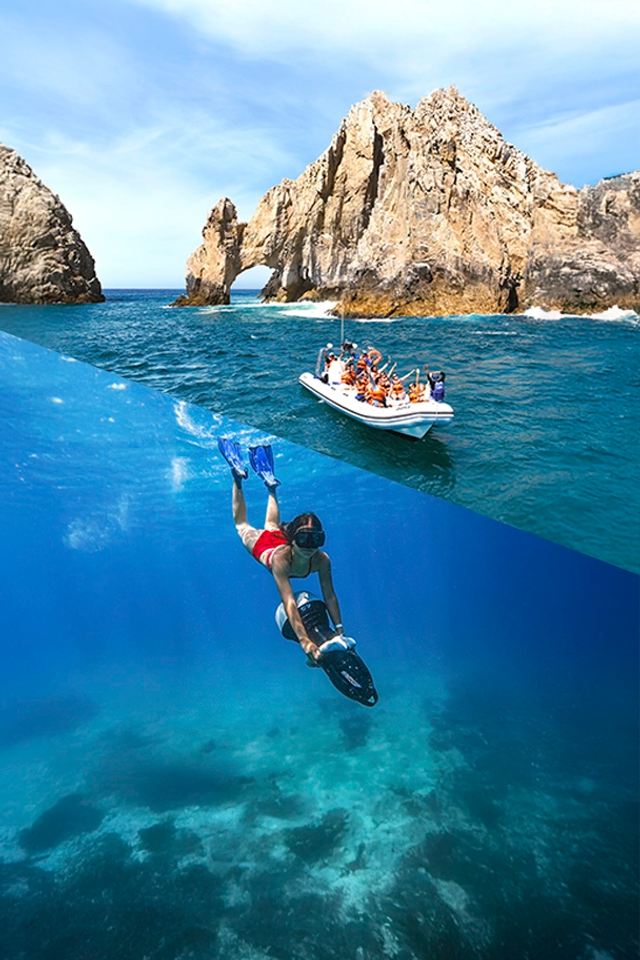
- Guided speedboat trip: Our Cabo Snorkel & Land's End Arch tour handles the boat, the gear, and the stop at Lover's Beach in one outing.
- Water taxi (panga): The most common option, departing from the Cabo San Lucas Marina or Medano Beach. The ride runs about 5 to 10 minutes, and boats pull close to the shallows for boarding. Confirm your captain will actually stop at the beach, not only pass by El Arco.
- Kayak or paddleboard: From Medano Beach, it is a 20 to 30 minute paddle over calm turquoise water.
Weather and strong currents can close access on some days, so build in flexibility. When you do land, the best snorkeling is on the bay side, running toward the marina breakwater, where visibility, sea turtles, and rays reward the trip.
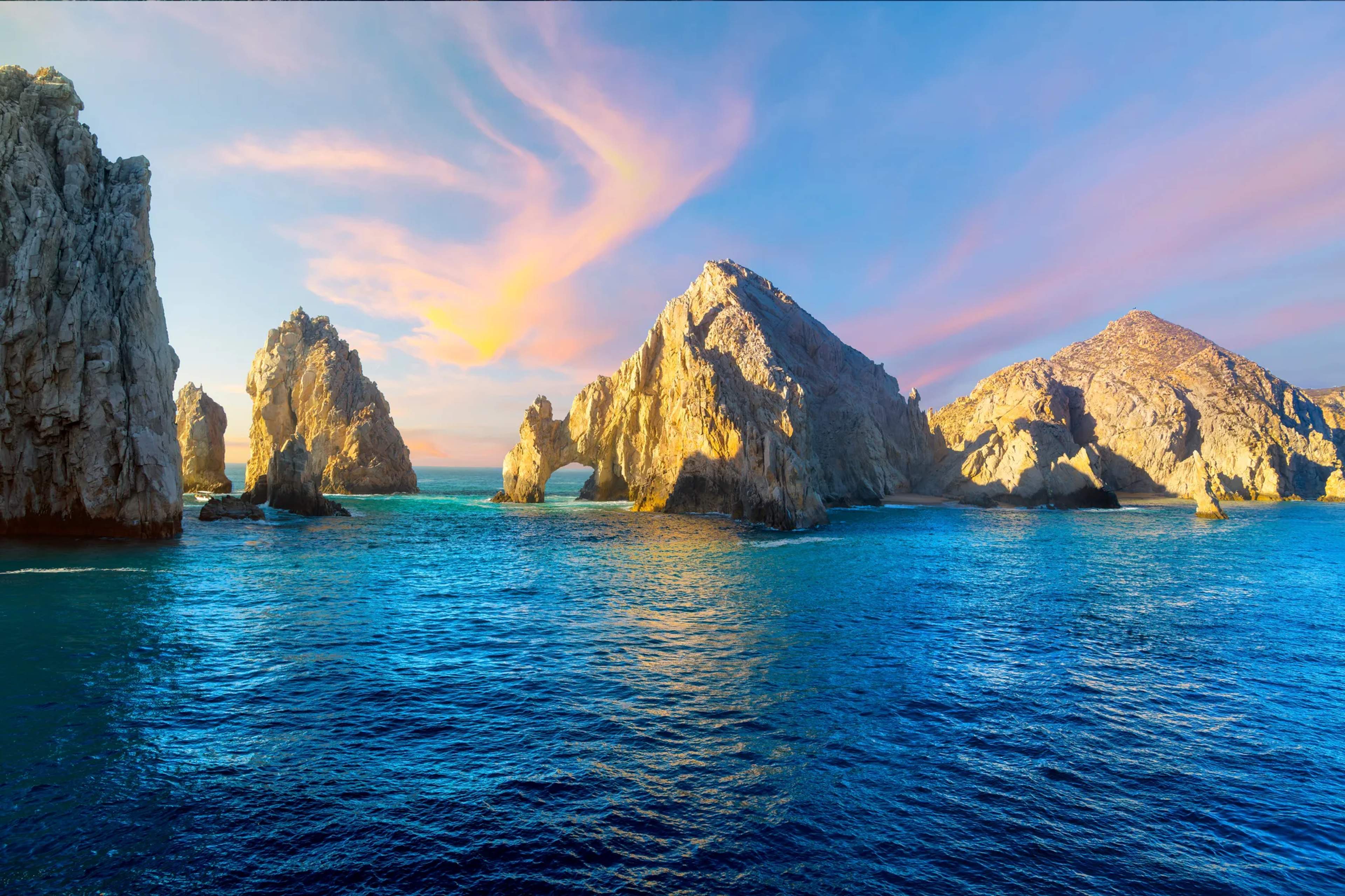
Balandra Beach Near La Paz
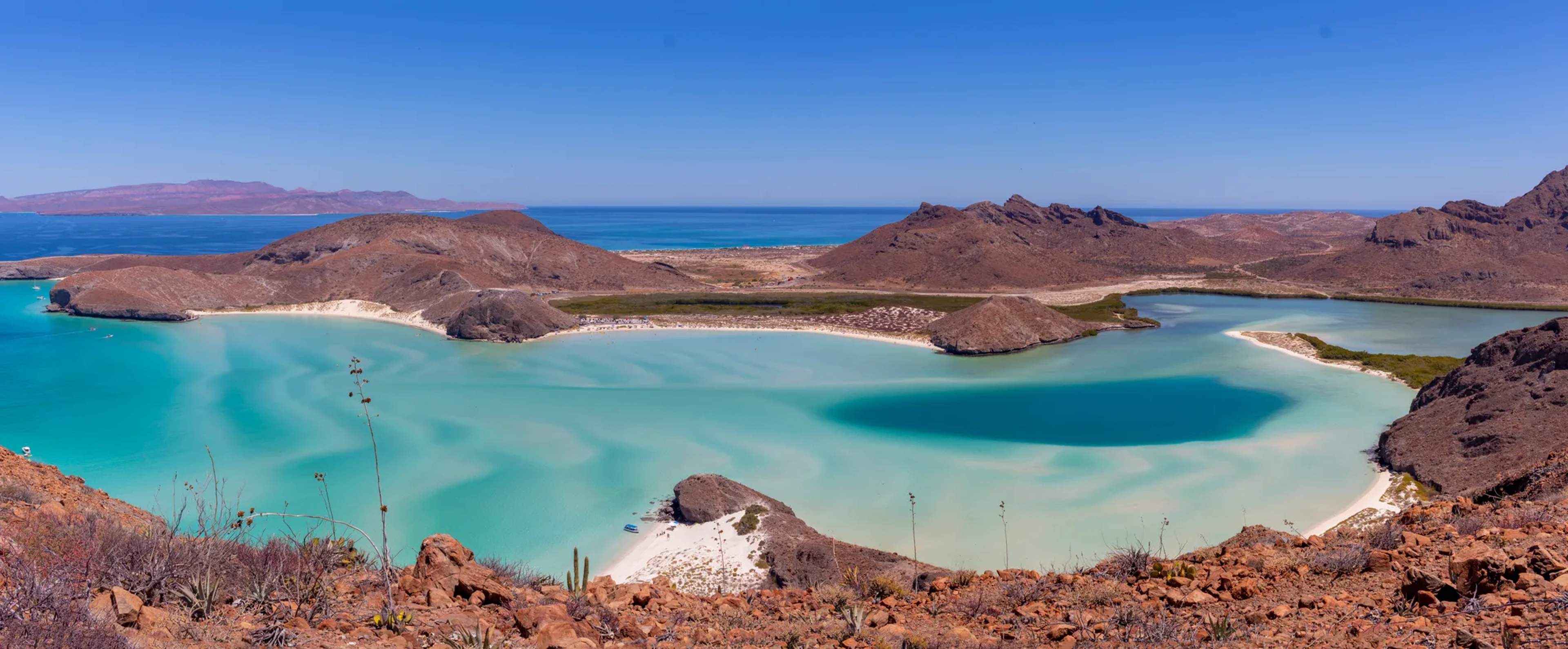
Balandra Beach sits on the eastern side of the peninsula near La Paz, part of the Balandra Wildlife Protected Area managed by CONANP. It is known for water so shallow you can wade hundreds of meters without it rising above hip level, and for El Hongo, the mushroom-shaped rock that anchors its skyline.
Balandra is near La Paz, so it is a longer trip from Cabo San Lucas. As a protected area, it follows CONANP access rules that require some advance planning, with seniors, retirees, disabled visitors, and children under 12 exempt from the fee.
The simplest way to visit is our Balandra Beach & La Paz Snorkeling tour, which covers the drive, the access logistics, and a full day on the water. You get the turquoise shallows and El Hongo without having to piece the trip together yourself.
Planning Your Beach Day
Finding Public Access Near Resort-Lined Stretches
For most public beaches, the access point is straightforward: follow the highway signs to a marked lot, or walk on directly, as at El Medano. Where a beach has no standalone public path, ask at the resort entrance whether you can pass through to reach the sand.
A polite "vamos a la playa" (we're going to the beach) is all you need. Remember, once you are on the sand within the tide zone, you have every right to be there.
What to Bring
- Sun-protective clothing: Pack UV-rated rash guards and lightweight long sleeves, and add a wide-brimmed hat for Cabo's strong sun.
- Water shoes: Rocky entries at spots like Santa Maria and Palmilla are much easier on protected feet.
- A dry bag: Keeps phones and valuables safe on boat rides and paddles.
- A rash guard for snorkeling: Many guided snorkel outings ask you to wear a rash guard rather than any SPF product, which also helps protect the reef.
A Safety Note on Swimming
Cabo's beaches split cleanly along one line: the sheltered Sea of Cortez side is generally safe, while the open Pacific Ocean side can be dangerous for swimming. Divorce Beach and Solmar Beach are public and worth seeing, and the same is true of the Pedregal stretches. These Pacific Ocean-facing beaches can have strong currents and heavy surf, with steep drop-offs close to shore, so don't swim there.
At staffed beaches, follow the flags: green means safe, yellow means swim with caution, red means stay out of the water, and purple or white signals dangerous marine life. Safe swimming concentrates in the protected bays: Medano, Lover's Beach on the Sea of Cortez side, Chileno, Santa Maria, and Palmilla.
When to Go
Cabo's beaches work in every season. With over 300 days of sunshine a year, each stretch of the calendar brings its own draw.
Winter (January to March) pairs mild 70 to 80°F days with migrating humpback whales offshore. Spring is calm and clear, with May averaging nine hours of daily sunshine.
Summer is warmer and quieter, with water temperatures rising toward their late-summer-to-early-fall peak for swimming. Autumn balances pleasant weather with fewer crowds, and the Sea of Cortez side stays swimmable across all of them.
The Best of Cabo Sits Past the Resort Gates
The best of Cabo's coastline waits just past the resort gates. Every beach here is yours by law, whether you stroll onto El Medano from downtown, follow the corridor to Chileno and Santa Maria, or ride out to Lover's Beach at Land's End.
Trade a poolside afternoon for a walk along a Blue Flag bay or a boat trip to the Arch. The real ocean adventure begins where the resort beach ends, and the sand is already waiting.
Frequently Asked Questions about Public Beaches in Cabo San Lucas
Can you have a bonfire or barbecue on public beaches in Cabo San Lucas?
Open fires and barbecues are not permitted on most public beaches in Cabo San Lucas. Municipal rules protect the sand, wildlife, and nearby vegetation from burn damage and litter.
For a beachside meal, stick to picnic-style food you bring in a cooler, or head to one of the many restaurants lining El Medano for a table right on the sand.
Are dogs allowed on public beaches in Cabo San Lucas?
Dogs are generally permitted on open stretches of public beaches in Cabo San Lucas, especially quieter ones like sections of El Medano outside of peak hours. Leashes are expected.
Blue Flag beaches and protected areas like Balandra restrict pets to safeguard wildlife and water quality. Check on-site signage first, and always carry water and waste bags.
Is Wi-Fi or cell service reliable at public beaches in Cabo San Lucas?
Cell service on public beaches in Cabo San Lucas is strong at El Medano and along most of the corridor, since major carrier towers cover the hotel zone. Streaming and maps work fine.
Coverage weakens at Lover's Beach behind the cliffs and drops off around Balandra's protected coves. Download offline maps and boat pickup details before you head out.