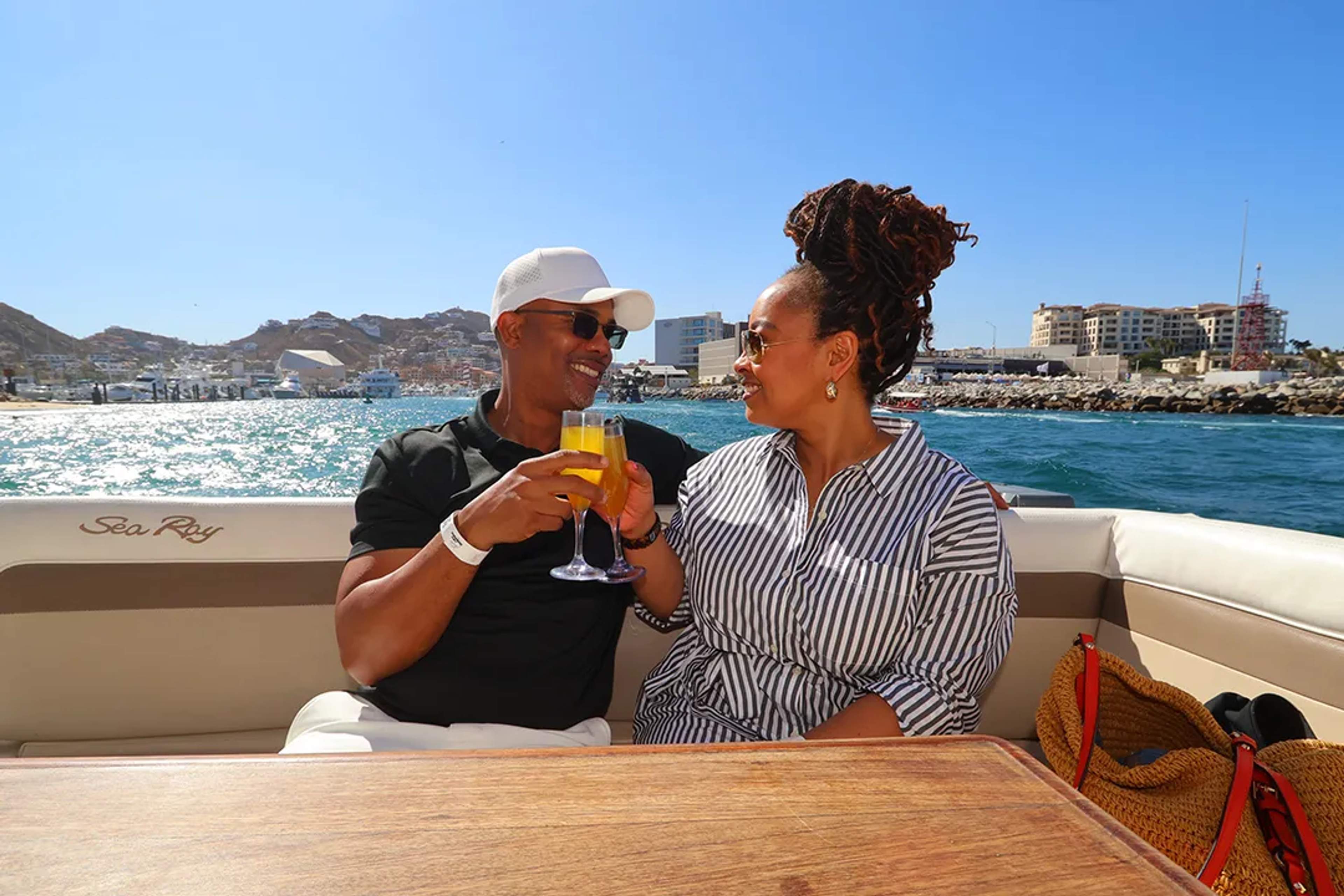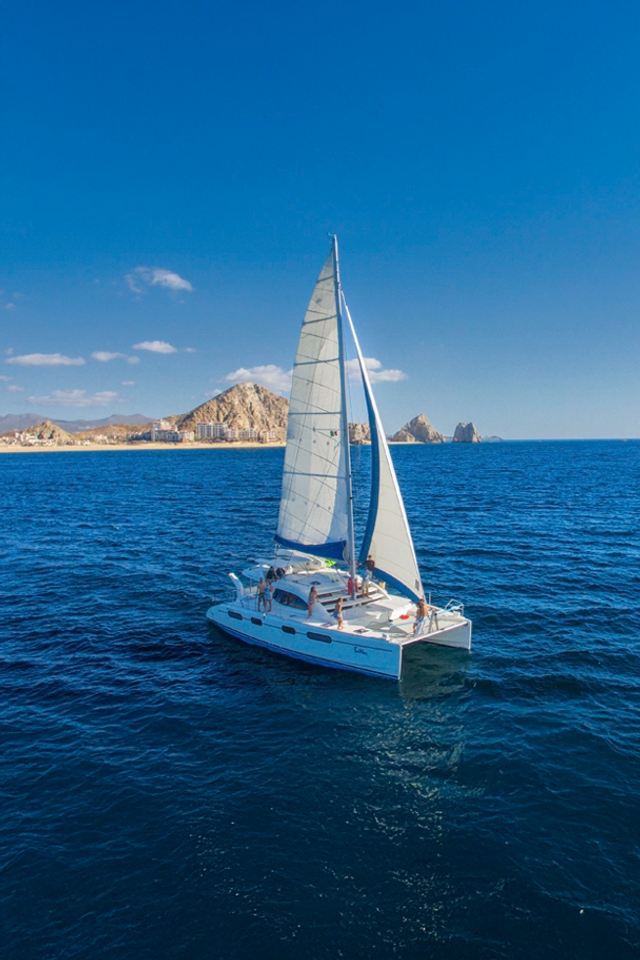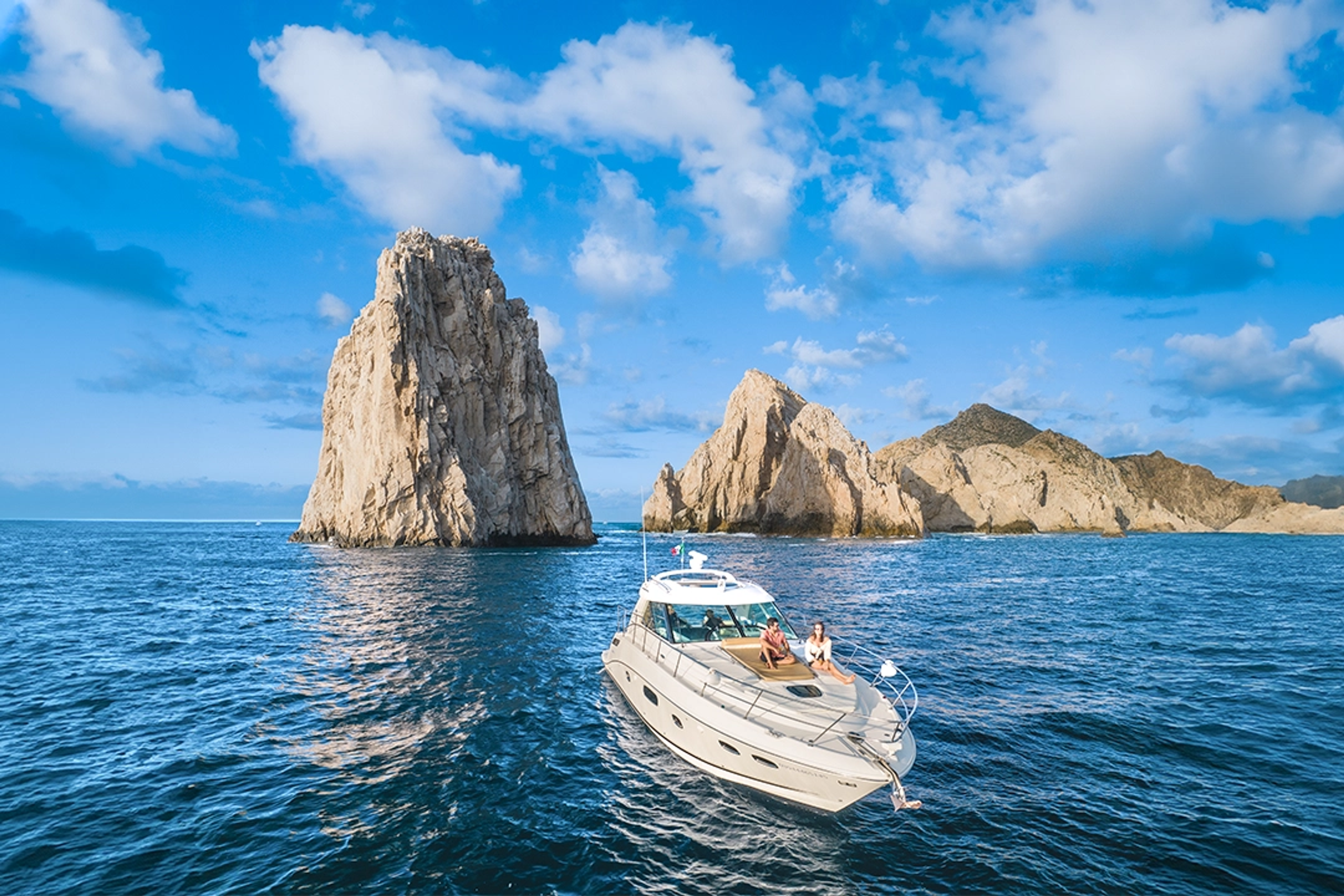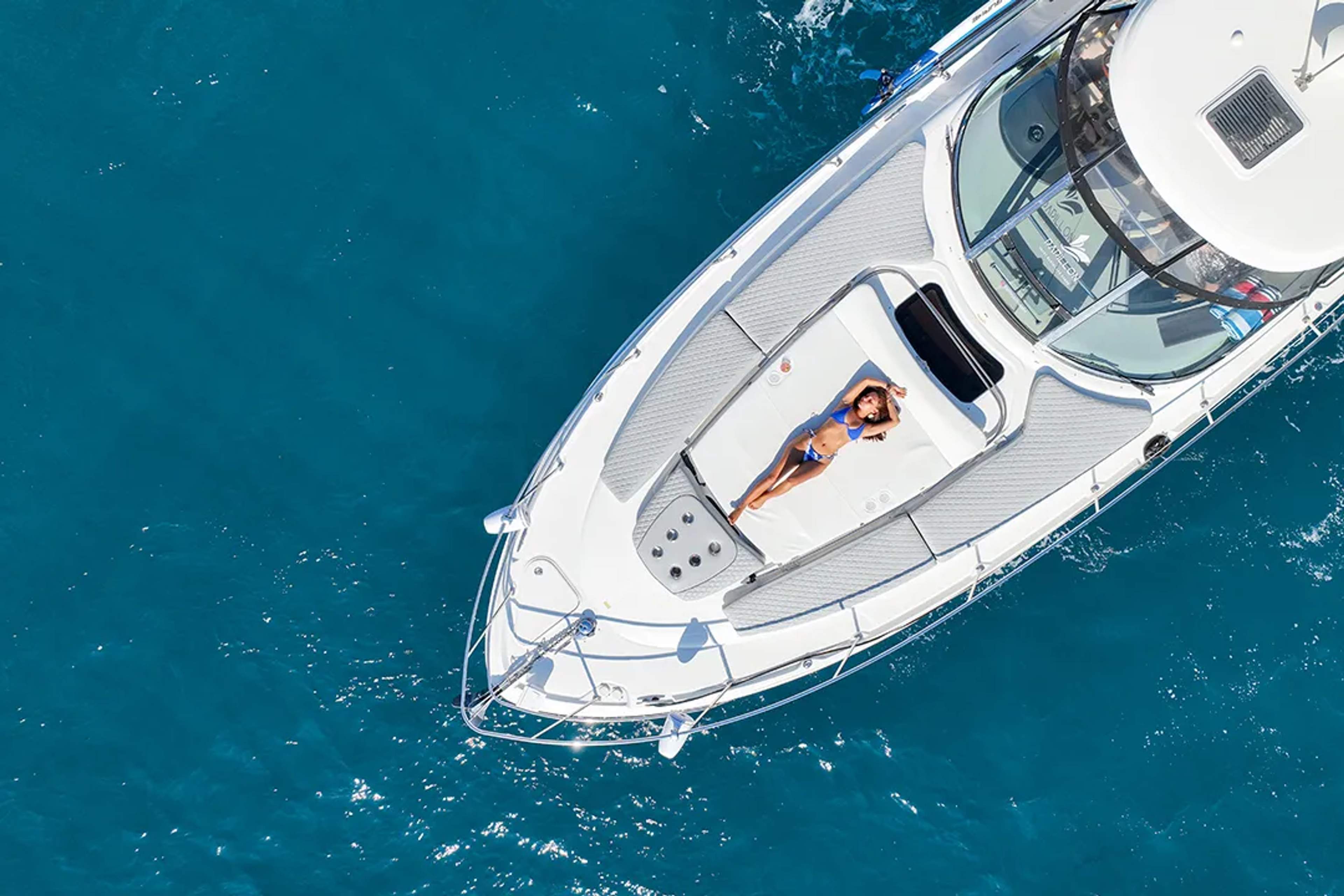
The difference between chartering a private catamaran in Cabo San Lucas and joining a group tour is the difference between having space to stretch out with a drink in hand, choosing when and where you anchor, and adjusting your route for the best wildlife sightings versus strategically positioning yourself to claim a seat on a fixed schedule.
When you're making a significant investment for your group, that distinction matters.
The real question isn't whether a private charter is worth the premium: it's knowing what makes a day on the water genuinely exceptional versus one that simply checks boxes.
Why Cabo's Waters Deserve a Private Charter
Cabo San Lucas sits at the southern tip of the Baja California Peninsula, where the Pacific Ocean meets the Sea of Cortez. This geographic convergence creates marine conditions you won't find elsewhere.
The Sea of Cortez harbors 891 fish species, 90 of them found nowhere else on Earth. This extraordinary biodiversity is exactly why UNESCO designated these waters a World Heritage Site, recognizing what Jacques Cousteau observed decades earlier when he called it "the world's aquarium."
That biodiversity becomes the real advantage of a private catamaran. You get the flexibility to adjust your route based on real-time conditions and wildlife sightings, which means we can pivot based on where marine life is actually showing up that day rather than following a fixed schedule.
The Space Economics That Justify the Premium
Private catamarans accommodating 1-40 guests provide roughly four to six times more deck space per person than larger vessels. That translates to dedicated lounging areas, unobstructed views from multiple vantage points, and room to move freely between activities without navigating around other passengers.
This matters most when you anchor. Whether you're spending time at Chileno Bay for snorkeling or positioning for sunset at The Arch, the vessel becomes your floating base rather than transportation with a schedule—a place where you can settle in rather than just pass through.
Destinations That Define Your Day
We focus private charters on the Land's End area, the dramatic southern peninsula tip where protected waters meet open ocean.
These locations anchor every route we plan:
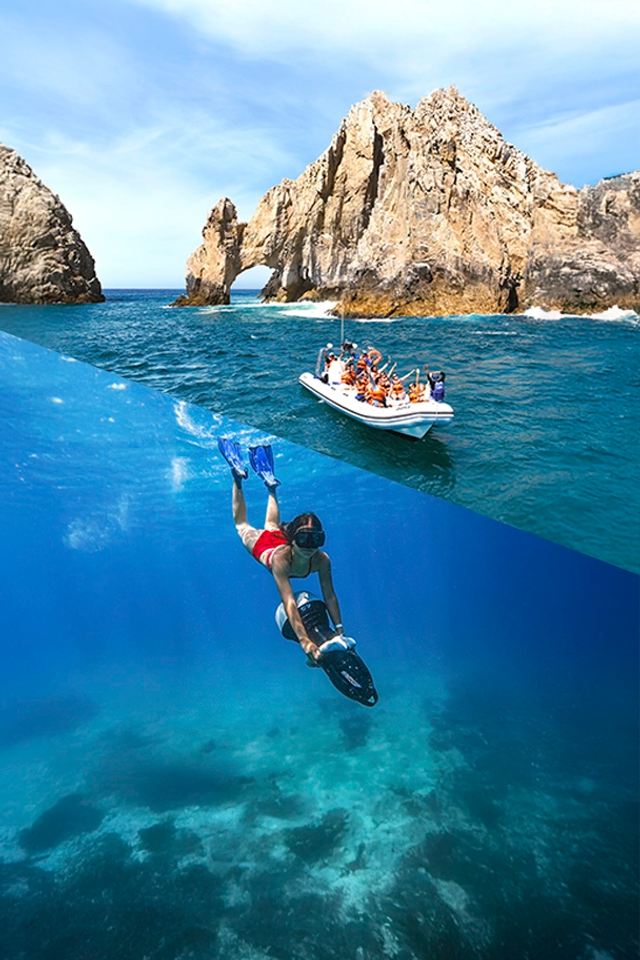
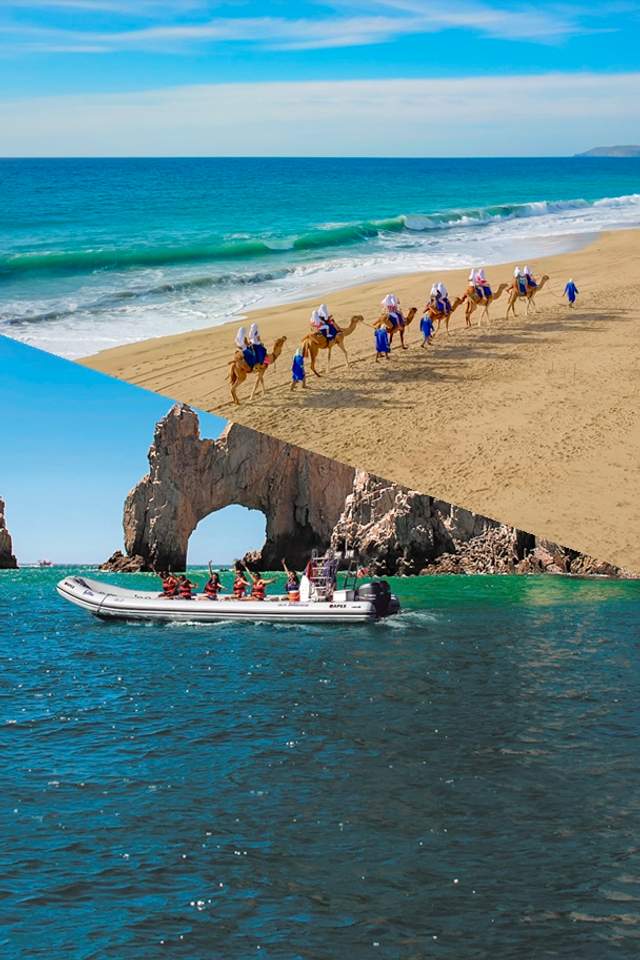
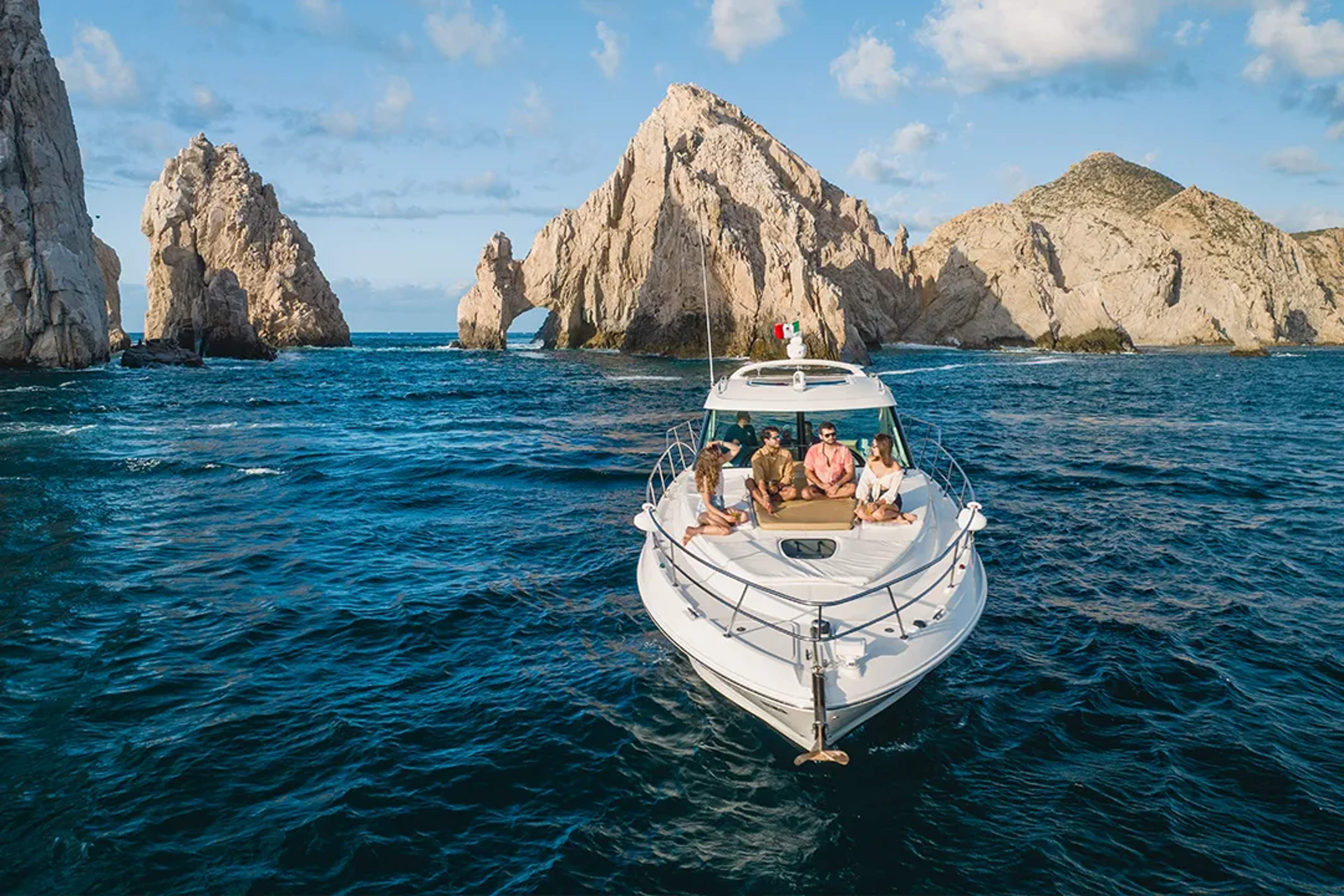
El Arco serves as Cabo's signature landmark. The granite arch formation rising from the sea represents the literal end of the Baja Peninsula, a geographic marker that gives the region its "Land's End" designation. The rock formations here illustrate coastal erosion processes that have shaped the peninsula over millennia.
Lover's Beach sits adjacent to the arch, occupying the unique junction where calmer Sea of Cortez waters meet rougher Pacific Ocean conditions. You can observe the contrasting ocean characteristics from a single beach, a phenomenon accessible primarily by water.
The sea lion colony near Land's End provides marine wildlife viewing within a protected area. We maintain appropriate viewing distances and respect marine mammal habitats during every approach.
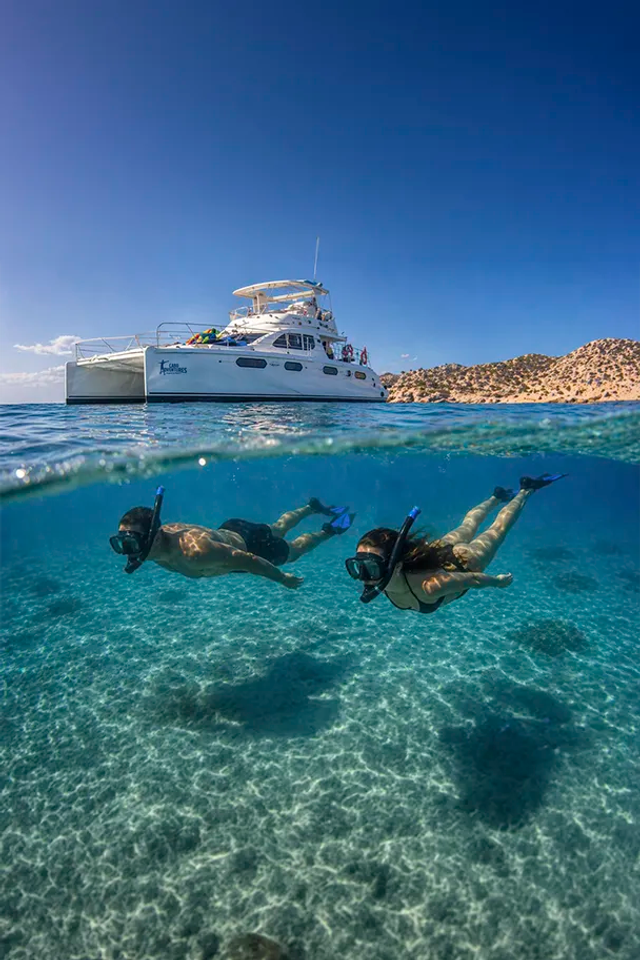
Chileno Bay and Santa Maria Bay represent the primary snorkeling destinations we access. Santa Maria Bay, a protected marine sanctuary, offers calm conditions and consistent tropical fish populations, making it ideal for all skill levels. Chileno Bay, on the other hand, is known for its crystal-clear waters, vibrant coral and rocky formations, and excellent visibility, often attracting a wide variety of marine life.
Together, these bays provide some of the best snorkeling experiences in Los Cabos, with conditions selected daily based on weather and sea conditions to ensure the best possible experience.
Wildlife Encounters Worth Planning Around
Cabo's marine wildlife follows predictable seasonal patterns worth planning around.
December through April brings peak whale activity. Humpback whales arrive mid-December and remain through mid-April, with mothers and calves creating the most dramatic breaching displays from mid-December through February. Gray whales migrate through these same waters during this window.
April through June offers something genuinely rare: the chance to encounter both blue whales and whale sharks in the same region. Blue whales are most reliably spotted in early spring, with sightings becoming less frequent as the season progresses into June. Whale shark encounters peak during April and May, when these gentle giants congregate in the nutrient-rich waters near La Paz.
Year-round encounters include dolphins, sea lions, and various shark species that maintain consistent populations outside peak whale seasons. The marine diversity doesn't disappear—it simply shifts.
October through November offers a strategic alternative for those seeking fewer crowds while still enjoying excellent wildlife viewing in warm waters with post-hurricane stability.
What Makes Our Private Charters Different
When you book a private catamaran with us, several factors define the quality of your day:
Conservation compliance matters beyond reputation. Our crews demonstrate familiarity with wildlife viewing distances and protected area regulations because we work within these environments daily.
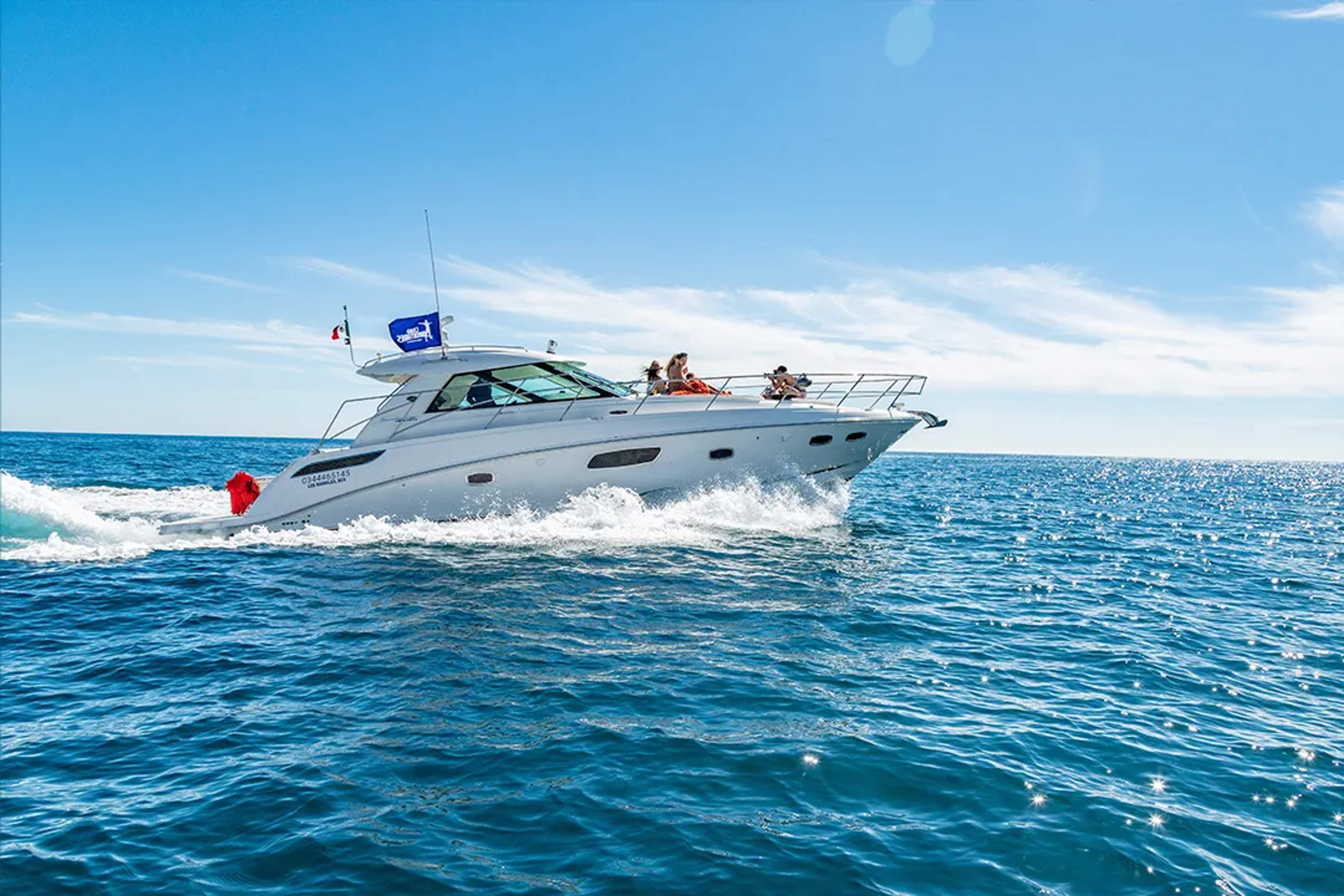
Crew expertise becomes apparent in how we respond to wildlife sightings and adjust routes based on current conditions. We position you for optimal viewing without disturbing marine life.
Included amenities feature snorkeling equipment and paddleboards as baseline gear. We operate on all-inclusive frameworks:
- High-quality snorkel gear for all passengers
- Paddleboards for exploring calm bays
- Gourmet appetizers and traditional Mexican lunch
- Premium open bar with handcrafted beverages
- Options to arrange specialized catering
Customization flexibility extends beyond departure times
- Route adjustments based on your interests
- Activity duration at each location
- Dietary accommodations
- Timing that suits your schedule
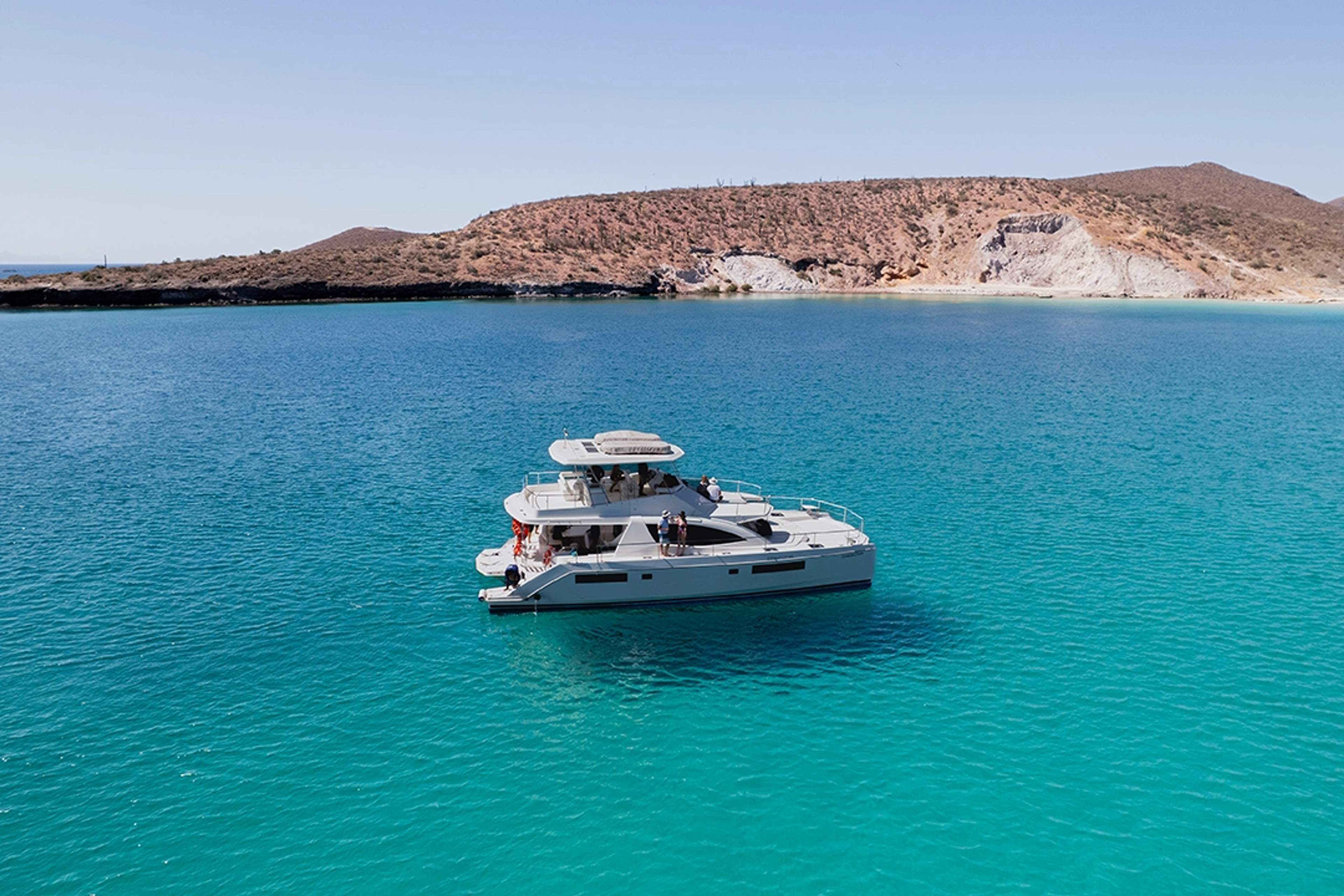
Vessel specifications matter for comfort. Catamarans' twin-hull design provides exceptional stability that prevents the rocking motion of monohull boats. This structural advantage is critical for passengers prone to seasickness and essential for families with children or elderly guests.
Preparing for Maximum Comfort
Proper preparation makes a measurable difference in your charter quality. Luggage and footwear require adjustment:
- Use soft-sided bags rather than hard suitcases
- Bring water shoes for rocky entry points during snorkeling
- Reflection from water surfaces intensifies exposure beyond typical beach conditions
- Wear sun-protective clothing with UPF rating
- Bring wide-brim hats
Morning and evening wind can create cool conditions, so pack a light windbreaker even when temperatures suggest otherwise
Multiple swimsuits allow one to dry while wearing another.
Water temperatures typically range from the low 70s to low 80s°F during peak season, making wetsuits optional for most visitors.
How Different Groups Get the Most Value
We customize private catamarans through operational adjustments of timing, activities, and itinerary design:
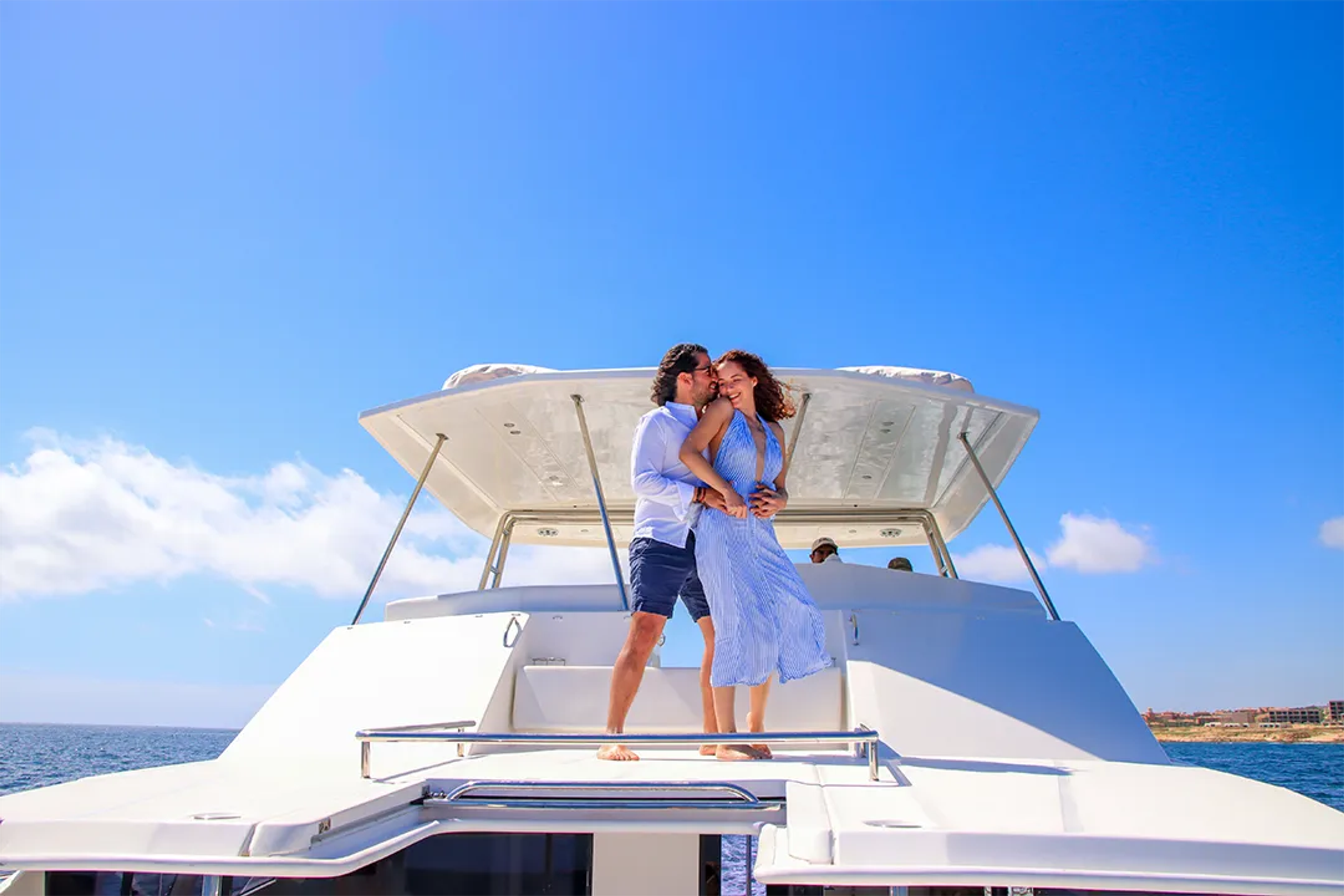
Couples celebrating milestones prioritize sunset timing as the defining feature. Early evening golden hour window creates the atmosphere honeymoons and anniversaries require. Complete privacy eliminates shared-boat dynamics. The vessel positioning and atmosphere take precedence over constant engagement.
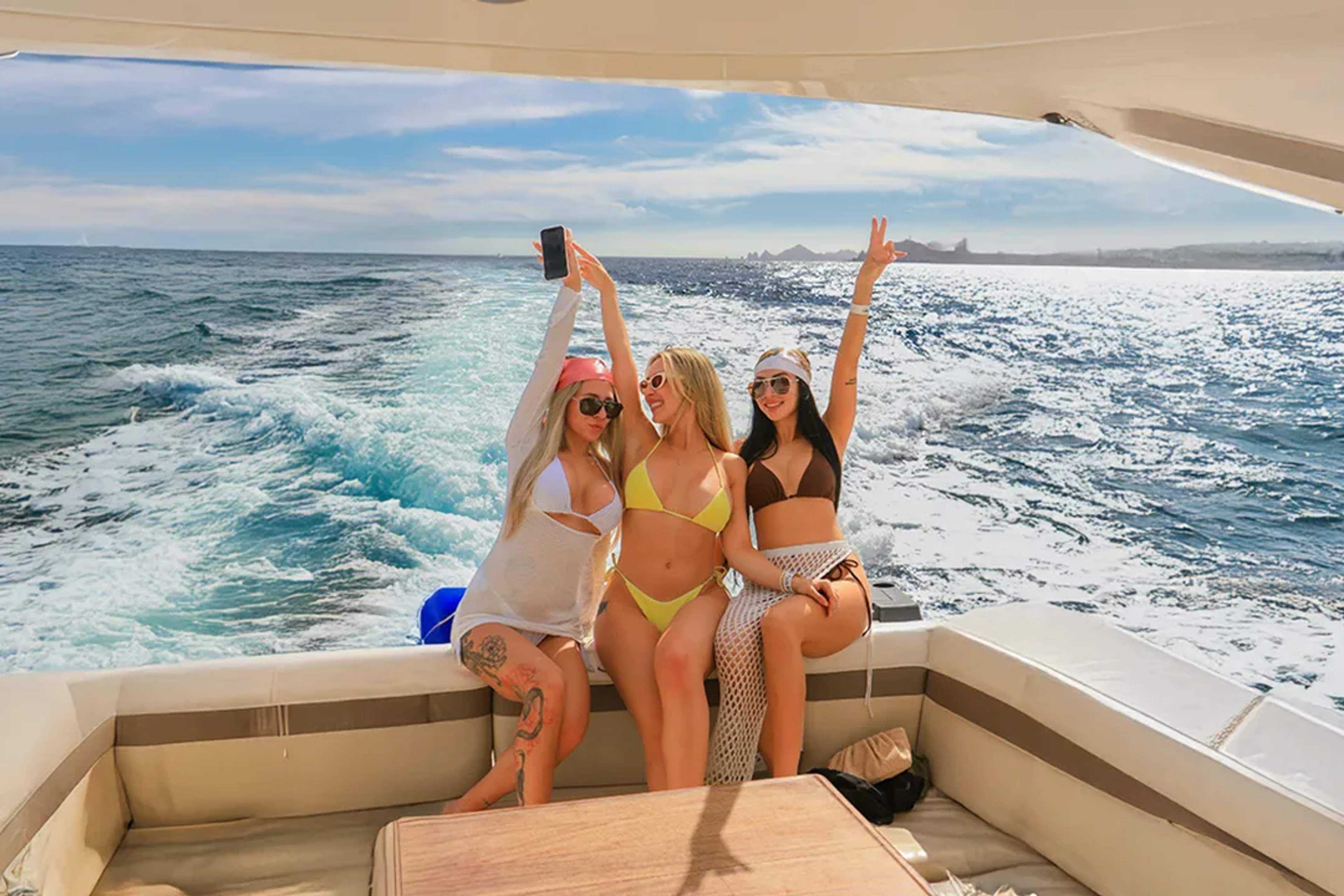
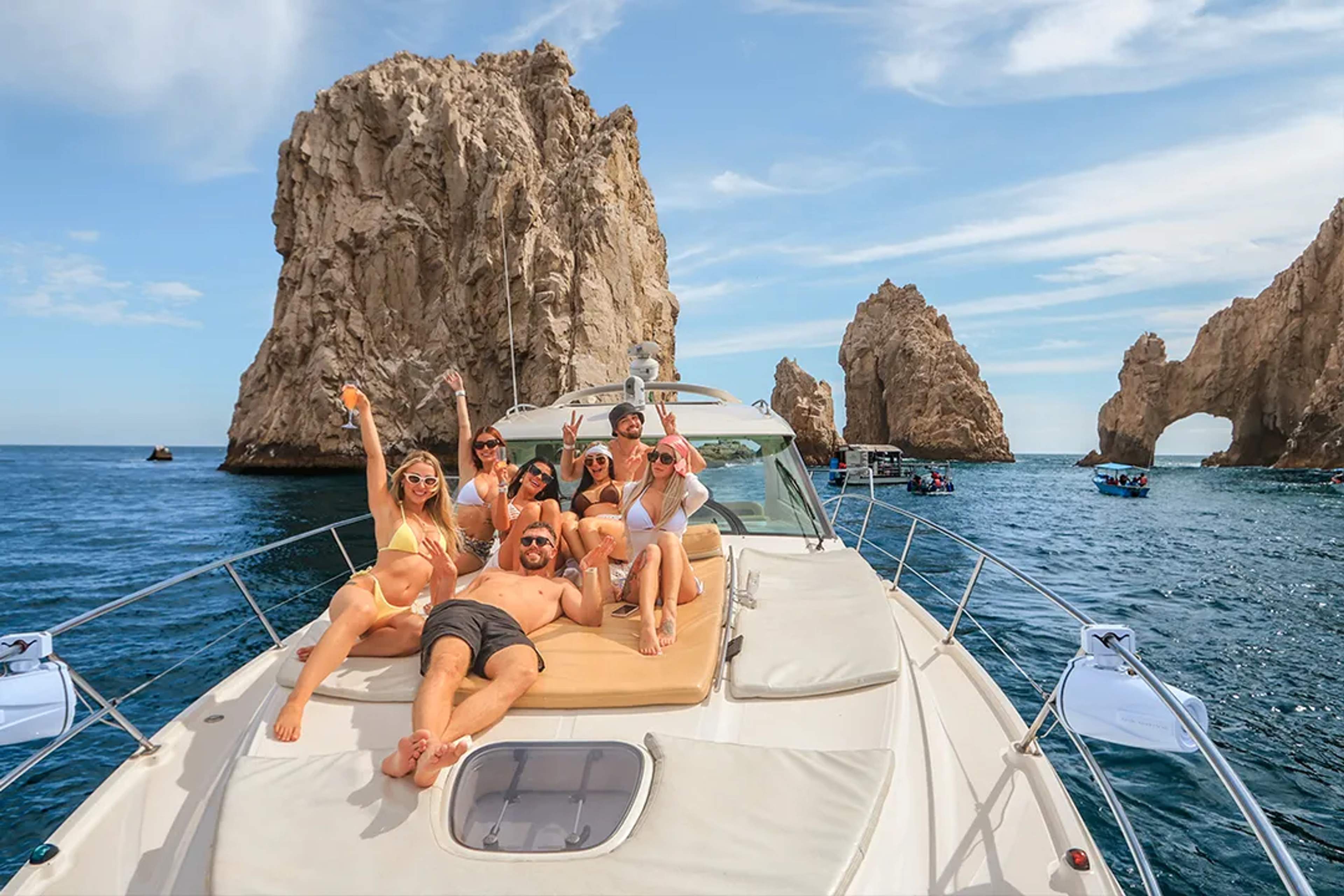
Friend groups and bachelorette parties thrive on the combination of privacy and space. Everyone gets a prime spot for photos with the Arch as backdrop. The open bar and deck space mean conversations flow without navigating around strangers. When someone wants to jump in for a swim or try paddleboarding, there's no coordinating with 30 other passengers.
Families with multiple generations benefit most from the catamaran's inherent stability. Twin-hull design prevents seasickness in children and elderly passengers. Protected bay locations like Chileno Bay offer calm snorkeling for varying abilities. Group capacities extending to 25 guests keep extended families together.
Active adventure seekers maximize value through multi-activity itineraries. We move between snorkeling locations, wildlife viewing, and water sports. Equipment provision enables seamless transitions between activities. Morning departures capture the lightest winds and smoothest seas according to marine forecasts.
This timing advantage aligns with documented marine weather patterns showing morning periods consistently feature calmer conditions than afternoon hours.
Frequently Asked Questions
How far in advance should I book a private catamaran charter in Cabo?
Book 4-8 weeks in advance during high season (December through April) to secure your preferred date and time slot. Peak whale-watching months from mid-December through February require the longest lead times. During shoulder seasons (October-November and May-June), one week's notice typically suffices.
Last-minute bookings may be available depending on current availability, but booking early ensures you get your ideal departure time and can coordinate with other vacation plans.
What's the best time of day to charter a private catamaran?
Morning departures between 9:00-10:00 AM offer the calmest sea conditions and best wildlife activity, particularly for whale watching during peak season. Waters are typically smoothest before afternoon winds pick up, reducing seasickness risk for sensitive passengers.
Afternoon charters departing around 2:00-3:00 PM provide stunning sunset views and golden hour lighting for photography, making them ideal for romantic celebrations. Your choice depends on whether you prioritize optimal marine conditions and wildlife encounters versus sunset ambiance.
Can we customize the itinerary on a private catamaran charter?
Absolutely. Private charters operate as flexible frameworks rather than fixed schedules. You can adjust your route based on real-time wildlife sightings, spend more time at preferred snorkeling locations, or modify activity durations at each stop.
We accommodate dietary restrictions, arrange specialized catering, and adjust departure times to suit your group's schedule. Route changes respond to current conditions and your interests, whether that means extending time with a pod of dolphins or prioritizing photography at El Arco during optimal lighting.