Cabo San Lucas marine life is unusually diverse because the Pacific Ocean meets the Sea of Cortez right at Land's End. In a single day on the water you can watch humpbacks breach offshore, snorkel with sea lions at the Arch, and, in season, swim alongside whale sharks near La Paz.
Jacques Cousteau called the UNESCO-listed Sea of Cortez "the world's aquarium," and the species list backs it up. Below are the eight animals that define these waters, when to find them, and the tours that get you closest.
Why These Waters Hold So Much Life
Three forces converge here. Cold, nutrient-rich water surges upward from the ocean floor, feeding blooms of plankton that sustain everything from reef fish to blue whales.
Right at Land's End, temperate Pacific waters collide with the warmer, shallower Sea of Cortez. That mixing, combined with millions of years of geological isolation, creates a region where reef species, open-ocean giants, and endemic species share the same coastline.
1. California Sea Lions
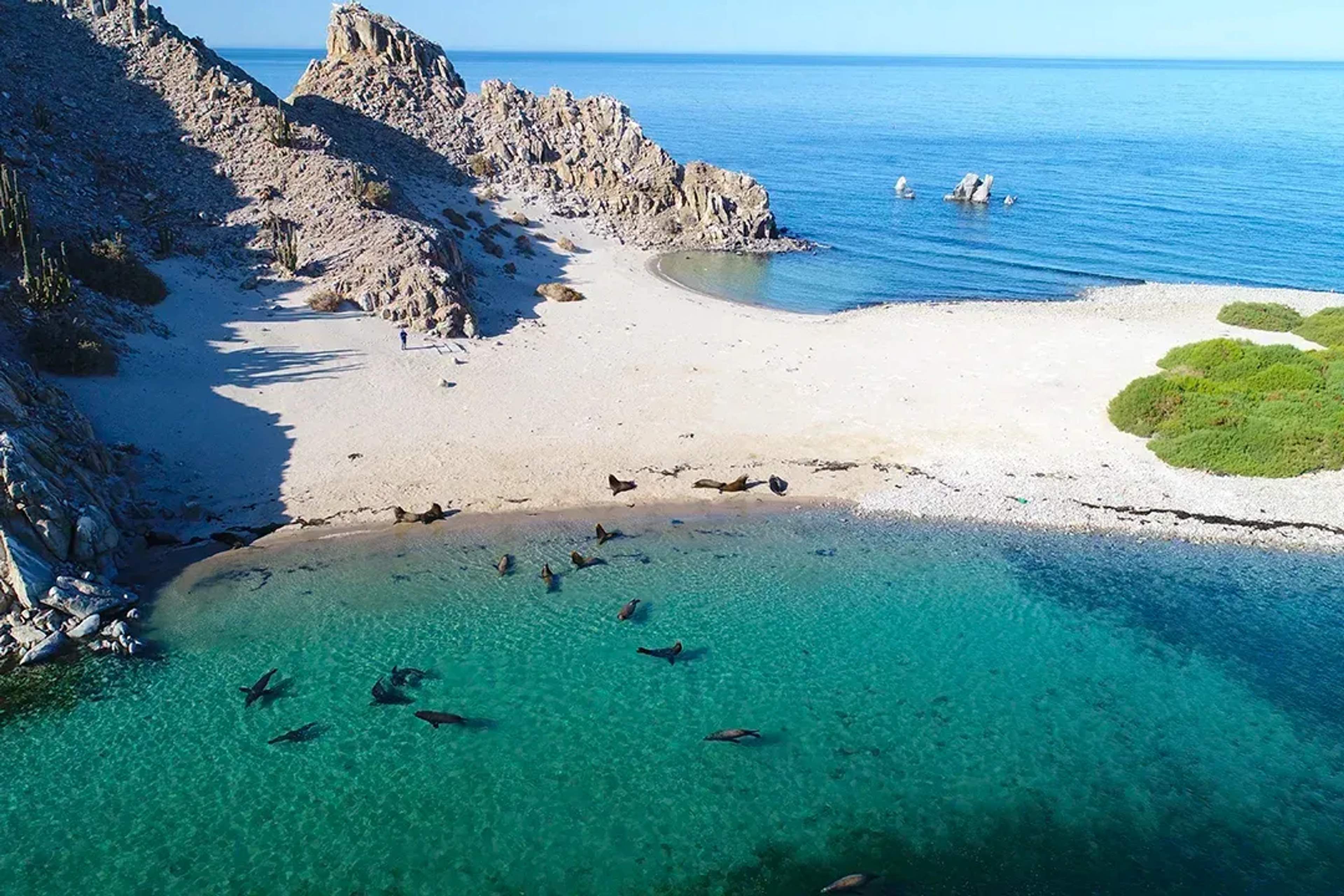
California sea lions are permanent residents of the Cabo San Lucas coastline, with a colony established on the rocks at Land's End visible from nearly every boat that passes the Arch. On land, they bask and bark, while in the water they transform into acrobats with surprising agility.
For a deeper sea lion swim, the premier destination is Los Islotes near La Paz. The sea lions there are famously interactive, often called "puppies of the sea" by divers, and visitors stay present year-round across both colonies.
2. Humpback Whales
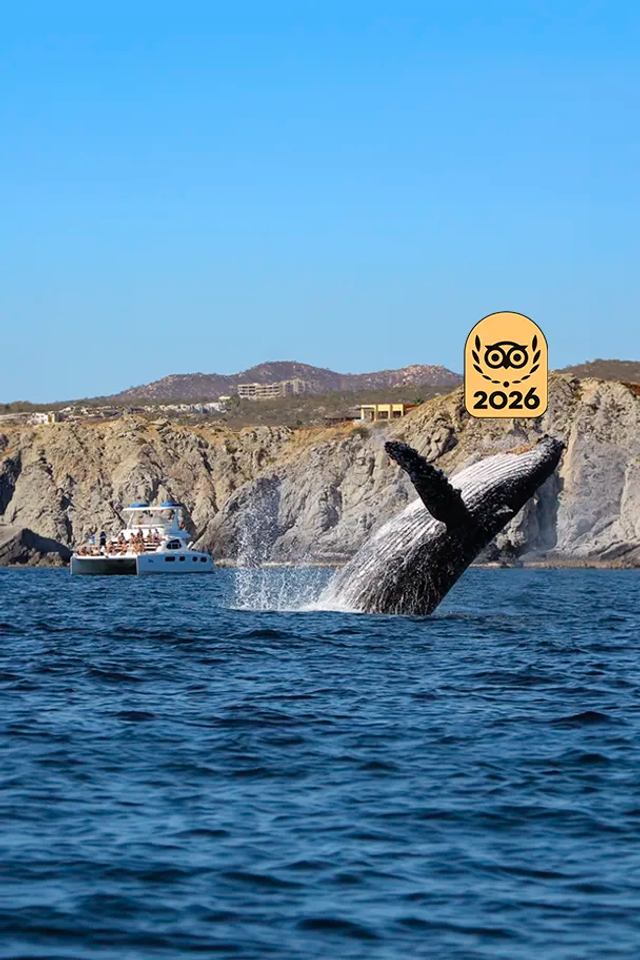
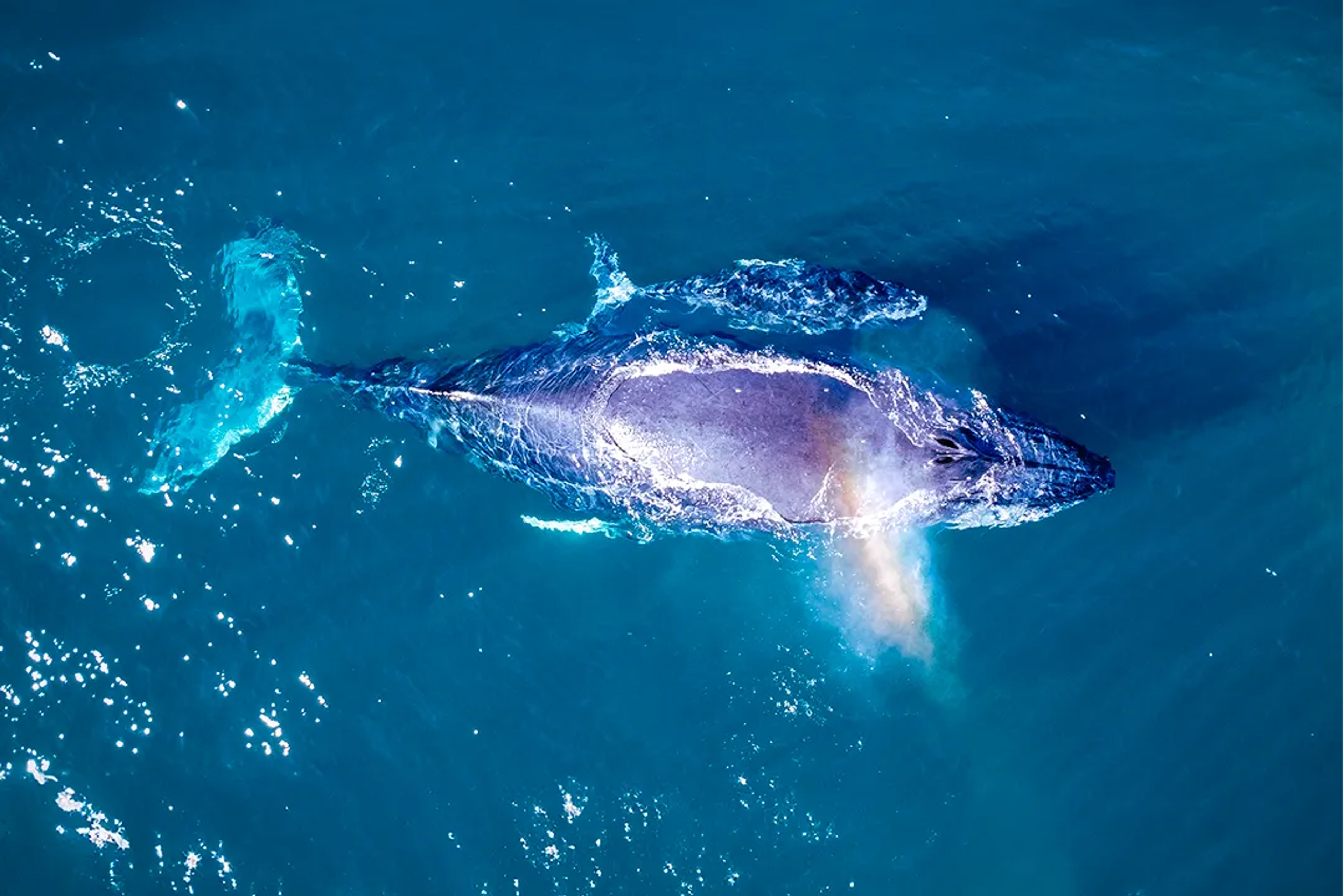
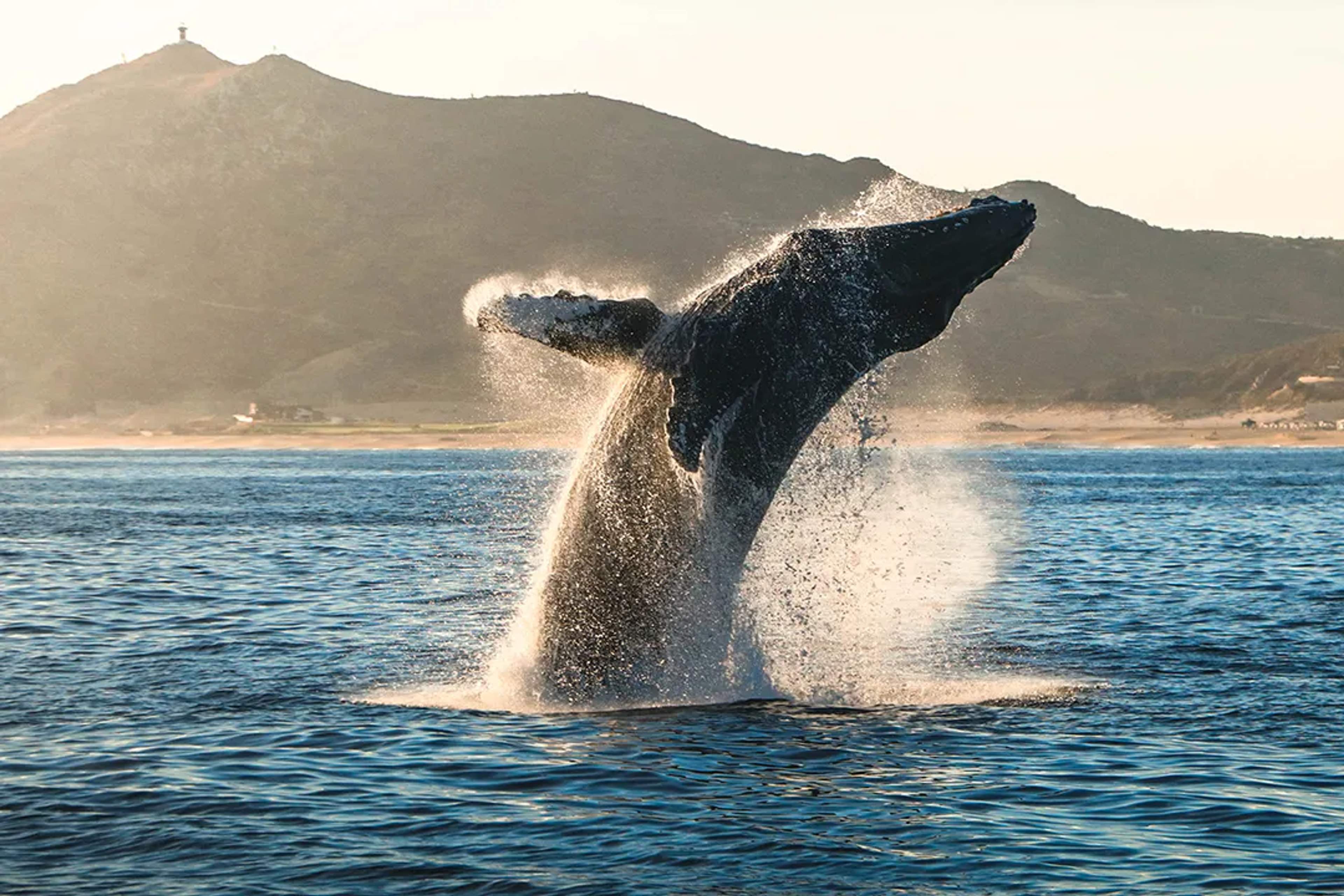
The stars of Cabo's winter season. Humpbacks arrive by mid-November, with peak activity from January through March, and the Los Cabos region is one of two primary concentration areas in the entire Sea of Cortez for whales engaged in mating, calving, and nursing.
What makes humpback sightings here particularly special is the behavior on display: breaching, spy-hopping, pec slapping, and mother-calf interactions. Male humpbacks on breeding grounds also sing, sharing evolving song phrases with populations as far away as Hawaii. Plan winter trips, especially January through March, for peak activity.
3. Blue Whales
The largest animals ever to have lived on Earth. Blue whales with young calves are regularly observed in the Sea of Cortez from December through March, and the region serves as an important calving and nursing area for the species.
Peak sightings occur February through March, primarily in the La Paz corridor. Spotting one means watching a living animal longer than a basketball court glide through deep blue water.
4. Orcas
Orca sightings in the Sea of Cortez are considered relatively frequent year-round, not rare seasonal events. Surface encounters can happen in any season, often during long-range marine expeditions.
As of August 2025, Mexico introduced the country's first regulations governing in-water orca sightings in Baja California Sur. Swimming with orcas is now permitted exclusively in La Ventana, with licensed operations only, in groups limited to four swimmers plus one guide.
5. Whale Sharks
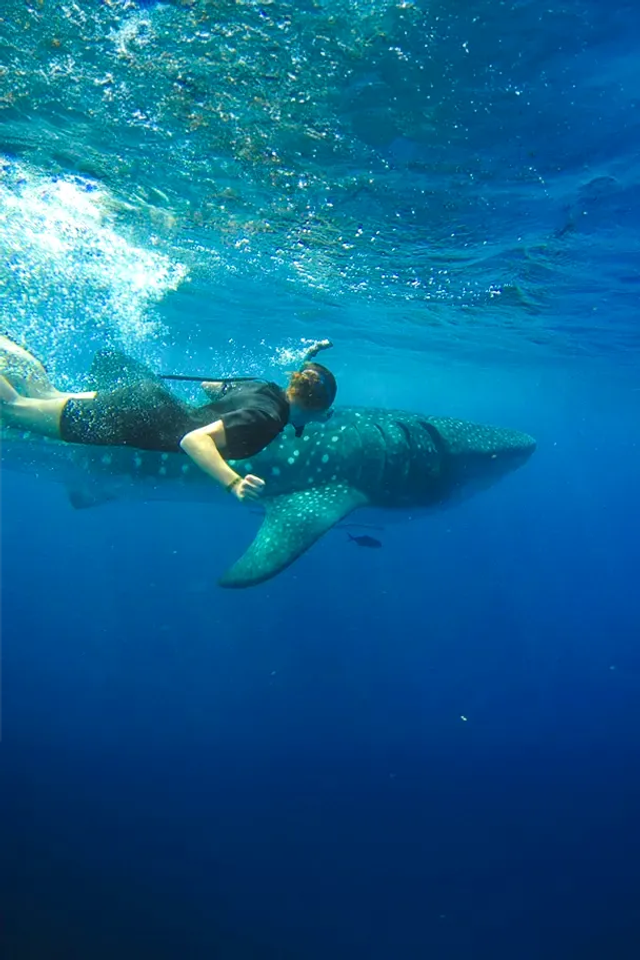
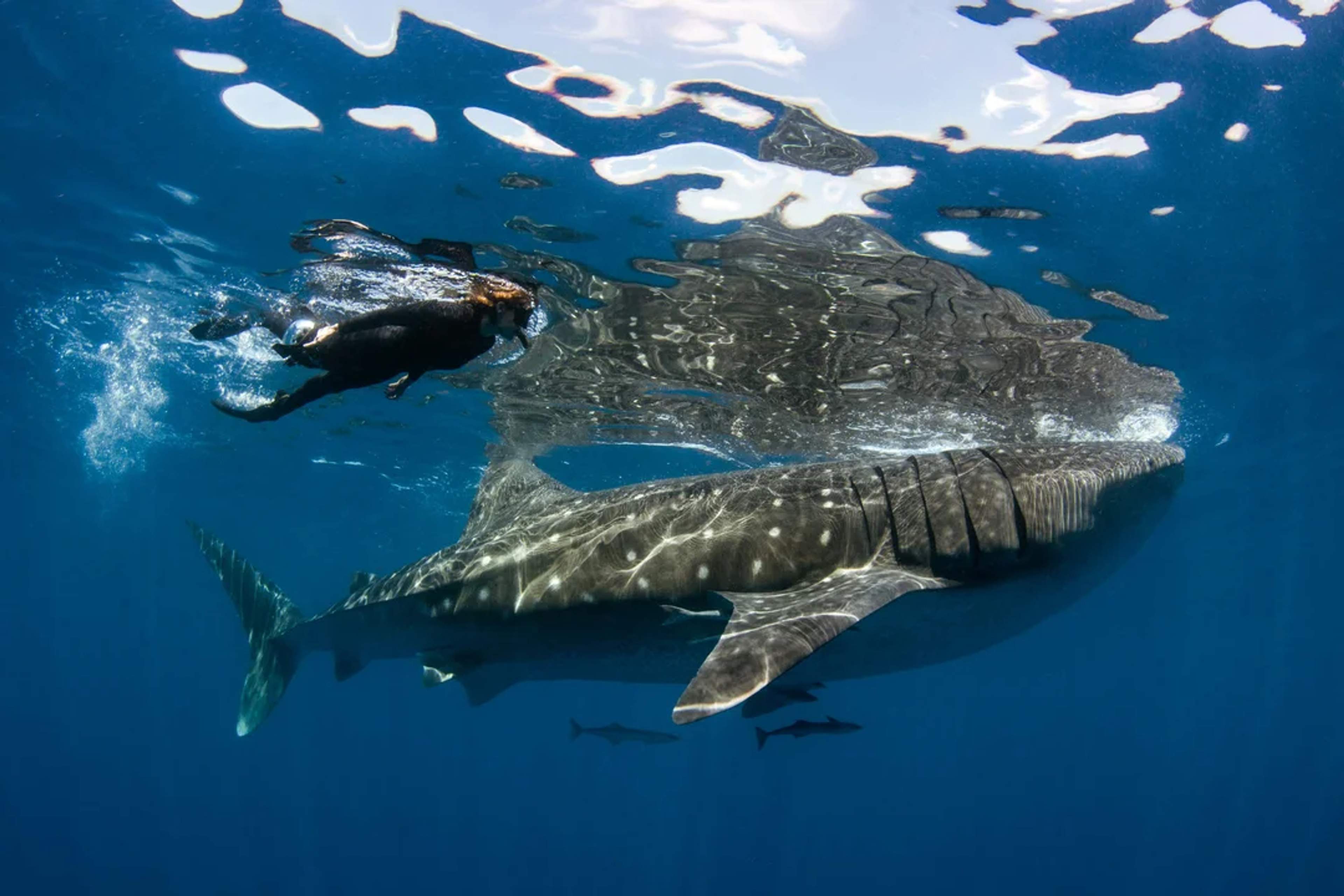
The whale shark is the largest fish alive. Typical individuals measure 19 to 39 feet long, with mouths spanning roughly four feet wide. Despite their size, they eat plankton, krill, and tiny schooling fish, posing zero threat to swimmers.
Their swimming speed of approximately 3 mph means snorkelers can keep pace without competitive ability. Each whale shark also carries a unique pattern of light-yellow spots and stripes that functions like a fingerprint for researchers.
The waters near La Paz, roughly 90 minutes from Cabo San Lucas, are among the world's premier locations for sightings. The official observation season in Bahía de La Paz runs from October 1 through April 30, with the highest concentrations documented in November and December.
6. Mobula Rays
One of the ocean's great spectacles. Munk's devil rays aggregate in the Sea of Cortez in formations numbering in the thousands during their reproductive season from April through July, with late May through late June producing the largest groups.
Mobula rays can leap approximately two meters out of the water in aerial displays whose purpose remains scientifically unresolved. Watching them breach in coordinated waves is one of Baja's defining marine moments.
7. Sea Turtles
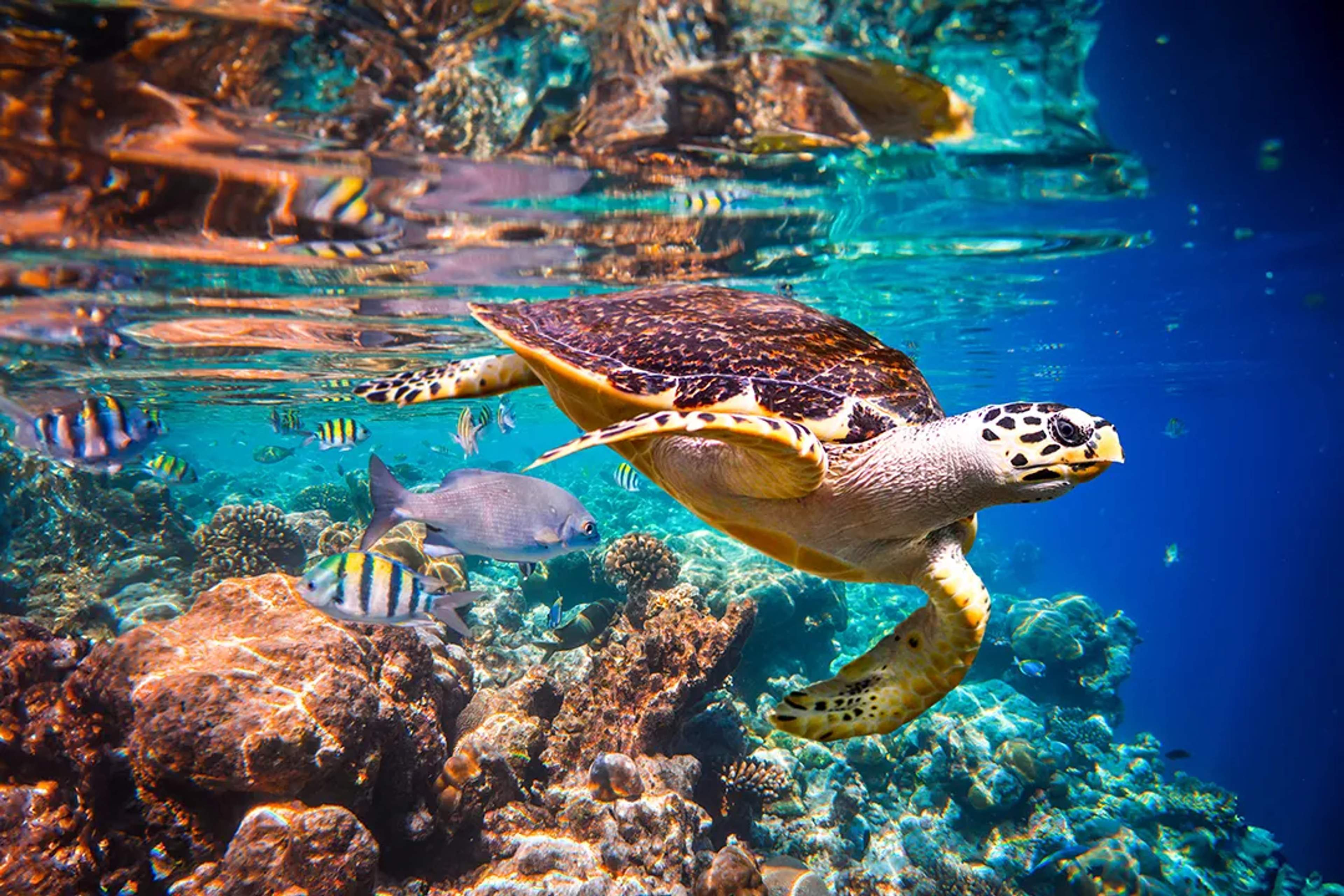
Five sea turtle species have documented presence in the waters near Cabo, including olive ridley, leatherback, hawksbill, black sea turtle, and loggerhead. Snorkelers regularly encounter them gliding over coral and basalt formations at Cabo Pulmo.
Nesting season begins in June, with hatching activity peaking through late summer and early autumn. Green sea turtles remain present year-round at Cabo Pulmo and La Paz, making turtle sightings one of the most reliable encounters in the region.
8. Reef Fish and Sharks at Cabo Pulmo
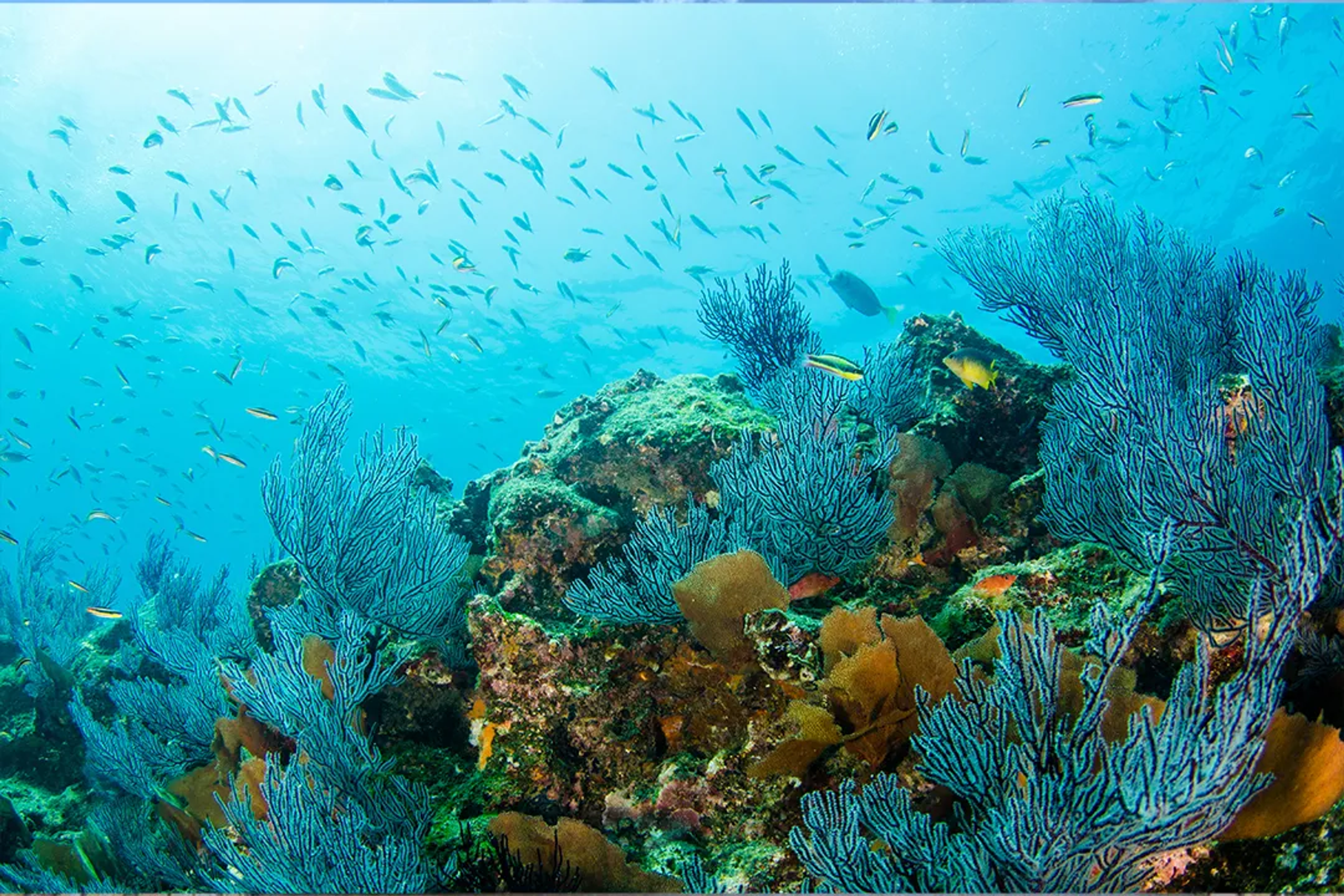
About two hours east of Cabo San Lucas, the water changes. It gets clearer, the reef structures get denser, and the fish, in terms of sheer volume, get almost hard to believe.
Cabo Pulmo National Marine Park protects the only coral reef in the entire Sea of Cortez and the northernmost coral reef in the eastern Pacific. The reef is estimated to be approximately 20,000 years old, growing on basalt bars at shallow depths accessible to snorkelers and divers.
Divers consistently report sightings of bull sharks, massive tornado-like formations of bigeye jacks, giant groupers, manta rays, and eels. After a community-led fishing ban in 1995, fish biomass surged to become the largest measured recovery in any marine reserve worldwide.
Three Ways to Get Closer to Cabo San Lucas Marine Life
Each species above pairs with a different ocean expedition. The three tours below cover the broadest range of sightings, from refined sunset whale cruises to in-water encounters with sharks and rays.
Luxury Whale Watching in Cabo
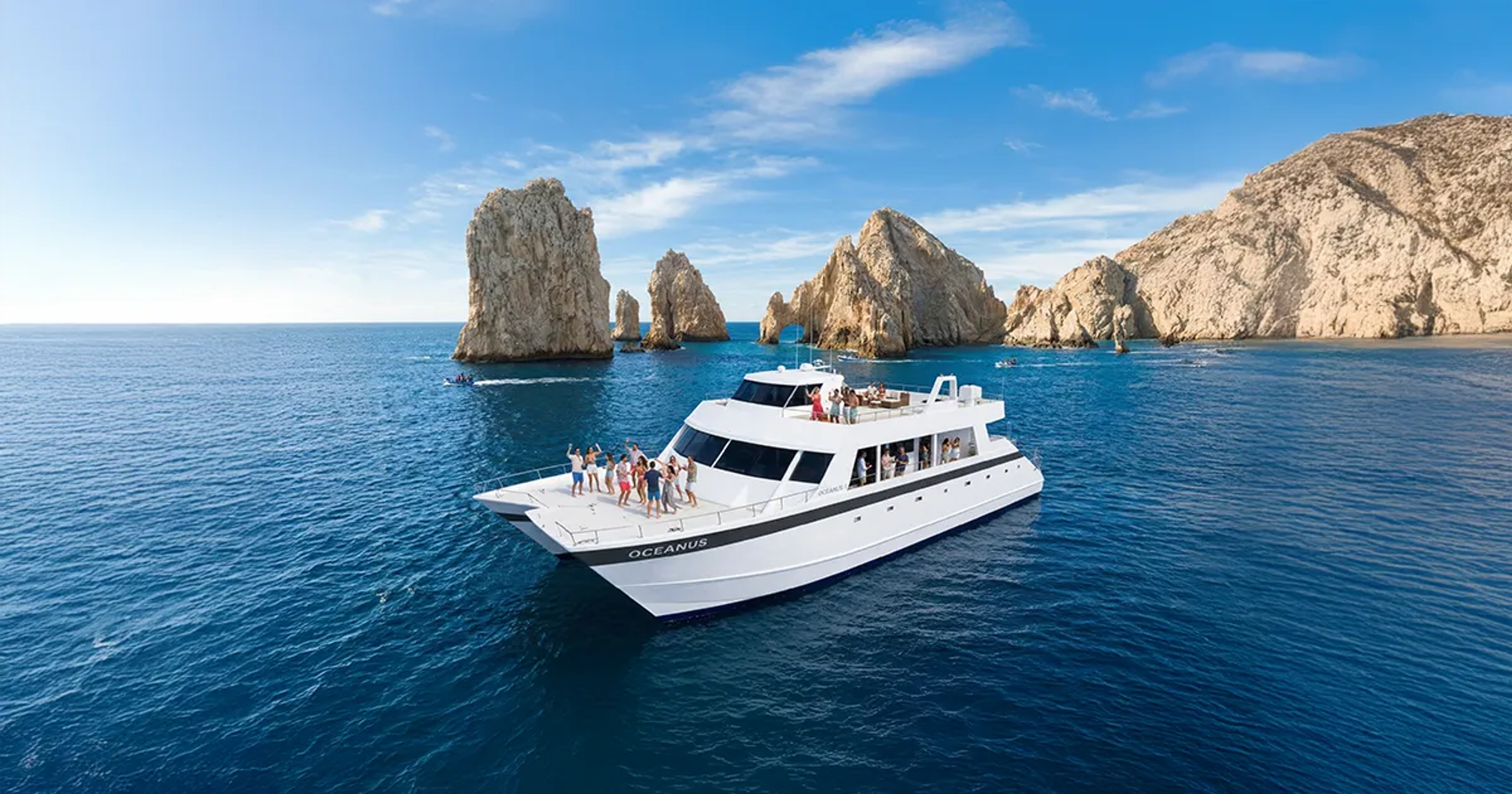
The Luxury Whale Watching tour puts you on a French-made Leopard Catamaran to witness humpbacks, gray whales, and orcas breaching and tail slapping across the Sea of Cortez. A state-of-the-art hydrophone lets you listen to whale songs underwater.
The cruise passes iconic Cabo landmarks including the Arch and Land's End. Gourmet appetizers and an open bar are included, making this the most refined way to share the water with the season's biggest visitors.
Swim with Orcas, Whales & Baja's Ocean Giants
This 12-hour expedition heads to Isla Cerralvo, known as Jacques Cousteau Island, searching for orcas, humpback whales, mobula rays, dolphins, and sea lions in a single day.
The trip includes snorkeling at La Reina Reef, a documented manta ray cleaning station, with groups limited to a maximum of seven guests per boat. Professional bilingual marine experts lead the search, and no two days produce the same sightings.
Cabo Snorkel & Land's End Arch
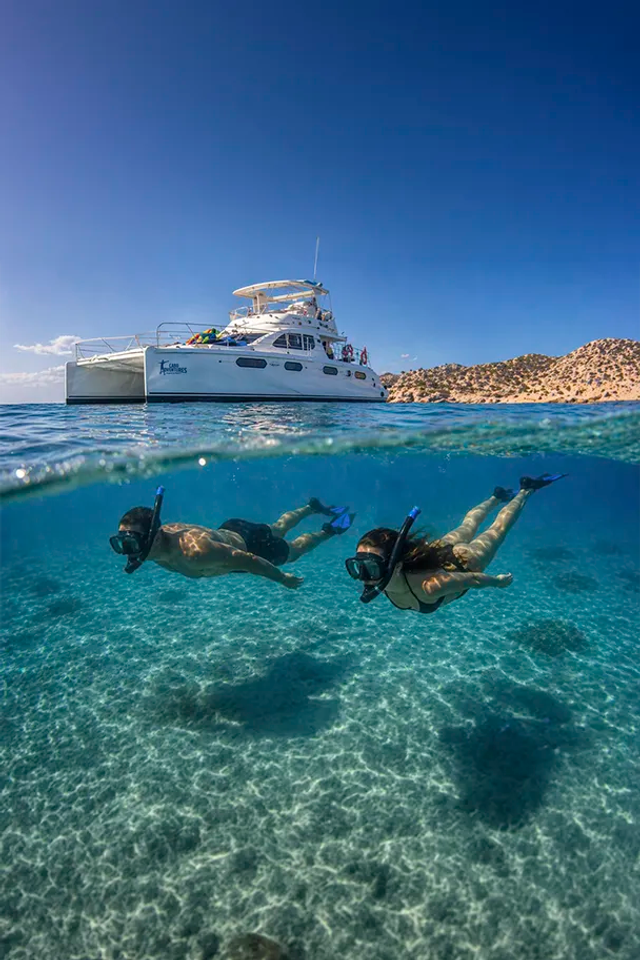
The Snorkel & Sea Adventure is a speedboat ride to the Arch, Lover's Beach, and Land's End with snorkeling and water sports in Cabo's clearest bays. Sea turtles, surgeonfish, and rays are common sightings.
Power snorkeling with sea scooters, kayaking, and paddleboarding round out the on-water options. The tour is family-friendly from age five and up, making it the easiest entry point into Cabo San Lucas marine life.
When to Visit for the Widest Range of Species
No month is empty here. The question isn't whether you'll see something remarkable, it's which species you're hoping to see.
November through March is the broadest window for marine megafauna. Humpback whales, whale sharks, manta rays, bull sharks at Cabo Pulmo, and year-round residents like sea lions and dolphins all overlap during these months.
December through February is peak whale season. Humpbacks are in full force, blue whales are calving in the Sea of Cortez, and whale shark concentrations in La Paz hold strong through the winter. For travelers who want humpbacks and whale sharks in the same trip, December is the sweet spot.
April through June shifts the spotlight. Mobula ray aggregations reach their peak, hammerhead sharks enter active season at the offshore seamounts, water visibility improves, and sea turtle nesting begins in June.
August through November brings the warmest water and the best visibility of the year. Sea turtle nesting and hatching reach their height, and whale sharks begin returning to La Paz by September, ahead of the official season opening on October 1.
Diving and Snorkeling Conditions
Water temperatures range from roughly 66 to 86°F depending on the season, with the warmest months from August through November and the coolest from February through April. Most months call for a wetsuit, from a shorty in the warmest months to a 6–7mm in the coldest.
Visibility varies with the seasons but in a way that rewards every window. August through November delivers peak clarity at 40 to 90 feet, while the lower-visibility spring months are precisely when upwelling attracts whale sharks, manta rays, and other filter feeders.
Cabo San Lucas Marine Park, one of Mexico's first national marine parks, offers dive sites for every level. Land's End is accessible to Open Water certified divers, while Neptune's Finger gives advanced divers a chance to see the famous sand falls alongside nudibranchs, turtles, and pelagic species.
Why Conservation Shapes Every Sighting
The extraordinary marine life in these waters exists because of protection frameworks that human choices either support or undermine. Cabo Pulmo's recovery required a complete fishing ban enforced by local families who sacrificed their own livelihoods.
Whale shark swims require authorized access following strict federal regulations. Orca swimming regulations, brand new as of August 2025, limit groups to four swimmers plus one guide per in-water interaction to minimize disturbance.
Every protected area in the region carries specific rules. The Cabo San Lucas Wildlife Protection Area requires entry bracelets and compliance with whale watching regulations, while Cabo Pulmo mandates the use of authorized tourism service providers within park boundaries.
Choosing an authorized, certified tour isn't a regulatory technicality. It's the mechanism through which tourism revenue directly supports the conservation systems that keep these waters alive.
The Real Adventure Starts Beyond the Resort
Most visitors to Cabo San Lucas spend their trip within resort boundaries, unaware that some of the most extraordinary marine sightings on Earth happen within a day's reach. Whale sharks feeding in the plankton-rich waters near La Paz, a 20,000-year-old coral reef at Cabo Pulmo, and massive mobula ray aggregations off Jacques Cousteau Island all sit within a short drive.
The Sea of Cortez has supported marine life for millions of years. Cabo San Lucas marine life reflects that legacy in every dive, every snorkel session, and every surface sighting of a breaching whale, rewarding anyone willing to get in the water.