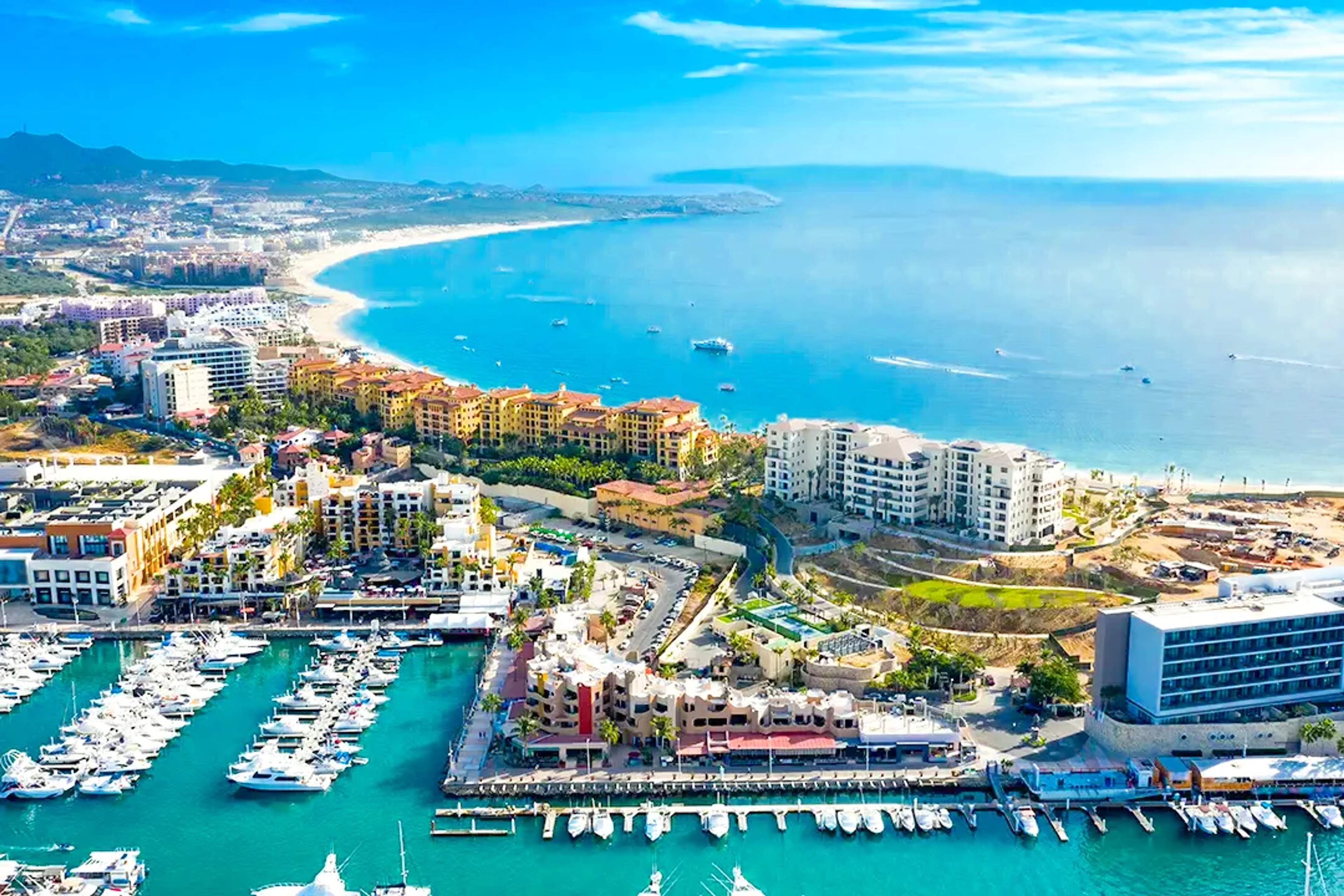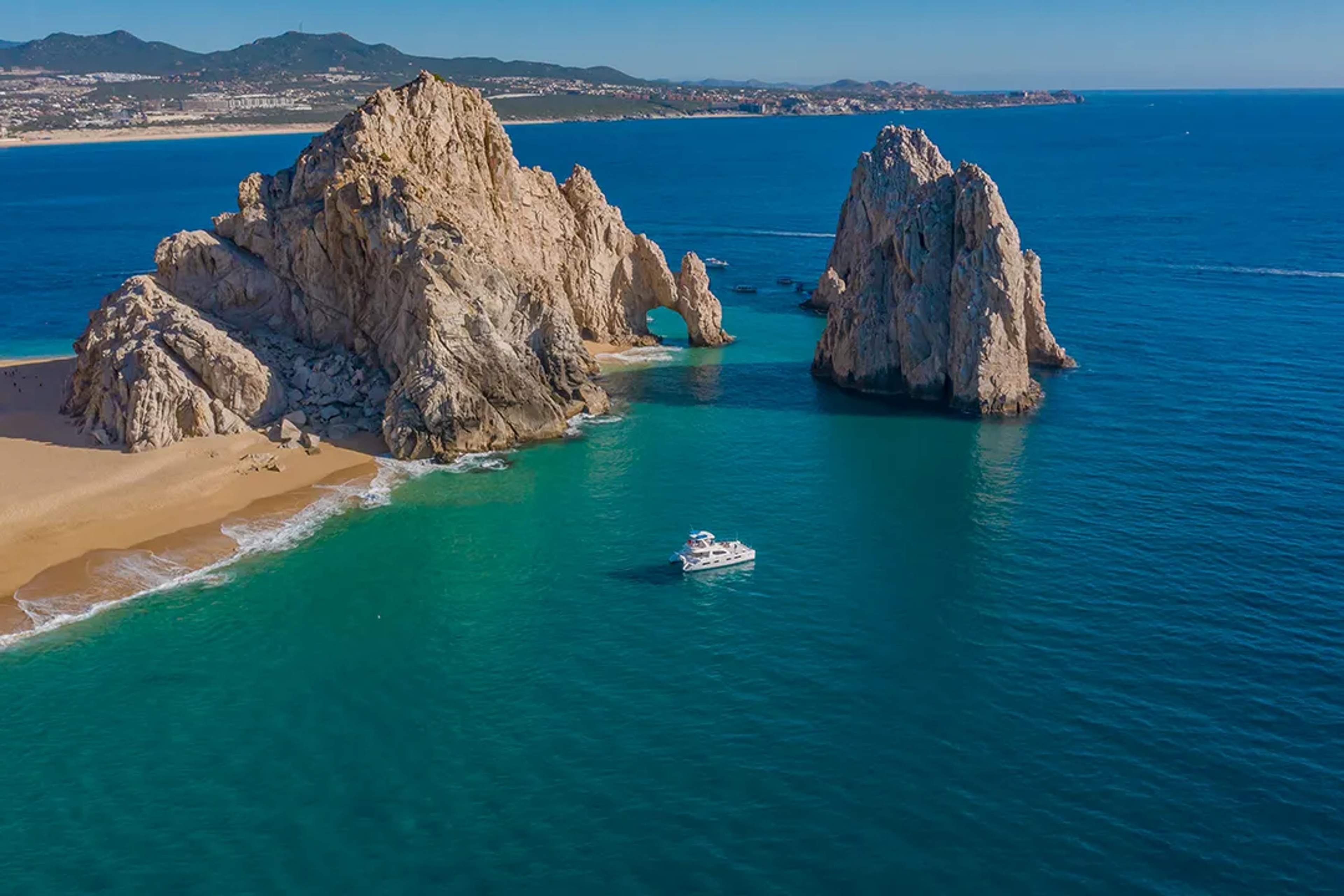
Wander a few blocks past the marina, and you'll notice Cabo has a much older side than the postcards let on. A colonial plaza, weathered stone, and a rust-colored headland at the tip of the peninsula all hint at stories waiting just beyond the resort strip.
The history of Cabo San Lucas is richer than most visitors expect, shaped by seafaring peoples, foreign powers, and a few colorful industries that each left their mark. In the sections ahead, we'll walk you through those chapters and point out where you can still see them today.
Early Cabo San Lucas
The Pericú Era (Before 1500)
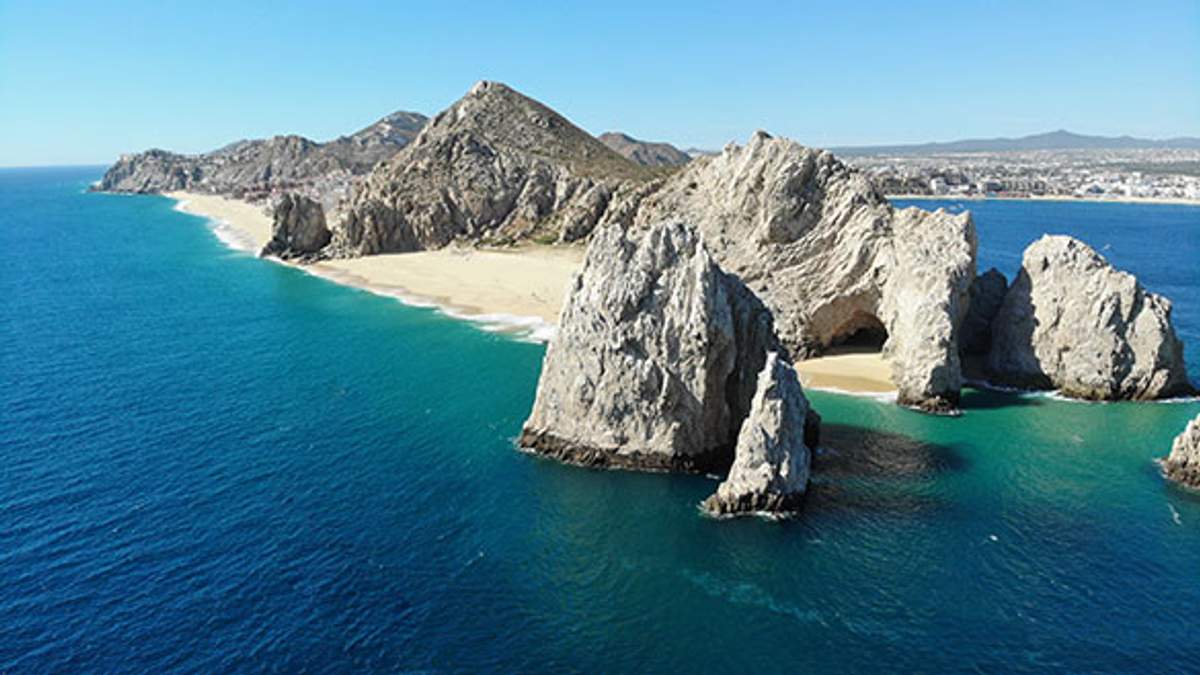
Long before any sail appeared, the Pericú people lived at the cape they knew as Yenekamú, "place between two waters." Archaeologists trace their presence here to roughly 11,000 to 12,000 years ago, which you can see firsthand at the downtown museum.
The Pericú did not farm and took almost everything from the sea. They used wooden rafts with double-bladed paddles and the atlatl, a dart-thrower, into the 17th century.
Jesuit missionaries recorded barely a dozen words of their language before disease, revolt, and the collapse of the mission population ended the culture. The Pericú have been extinct since the late 18th century, roughly 250 years.
European settlers and visitors encountered the Pericú and documented characteristics of their language and culture.
Spanish Arrival and Naming (1535 to 1697)
The Spanish came next. Hernán Cortés led a 1535 expedition to the Baja Peninsula and founded a colony at the bay that became La Paz; it collapsed after a storm sank its supply ships.
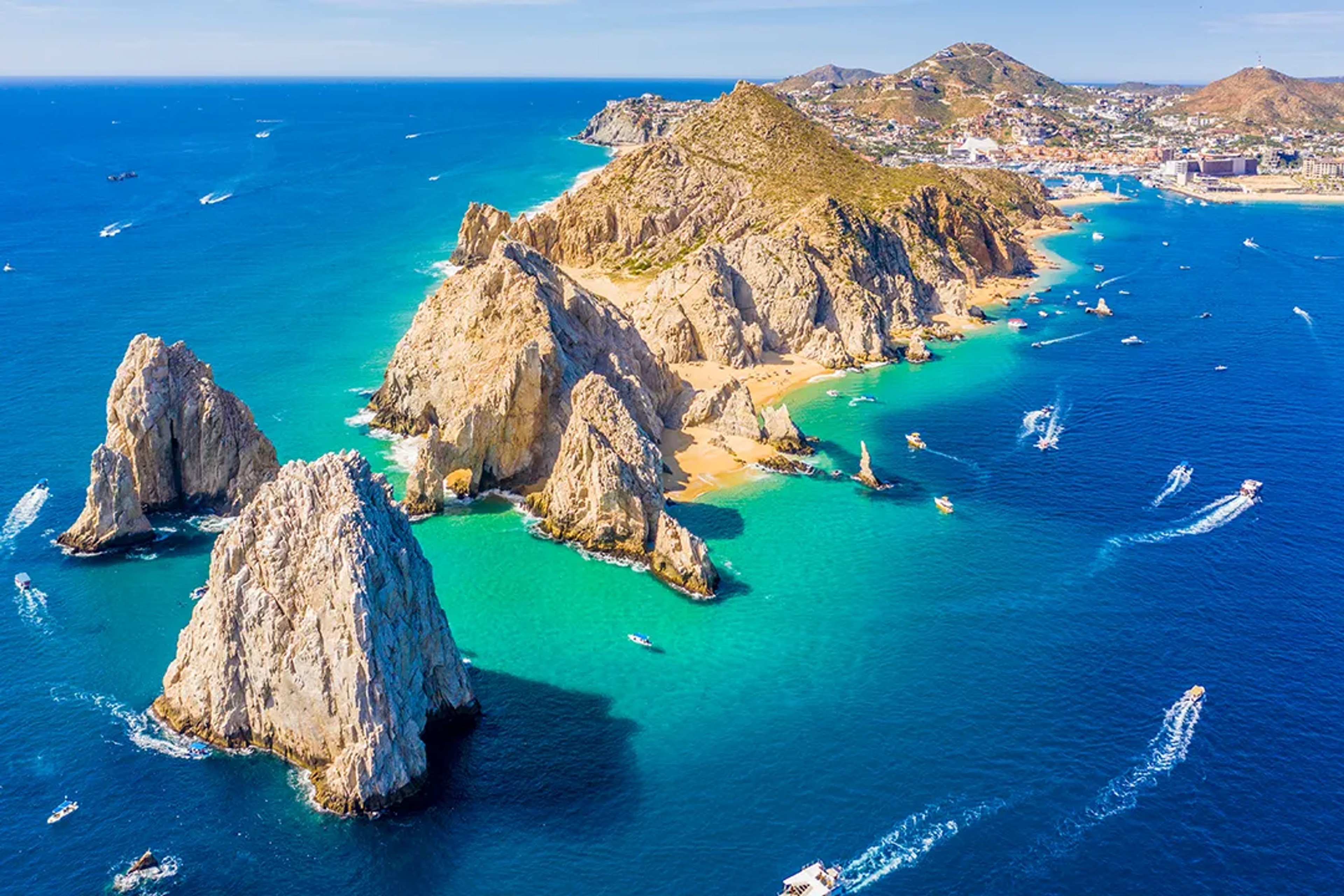
Francisco de Ulloa proved in 1539 that this was a peninsula, not an island. In 1541, sheltering from a storm, Francisco Bolaños named the cape for Saint Luke. No European settlement survived on the peninsula until 1697, over a century and a half after Cortés's colony failed, when Jesuit Juan María de Salvatierra founded Mission Loreto.
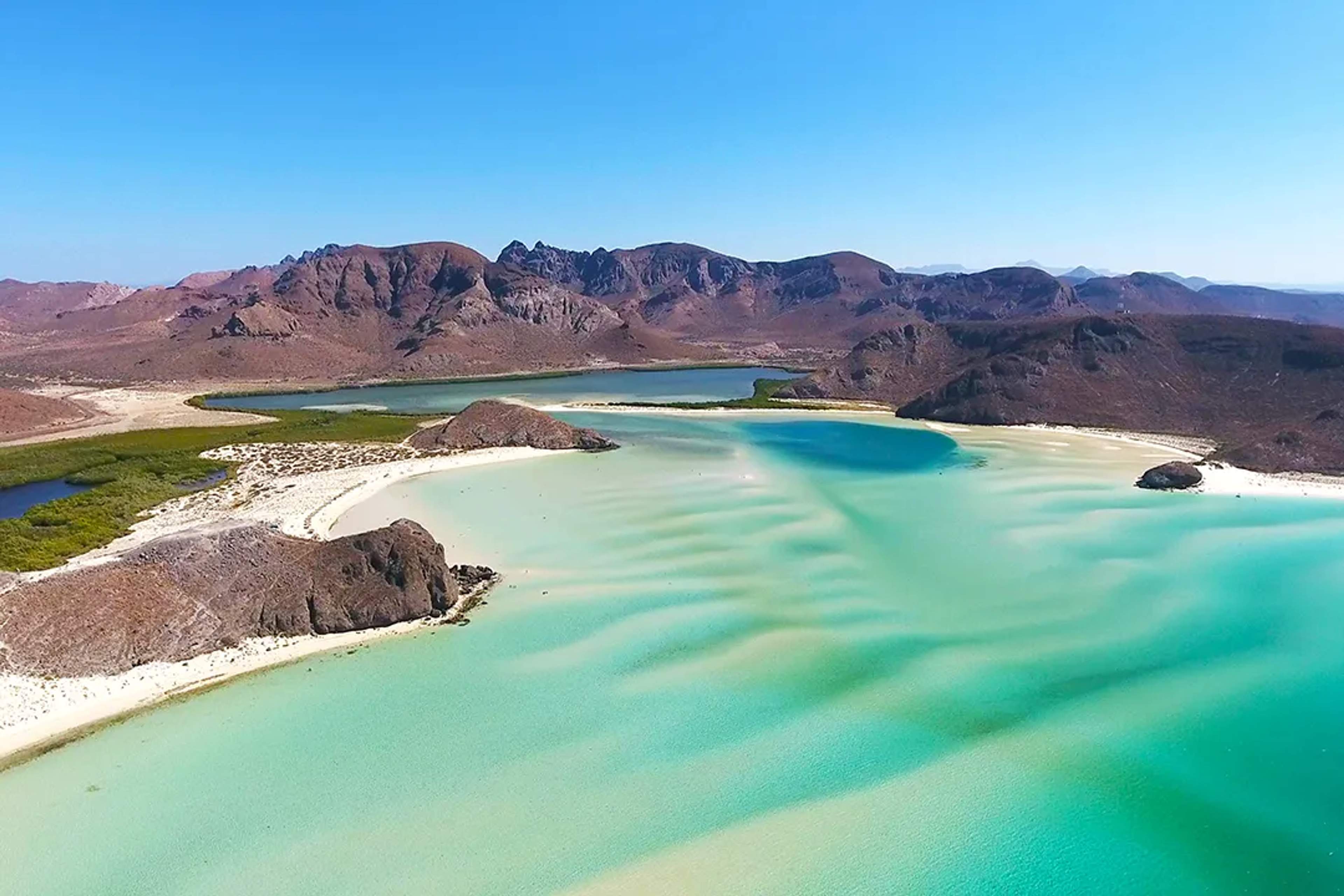
The pearl-rich bay Cortés sought is a two-hour drive north today, and whale sharks feed in its shallows from late autumn into winter, worth timing your trip around if the season lines up.
Galleons and Pirates (1565 to 1815)
From 1565 to 1815, Manila galleons passed the cape on the run to Acapulco. Crews weakened by scurvy watered at San José del Cabo, and English pirates waited for them in the bay they knew as Aguada Segura.
Thomas Cavendish captured the galleon Santa Ana here in 1587 after a battle of nearly six hours. Woodes Rogers took a second galleon in the same bay 122 years later, in 1709, with Alexander Selkirk, the model for Robinson Crusoe, aboard.
Dutch privateers known as pichilingues sheltered in the bays of Los Cabos and La Paz, and the name survives in the port of Pichilingue near La Paz.
From Francis Drake in the 1570s to Rogers in 1709, piracy here spanned more than 130 years. Two of the only four Manila galleons ever captured fell in this one bay.
Missions and War (1730 to 1848)
Missionaries followed. Jesuit Nicolás Tamaral founded Mission San José del Cabo in 1730 and baptized more than 1,000 Pericúes in his first year. A revolt over his ban on polygamy killed him in 1734, and a tile mural above the church entrance still depicts that day, worth a close look when you visit.
War between the United States and Mexico reached the cape in 1847 and 1848. About 150 men, led partly by naval Lieutenant José Antonio Mijares, attacked the American garrison at San José del Cabo in November 1847; Mijares died of his wounds, and the town's main boulevard now carries his name.
The Treaty of Guadalupe Hidalgo, signed February 2, 1848, ceded Alta California but not Baja. Mexican negotiators intercepted a letter revealing that Americans considered the peninsula expendable, and they refused to budge; Baja stayed Mexican through that resistance.
The Cabo San Lucas of Today
The Cannery Years (1917 to 1962)
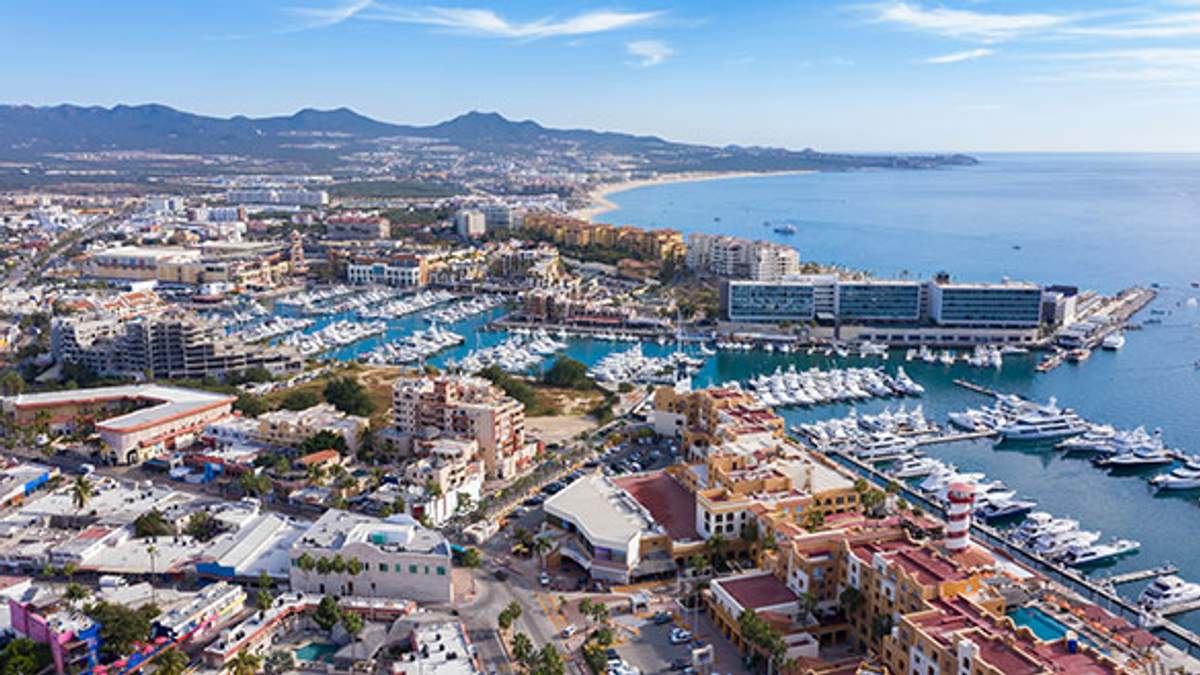
Commercial fishing built the modern town. An American company anchored a floating tuna platform near Land's End in 1917, and a shore cannery was running by 1929.
At its peak, the plant was Latin America's largest cannery and produced most of Mexico's canned seafood. As late as 1962, the settlement was roughly 300 cannery workers and their families, and the ruins still stand near Playa Empacadora, an easy walk from the marina.
The Sportfishing Boom (1950s to 1970s)
Sportfishing drove the town's next growth phase. Billfish were so plentiful that anglers nicknamed these waters "Marlin Alley," drawing John Wayne, Bing Crosby, and Lucille Ball down by private plane, and Hotel Palmilla opened in 1956 as the area's first elite resort.
The Transpeninsular Highway reached the cape in 1973 and gave it a paved connection to the U.S. border. Dredgers cut the marina out of a dry mudflat by 1975, on ground that had held a cannery-era landing strip and workers' houses.
The Modern Resort Era (1977 to Today)
The airport that opened in 1977 replaced the long drive with a short flight, and today most travelers land at SJD. The first golf course followed in 1987, and more spread along the corridor.
Mexican culture never left. San José del Cabo's gallery district hosts a free Art Walk on Thursday evenings, November through June, and Plaza Amelia Wilkes fills with local food, crafts, and music on Friday evenings, both good options if you're planning your evenings in advance.
Explore the History of Cabo San Lucas
Reading about the cape is one thing; standing where it happened is another. The tours below turn the chapters above into places you can walk, sail, snorkel, and taste, each one linking a piece of Cabo's past to something you can do this week.
Swim with Whale Sharks in Cortés's Bay
Swim beside a whale shark in the same pearl-rich bay Hernán Cortés was chasing in 1535, and the story he never quite got to write suddenly feels close. You slip into calm water beside these gentle giants, watch them glide past at their own pace, then climb back aboard for the ride home. Our La Paz Whale Shark Tour is the simplest way to reach that bay from your base in Cabo.
See Both Historic Towns in a Day
Walk the plaza where Nicolás Tamaral built his mission in 1730, then cross the corridor to the marina town that grew from a tuna cannery. You cover both centers of the history of Cabo San Lucas in a single day, with a guide filling in the threads between them. Our San Jose del Cabo & Cabo San Lucas Tour ties the two towns together in one easy loop.
Our guide covers more of San José del Cabo's cultural side, useful if you're still building your itinerary.
Taste Mezcal After a Desert Camel Ride
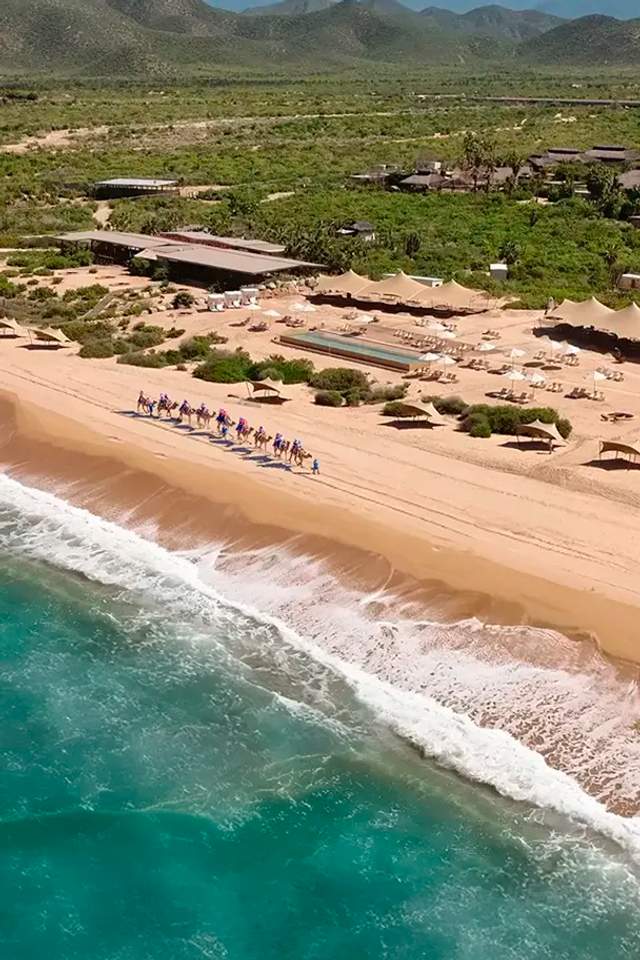
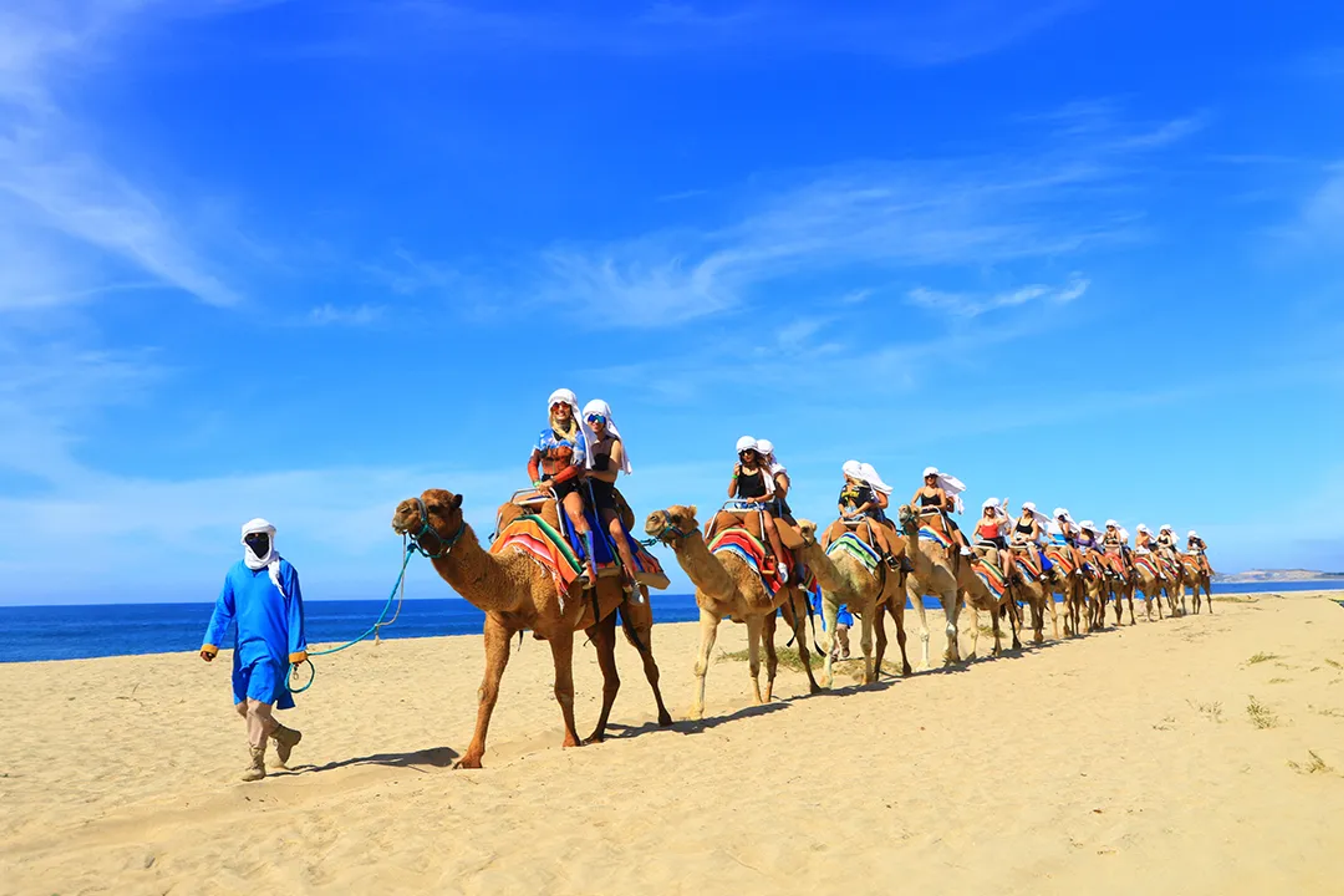
Sip mezcal at a shaded desert table after riding a camel out toward the Pacific, and you taste a lineage that runs from Nahuatl-speaking cultures to Baja California Sur's own Damiana liqueur. Mezcal takes its name from Nahuatl mexcalli, "cooked agave hearts," and a mezcal or tequila tasting is the fastest way into that heritage. Our Outback & Cabo Camel Ride folds the tasting into a desert afternoon within reach of your Cabo stay.
Snorkel the Recovered Reef at Cabo Pulmo
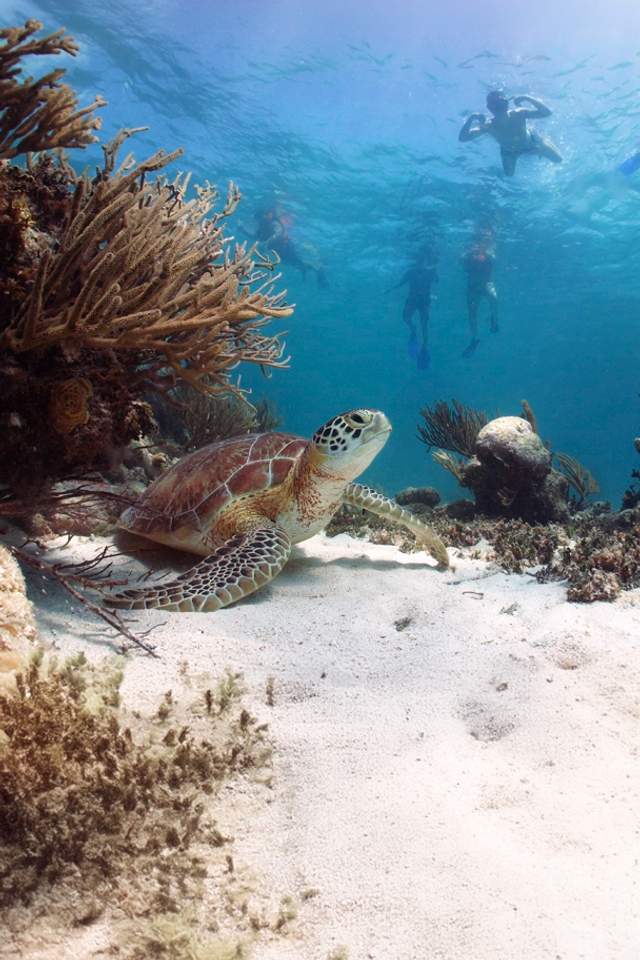
Snorkel above a living coral reef 100 kilometers up the coast, where fish biomass multiplied within a decade after residents ended fishing there in the 1990s, and you see conservation history in real time. Sharks and huge schools of fish returned, and today Cabo Pulmo protects that recovered reef inside the same sea Jacques Cousteau called "the world's aquarium." Our Cabo Pulmo Snorkeling Expedition puts you on the reef with a guide who points out what has come back.
Try a Taco Tasting on Regional History
Sit down to a traditional taco tasting, and you're eating the regional history on the plate, from Nahuatl agave traditions to the Baja fishing camps that shaped the local kitchen. Any of the tours above pair naturally with a meal built around that lineage, so pick the chapter that pulls you in most and add a tasting to the day. Book a Cabo tour and turn the history above into your next afternoon out.
Frequently Asked Questions
How many days do I need to explore the history of Cabo San Lucas?
Two full days give you room to move without rushing between sites. Spend one in downtown Cabo San Lucas at the museum, the cannery ruins near Playa Empacadora, and the marina, and use the second for San José del Cabo's plaza, mission church, and gallery streets. If you want to add El Triunfo or a boat morning at Land's End, plan a third day so nothing feels squeezed against a dinner reservation.
Is Cabo San Lucas easy to explore without a rental car?
For the historic core, yes. The downtown museum, marina, and Médano Beach all sit within easy walking distance of most Cabo San Lucas hotels. San José del Cabo's colonial plaza and gallery streets are also walkable once you arrive by taxi, hotel shuttle, or corridor bus between the two towns. A rental car only really helps if you want to drive up to El Triunfo, Todos Santos, or La Paz on your own schedule.
Can I combine a boat trip with the history of Cabo San Lucas?
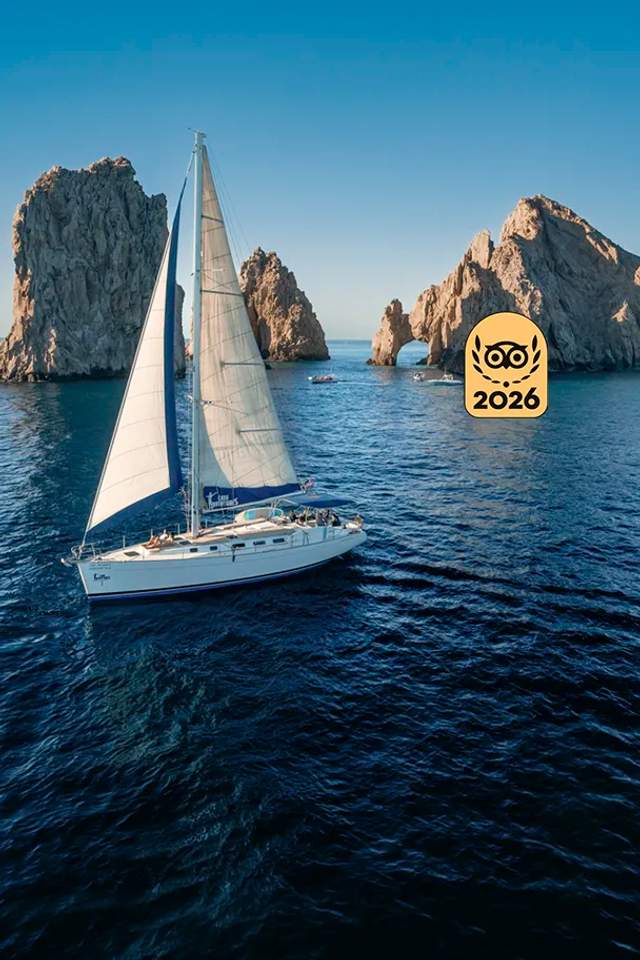
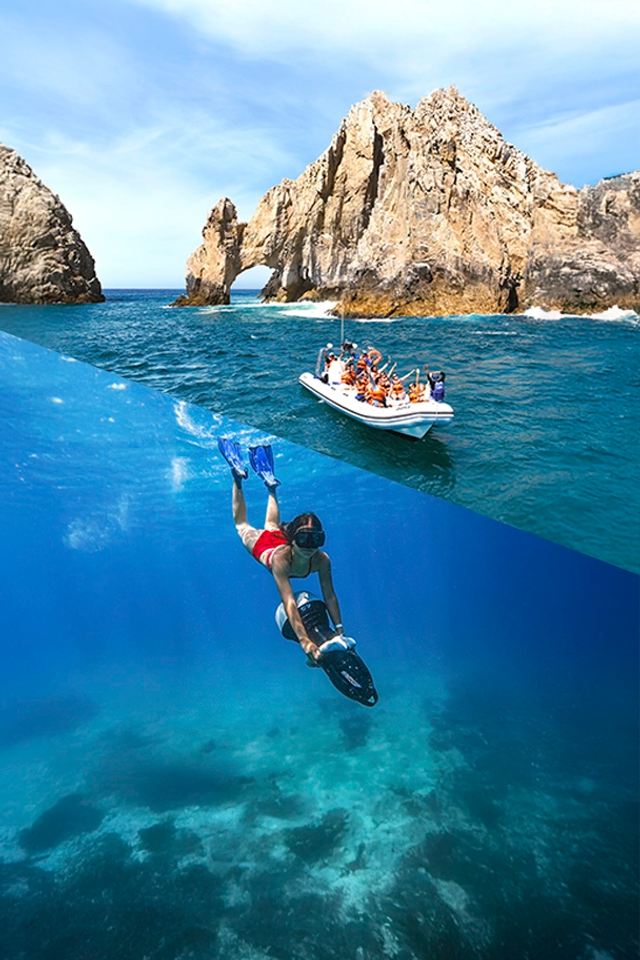
Yes, and it's one of the easier days to plan. Our Luxury Cabo Sailing trip circles the granite point that Bolaños named for Saint Luke in 1541, the same headland that guided Manila galleons past the cape for two and a half centuries. Book the sail as a morning or afternoon slot, then walk over to the downtown museum afterward to see Pericú artifacts, geology exhibits, and old navigational instruments up close.
What should I know before visiting the mission church in San José del Cabo?
The church stands on the site Nicolás Tamaral founded in 1730, though the current building dates to the 20th century. Look for the tile mural above the entrance, which depicts the day Tamaral was killed during the Pericú revolt. Dress modestly if you plan to step inside, especially during Mass, and keep your voice low while parishioners are present. The plaza in front makes a natural starting point for the surrounding gallery streets.
Is there a tour that covers both historic towns in one day?
Yes. Our San Jose del Cabo & Cabo San Lucas Tour connects the two centers of the history of Cabo San Lucas in one guided day. You walk the colonial plaza and mission church in San José del Cabo, then cross the corridor to the Cabo San Lucas marina and downtown museum area. A guide fills in the threads between Pericú settlement, Spanish naming, mission life, and the cannery-era town that followed.